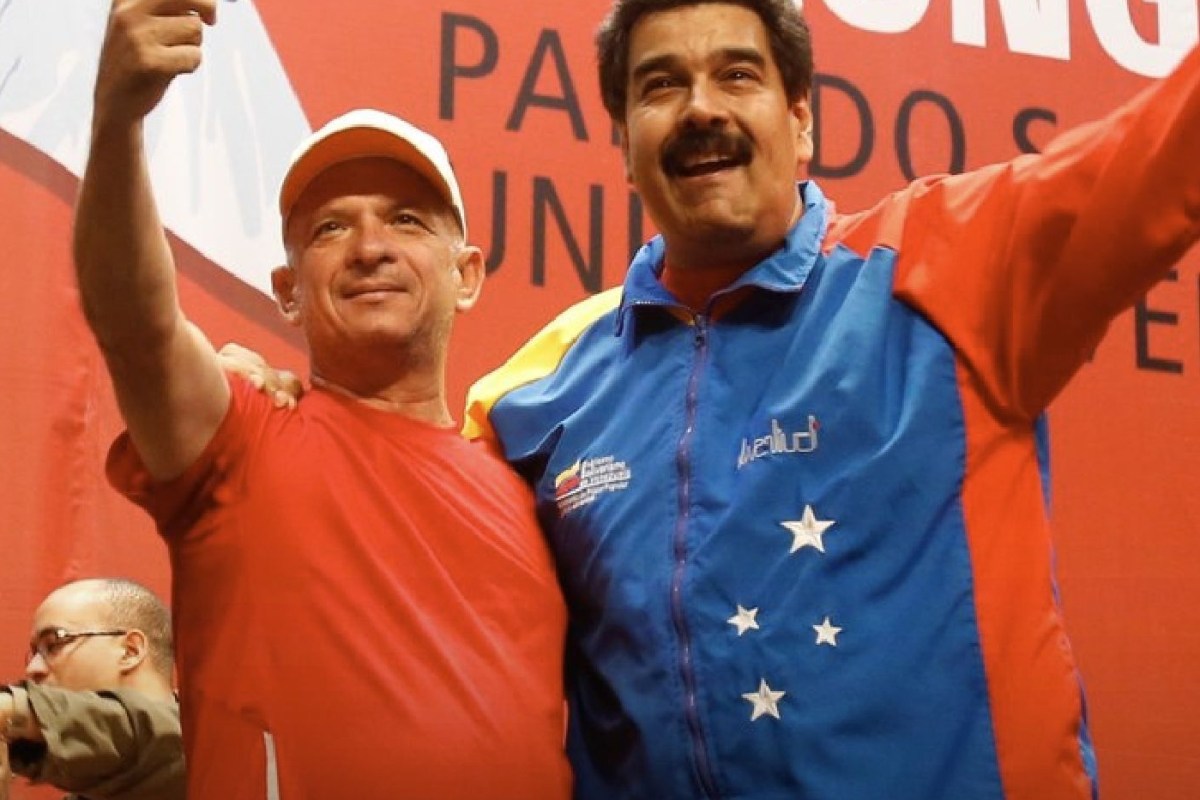
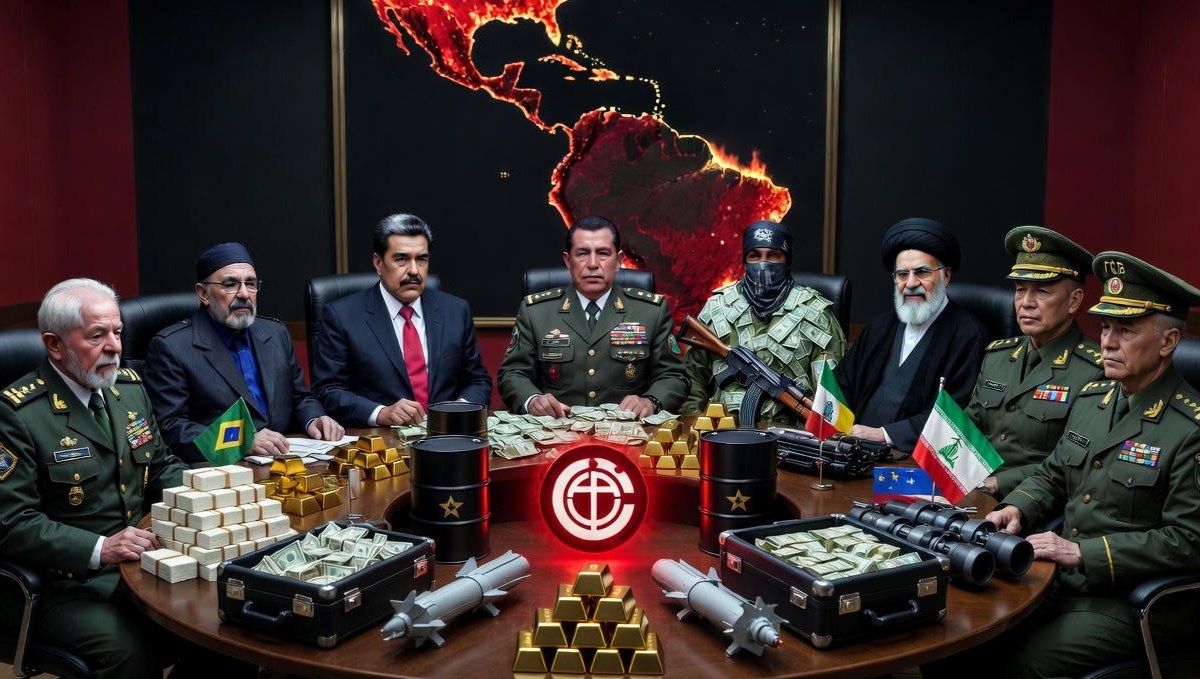
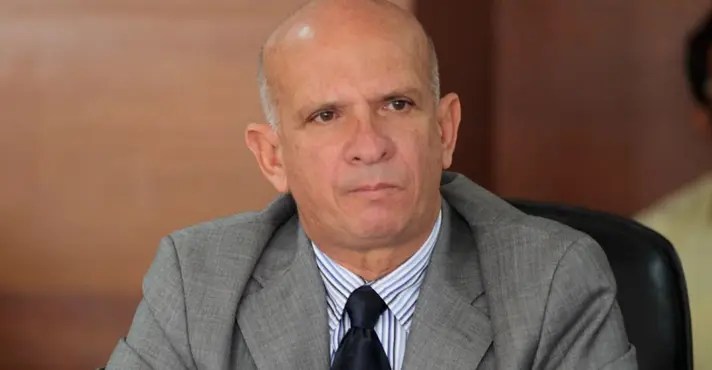
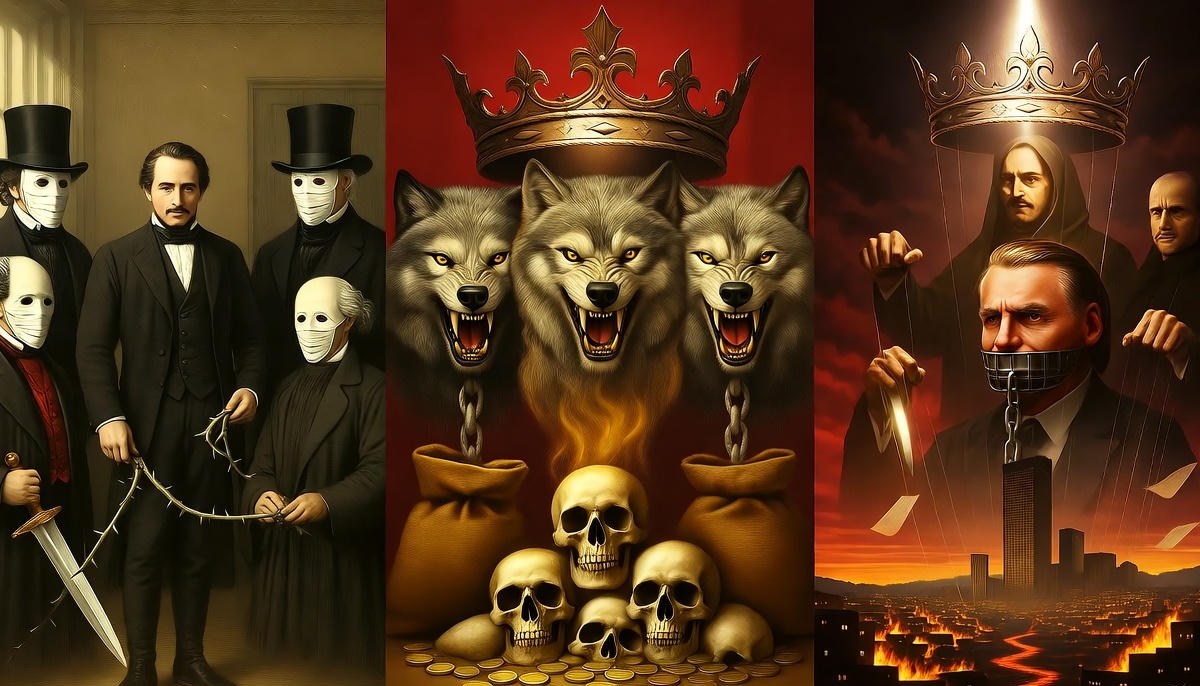
Confessions of 20 years of narcoterrorism, espionage, and election manipulation carried out on the orders of Maduro, Cabello, and Cuban intelligence services, by General Hugo “El Pollo” Carvajal in a letter addressed to Trump on this December 2.

Here is the full letter dated December 2, 2025, sent by Hugo “El Pollo” Carvajal to President Donald Trump, in which the former head of Venezuelan Chavista intelligence confesses two decades of narcoterrorism, espionage, and election manipulation carried out on the orders of Maduro, Cabello, and Cuban intelligence services.

«Dear Mr. President Trump and the people of the United States,

My name is Hugo Carvajal Barrios. For many years I was a senior official of the Venezuelan regime. I was a three-star Major General, enjoying the absolute trust of both Hugo Chávez and Nicolás Maduro, and I held the positions of Director of Military Intelligence and Member of Parliament in the National Assembly. Today I am imprisoned in a United States prison because I voluntarily pleaded guilty to the charges against me: conspiracy to commit narcoterrorism.

I am writing to atone for my sins by telling the whole truth, so that the United States can protect itself from the dangers I myself witnessed for so many years.

I publicly broke with the Maduro regime in 2017 and fled my country knowing that I faced criminal charges in the United States. By doing so, I became its enemy. Knowing the risks, I acted with the firmest conviction: to dismantle Maduro’s criminal regime and restore freedom to my country.

Today I feel the need to speak directly to the American people about what the Venezuelan regime really is and why President Trump’s policies are not only correct but absolutely necessary for the national security of the United States.

1. Narcoterrorism 
I was a direct witness to how Hugo Chávez’s government turned into a criminal organization now led by Nicolás Maduro, Diosdado Cabello, and other senior regime officials. The purpose of this organization, today known as the Cartel of the Suns, is to use drugs as a weapon against the United States. The drugs that reached your cities via new routes were not accidents of corruption or the work of independent traffickers alone; they were deliberate policies coordinated by the Venezuelan regime against the United States. This plan was suggested to Chávez by the Cuban regime in the mid-2000s and has been successfully executed with the help of the FARC, the ELN, Cuban operatives, and Hezbollah. The regime provided them with weapons, passports, and impunity so that these terrorist organizations could operate freely from Venezuela against the United States.

2. Tren de Aragua 
I was present when the decisions were made to organize and arm criminal gangs throughout Venezuela to protect the regime, including the group known as Tren de Aragua. Chávez ordered the recruitment of criminal leaders inside and outside prisons to defend “the revolution” in exchange for impunity. After Chávez’s death, Maduro expanded this strategy by exporting crime and chaos abroad in order to hunt down Venezuelan political exiles and artificially lower crime statistics inside Venezuela. The leaders of these gangs were ordered to send thousands of members out of the country. This was coordinated through the Ministry of the Interior, the Ministry of Penitentiary Services, the National Guard, and the national police forces. Tren de Aragua became the most effective and fastest-growing. When the Biden-Harris administration’s open-border policy became widely known, they seized the opportunity to send these operatives to the United States. They now have obedient, armed personnel on U.S. soil. To finance their operations, they were expressly ordered to continue kidnapping, extorting, and killing. Every crime they commit on your soil is an act ordered by the regime.

3. Counterintelligence and espionage against the United States 
I was present when Russian intelligence arrived in Caracas to propose to Hugo Chávez the interception of the undersea internet cables that connect most of South America and the Caribbean islands to the United States, with the aim of penetrating U.S. government communications. In 2015 I warned Maduro that allowing Russian intelligence to build and operate a secret listening post on La Orchila Island would one day attract American bombs. He ignored me.

For twenty years, the Venezuelan regime has sent spies to your country; many are still there, some posing as members of the Venezuelan opposition. Cuban intelligence showed me their networks inside your East Coast naval bases. They boasted of having sent thousands of spies over decades, some of whom are now career politicians. American diplomats and CIA officers of the CIA were paid to help keep Chávez and Maduro in power. These Americans acted as spies for Cuba and Venezuela, and some remain active to this day.

4. Smartmatic and your elections 
Smartmatic was born as an electoral tool of the Venezuelan regime but quickly became an instrument to keep the regime in power forever. I know this because I personally appointed the head of IT at the National Electoral Council (CNE), and he reported directly to me. The Smartmatic system can be manipulated; that is a fact. This technology was later exported abroad, including to the United States. Regime operatives maintain relationships with election officials and voting-machine companies inside your country. I do not claim that every election is stolen, but I state with certainty that elections can be manipulated with that software, and it has been used for that purpose.

People of the United States, make no mistake: allowing a narcoterrorist organization to move freely throughout the Caribbean and all of Latin America, doing everything possible to harm the American people, financing anti-Americanism across the continent, and facilitating the operations of other terrorist organizations and enemies of the United States inside Venezuela and now inside your own borders is a real and present threat.

The regime I served is not merely hostile: it is at war with you, using drugs, gangs, espionage, and even your own democratic processes as weapons.

President Trump’s policies toward Maduro’s criminal regime are not only justified; they are necessary and proportionate to the threat. I may even be underestimating what the regime is willing to do to cling to power. They have contingency plans for every extreme scenario to ensure they never relinquish control.

I fully support President Trump’s policy toward Venezuela because it is legitimate self-defense and is based on the truth.

I remain ready to provide additional details on these matters to the United States government.»

Hugo Carvajal Barrios 
United States of America 
December 2, 2025.

FORO DE SÃO PAULO EXPOSED! The Narco-Communist Super-Cartel That Installed Hugo Chávez – Funded by FARC Cocaine, Venezuelan Oil, Revolutionary Iran, Communist China… and Putin’s Russia. 

Introduction.  

This is not a theory. This is the most powerful criminal-political alliance in the Western Hemisphere, documented by Interpol, confessed by its own leaders, and corroborated by defectors in U.S. courts.  

Since 1990 the Foro de São Paulo (FSP) has functioned as the strategic command center for an unprecedented fusion: Latin American leftist parties, Colombian narcoterrorists (FARC-ELN), the Iranian Revolutionary Guards–Hezbollah network, the Chinese Communist Party… and, since the mid-2010s, Vladimir Putin’s Russia.  

Hugo Chávez was not an accidental president in 1998.  

He was the first head of state deliberately placed in power by this five-headed hydra.  

Here is the complete dossier – with full URLs for every single claim.

1. Founding and Real Mission (1990). 

Invitation letter signed by Lula and Fidel Castro:  

“Recover in Latin America what was lost in the East after the fall of the Berlin Wall.”  

Foro de São Paulo

2. Narco-Money: FARC as the Foro’s Private Bank. 

– Raúl Reyes laptops (2008 Ecuador raid), authenticated by Interpol.

https://www.aljazeera.com/news/2008/5/19/seized-farc-documents-are-genuine 

  → $150,000 to Chávez in prison (1992)  

  → Further payments of $100k–$480k in the 1990s  

  → $5 million from FARC drug proceeds to Lula’s PT for the 2002 Brazilian election.

https://en.wikinews.org/wiki/Brazilian_President_party_received_money_from_FARC%2C_say_documents

– Iván Márquez (FARC #2) admits on video (2019): “We financed campaigns of the Foro de São Paulo.

https://www.youtube.com/watch?v=fIgN812Jom0  

3. Iran & Hezbollah: The Middle-Eastern Branch.  

– Weekly “ghost flights” Caracas–Tehran–Damascus (2007–2014) carrying 14 tons of unchecked cargo (testimony of Hugo Carvajal, 2024)  

https://en.wikipedia.org/wiki/Venezuela-Iran_ghost_flights

https://www.caracaschronicles.com/2025/06/27/the-legacy-of-chavismos-ties-to-iran/

https://www.businessinsider.com/aeroterror-venezuela-iran-and-latin-america-2015-3

– Venezuelan gold & coltan mines handed over to IRGC and Hezbollah for money-laundering and financing Foro regimes.  

https://www.iranintl.com/en/202212124467

– Tareck El Aissami (ex-VP, PSUV, Foro delegate) indicted in the U.S. for narco-terrorism + Hezbollah links . 

https://iranwire.com/en/features/69471/

4. Communist China: The Silent Mega-Donor.  

– $62 billion in non-transparent loans to Chávez/Maduro (2007–2022) – never repaid  

https://thediplomat.com/2024/07/china-a-silent-ally-protecting-venezuelas-maduro/

https://www.forbes.com/sites/anderscorr/2017/04/21/remove-maduro-and-china-send-80-billion-in-emergency-aid-to-venezuela/

– 2021: Chinese Communist Party invites the entire Foro de São Paulo to the global summit of 120 communist parties.

https://revistaoeste.com/politica/evento-do-partido-comunista-chines-tem-partidos-brasileiros-e-foro-de-sao-paulo/

https://dialogopolitico.org/edicion-especial-2021-el-futuro-de-los-partidos-politicos/los-riesgos-de-cooperar-con-el-partido-comunista-chino

– November 2024: Lula–Xi Jinping sign 37 agreements explicitly mentioning Foro coordination.  

https://oglobo.globo.com/english/noticia/2024/11/20/lula-and-xi-jinping-sign-37-deals-in-brasilia-but-brazil-skips-belt-and-road.ghtml

5. Russia: The Newest – and Most Dangerous – Partner.  

– 2014–2025: Rosneft (Russian state oil giant) invests $17 billion in Venezuela and becomes PDVSA’s largest creditor, effectively controlling 40–50 % of Venezuelan oil production.  

https://www.reuters.com/investigates/special-report/venezuela-russia-rosneft/

– 2019: Wagner Group (Putin-linked mercenaries) deployed to Caracas to protect Maduro after Guaidó uprising.

https://www.reuters.com/article/world/exclusive-kremlin-linked-contractors-help-guard-venezuelas-maduro-sources-idUSKCN1PJ22P/

– 2022–2025: Russia supplies weapons, S-300 missiles, and military instructors to Maduro regime while Maduro publicly thanks “brother Putin” at every Foro plenary.  

https://www.twz.com/news-features/moscow-just-gave-venezuela-air-defenses-not-ruling-out-strike-missiles-russian-official

– July 2025: At the 26th Foro plenary in La Paz, Bolivia, the final declaration openly thanks “the Russian Federation for its solidarity with the peoples of Latin America” – the first time Russia is mentioned by name in an official FSP document.  

https://forodesaopaulo.org/declaracion-final-del-xxvi-encuentro-del-fsp/

6. The Confessions That Remove All Doubt.

– Lula (2005): “The Foro acted discreetly so no one would accuse us of interference” (saving Chávez).

https://www.bbc.com/news/world-latin-america-11213002

– Lula (2011): “I presided over the Foro for 12 years… we conquered country after country.” 

https://www.reuters.com/article/us-nicaragua-forosaopaulo/lula-says-left-has-won-power-in-latin-america-idUSTRE79A0KX20111011

– Hugo “El Pollo” Carvajal (2024–2025 testimony in U.S. court): “PDVSA oil money was diverted to Lula, Kirchner, Morales, Correa, and Podemos – all coordinated through the Foro de São Paulo.”  

https://www.infobae.com/venezuela/2025/10/17/desde-lula-da-silva-a-los-kirchner-y-petro-el-pollo-carvajal-revelo-como-el-chavismo-financio-a-la-izquierda-latinoamericana/

Conclusion: The Five-Headed Narco-Communist Hydra.  

The Foro de São Paulo is the only known organization in history that has successfully fused:  

– Colombian cocaine cash (FARC/ELN)  

– Stolen Venezuelan oil billions (PDVSA)  

– Iranian theocracy gold & Hezbollah networks  

– Chinese Communist Party loans and geopolitical muscle  

– Putin’s Russia: oil investments, mercenaries, and missiles  

All of this to install and defend a bloc of authoritarian regimes from Caracas to La Paz.  

Olavo de Carvalho warned the world about the Foro in 1995.  

He was banned, ridiculed, and called a madman.  

Thirty years later, every seized hard drive, every defector’s testimony, every U.S. indictment, every billion-dollar loan, and every Russian missile in Caracas has proven him right.  

The Foro de São Paulo is alive and stronger than ever.  

Its 26th congress was held in July 2025 in Bolivia – with official greetings from Beijing, Moscow, and Tehran.  

This is no longer Latin America’s “Pink Tide.”  

This is the Red Axis – armed, nuclear-backed, and richer than any drug cartel in history.

Cultural Jihad and Nihilism.

Introduction.

The American thinker Philip Rieff, in his final book, « My Life Among the Deathworks » (University of Virginia Press, 2006), provides a framework for explaining why contemporary nihilism paves the way for an Islamization that infiltrates subtly, allied with communist forces and cultural Marxism.

This is a cultural jihad that, far from being a mere military conquest, operates over the long term through psychological, ideological, and spiritual warfare, exploiting the weaknesses of secularized Western society.

To understand this phenomenon, let us take a step back with an overview and begin with an analysis of culture as an expression of divine order, inspired by the works of Philip Rieff.

The Sacred Order and Western Nihilism.

In the historical evolution of the West, Rieff identifies three successive sacred orders, which he calls « worlds. »

  • In the culture of the ancient Greco-Roman world, supra-human and infra-human spiritual powers framed man within a cosmic order that translated into a social order under the general notion of « fate. »
  • In Christian monotheism, the reading of symbols becomes more subtle and at the same time more demanding, establishing the commitment of « faith » and the permanent struggle of man to remain integrated into the divine order.
  • The third culture, or « third world, » is forming before our very eyes, and its difference from the previous two is radical: for the first time in human history, cultural elites are attempting to build a social order without a sacred order—or rather, against any sacred order. The experience, Rieff insists, is unprecedented.

Commenting on the book in the « Intercollegiate Review« , R. R. Reno, particularly qualified to analyze the subject due to his prior experience in « Ruins of the Church: Sustaining Faith in an Age of Diminished Christianity » (2002), observes that it involves imposing on all of humanity remedies that have never been tested.

The principles of the new civilization can be summarized in three statements:

  • Every prohibition is prohibited. 
  • Every repression must be repressed. 
  • The only truth is that there is no truth.

    What remains at the bottom of nihilism is hedonism, but it would be futile to try to build—or defend—a civilization on this basis. Hedonism attracts interests but is not a source of authority. It is itself a light version of nihilism. Restaurant advertisements can do nothing against the vigor of Islamic protest.

The absolute inability of secular social democracy to resist the Islamic cultural invasion is already more than demonstrated in practice. I will not dwell on this. Those interested will read « Eurabia: The Euro-Arab Axis » by Bat Ye’or (Fairleigh Dickinson University Press, 2005), « The Death of the West » by Patrick J. Buchanan (St. Martin’s Press, 2002), and « The Abolition of Britain » by Peter Hitchens (Encounter Books, 2000), as examples only.

The incurable weakness of what was once « the West » stems from the fact that, stripped of the vital content they received from the Christian tradition, the very principles that incite European intellectuals to defend their countries against Islamic tyranny—democracy, capitalist progress, freedom of expression, the primacy of the consumer, and the comforts of social security—become instruments of corrosion of national identities and cultural defense capabilities. And for a long time, Islamic strategists have perceived how to operate this inversion and subversion; otherwise, they could not have conceived of « asymmetric warfare » or the massive use of immigration as a weapon of combat.

Thus, despite errors in details—for example, regarding China—the analysis made in 1924 by René Guénon (himself a Muslim) in East and West remains valid, according to which the West, from that moment on, would have only three paths to choose:

  • the reconquest of the Christian tradition; 
  • the fall into barbarism and endless ethnic conflicts; 
  • general Islamization.

Those who claim to defend the West on the basis of secularism or atheism only help to strengthen the second alternative, against which the third may emerge one day, even as a humanitarian alternative.

The « secular civilization » is not a promise of life: it is the agony of a declining humanity that, one minute before death, will end up imploring the aid of Islam.

But the strength of the Islamic invasion does not rest solely on the weakness of the adversary. There is an effective, « active » power, so to speak, intrinsic to the Islamic message that makes it particularly apt to appropriate a civilizational body weakened by nihilism.

This is because Islam itself has a « nihilistic » foundation. Muhammad destroying the idols of the Kaaba is the advent of an abstract monotheism that sweeps away the visible symbols of the divine from the planet and replaces them with the disciplinary worship of the absolutely invisible.

Islam rests above all on a set of community rules, which is a paradigm totally opposed and different from Christianity, which aims for a unique personal and individual intimacy with God. This is a point not understood by superficial analysts.

The radical prohibition of images amounts to a scorched-earth policy in the spiritual realm, where only what remains to attest to the divine presence is the auditory call of an abstract noun (Allah does not properly mean « God, » a proper name, but « the divinity »). In mosques, the equivalent of the altar is the mihrab, an empty space hollowed out in the wall, designating the divinity eternally absent and inaccessible.
In Islam, there is neither the chosen people, attesting through history to the continuity of prophecy and the permanent dialogue between man and God, nor the Incarnation through which the divine dwells among us as our equal and our brother.

The cycle of prophecy is closed: God spoke for the last time to Muhammad and will speak no more until the end of time. The silence is broken only by the call of the muezzins from the minarets, summoning humanity to prostrate itself before the Eternal Absent who, in the face of the nullity of the Earth, becomes the only Present.

And God, according to Islam, has never been among us: it was only an appearance, or better, an apparition. As noble and spiritual as one might wish, but an apparition. La ilaha illa Allah, « there is no god but God« —everything else is, properly speaking, nonexistent. Only God exists, ungraspable and incorporeal—and, on the other side, the Nothingness.

In a world emptied by nihilism, Islam becomes, for them, the only viable religion.

English, Français, Português. Venezuela. Short vidéo, vidéo courte, vidéo curto.

Venezuela in a Short Video, Without Falling into Caricature or Any Bias.

Venezuela en vidéo courte sans verser dans la caricature ni dans un biais partisan quelconque.

Venezuela em vídeo curto, sem cair na caricatura nem em qualquer viés partidário.

This video, specifically designed for an audience eager for an impartial and rigorous analysis, offers a neutral and deeply elaborated synthesis—for a complete immersion—in order to grasp Venezuela from all its angles.

Without resorting to caricature or any partisan bias, we will draw upon irrefutable and verifiable sources, such as the exhaustive reports from international organizations, precise academic analyses, and in-depth journalistic investigations backed by exact data.

Our analysis will provide access to a balanced and constantly updated perspective.

Furthermore, we will not hesitate to firmly denounce the rampant sensationalism of certain influencers: through catchy headlines, crude ideological shortcuts, and viscerally anti-Western binary narratives, they perpetuate gross ignorance, transforming a multidimensional complexity into ephemeral and misleading viral slogans.

These « self-proclaimed informants »—often nursed on the milk of Eurasian propaganda or vulgarized Marxism—scorn the more subtle internal dynamics and deserve to be relegated to the margins in favor of authentically grounded and intellectually rigorous voices.

———————–

Cette vidéo conçu spécifiquement pour un public francophone avide d’une analyse dépassionnée et rigoureuse, propose une synthèse neutre et profondément élaborée – pour une immersion complète – afin d’appréhender le Venezuela sous tous ses angles.

Sans verser dans la caricature ni dans un biais partisan quelconque, nous nous appuierons sur des sources irréfutables et vérifiables, telles que les rapports exhaustifs d’organisations internationales, les analyses académiques pointues, les enquêtes journalistiques fouillées avec données précises.

Notre analyse permettra d’accéder à une perspective équilibrée et constamment actualisée.

Par ailleurs, nous n’hésiterons pas à dénoncer avec fermeté le sensationnalisme effréné de certains influenceurs : par le biais de titres accrocheurs, de raccourcis idéologiques grossiers et de narratifs binaires viscéralement anti-occidentaux, ils perpétuent une ignorance crasse, métamorphosant une complexité multidimensionnelle en slogans viraux éphémères et trompeurs.

Ces « informateurs auto-proclamés » – souvent nourris aux mamelles d’une propagande eurasienne ou d’un marxisme vulgarisé – méprisent les dynamiques internes les plus subtiles et méritent d’être relégués aux marges au profit de voix authentiquement sourcées et intellectuellement rigoureuses.

——————————

Este vídeo, concebido especificamente para um público ávido de uma análise imparcial e rigorosa, propõe uma síntese neutra e profundamente elaborada – para uma imersão completa – a fim de apreender a Venezuela sob todos os seus ângulos.

Sem cair na caricatura nem em qualquer viés partidário, apoiaremo-nos em fontes irrefutáveis e verificáveis, tais como os relatórios exaustivos de organizações internacionais, as análises acadêmicas precisas, as investigações jornalísticas aprofundadas com dados exatos.

Nossa análise permitirá acessar uma perspectiva equilibrada e constantemente atualizada.

Além disso, não hesitaremos em denunciar com firmeza o sensacionalismo desenfreado de certos influenciadores: por meio de títulos chamativos, de atalhos ideológicos grosseiros e de narrativas binárias visceralmente anti-ocidentais, eles perpetuam uma ignorância crassa, metamorfoseando uma complexidade multidimensional em slogans virais efêmeros e enganosos.

Esses « informantes autoproclamados » – frequentemente nutridos com o leite de uma propaganda eurasiática ou de um marxismo vulgarizado – desprezam as dinâmicas internas mais sutis e merecem ser relegados às margens em favor de vozes autenticamente fundamentadas e intelectualmente rigorosas.

Former Venezuelan General Accepts Plea Deal

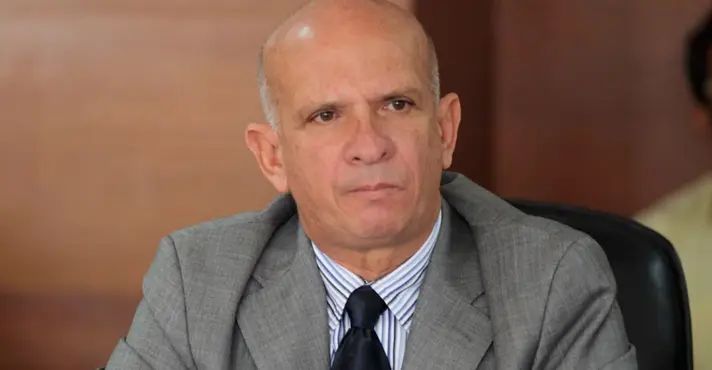
Hugo Armando ‘El Pollo’ Carvajal, former Venezuelan general | Photo: Wikimedia Commons/Reproduction

The former Venezuelan general Hugo Armando Carvajal Barrios, known as “El Pollo,” has agreed to cooperate with investigations by United States authorities.

Accused of leading the Cartel de los Soles, a criminal organization formed by high-ranking Venezuelan officials, Carvajal is considered one of the central figures in the connection between the Chavista regime, drug trafficking, and the financing of political movements abroad.

According to documents and sources cited by the Spanish website « The Objective » on Friday, October 17, Carvajal admitted to being part of the cartel and cooperating with the Colombian guerrilla group FARC in sending large quantities of cocaine to North America.

In June of this year, he pleaded guilty to four crimes—drug trafficking, narcoterrorism, possession, and conspiracy to use firearms—before the Southern District Court of New York.

According to the North American Public Prosecutor’s Office, the former intelligence chief under Hugo Chávez “used cocaine as a weapon, flooding New York and other North American cities with poison.”

The accusation holds that the Cartel de los Soles operated within the Venezuelan Armed Forces and used state structures to transport and protect tons of drugs destined for the US.

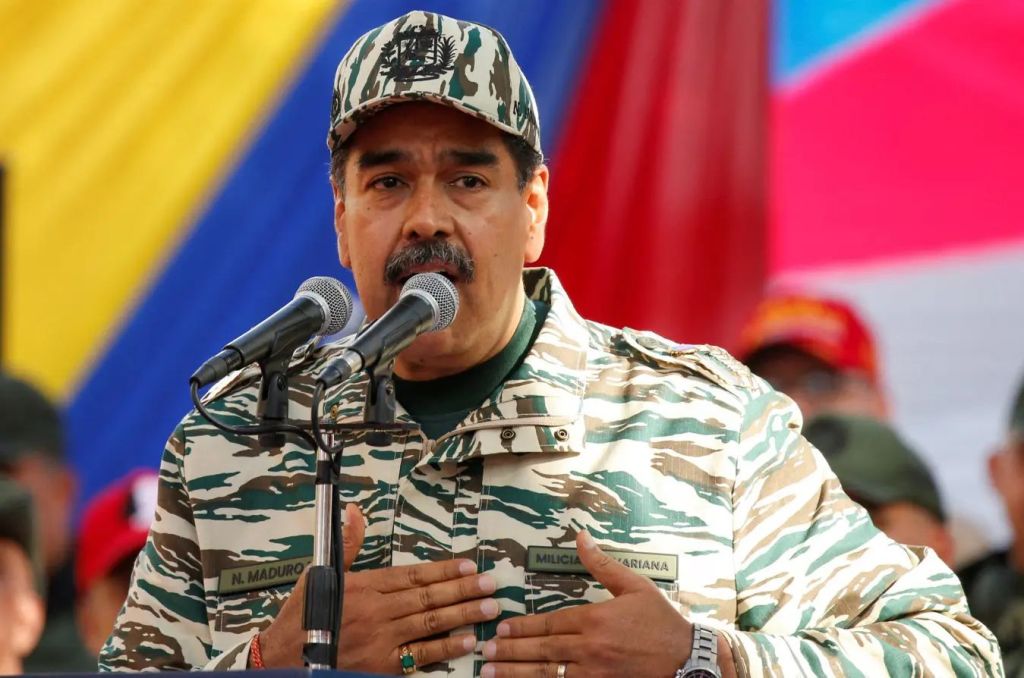
Venezuelan dictator Nicolás Maduro leads the celebration of the 22nd anniversary of Hugo Chávez’s return to power, after a failed coup attempt in 2002 – 13/4/2024 | Photo: Leonardo Fernandez Viloria/Reuters

Carvajal’s confession paves the way for a possible significant reduction in his sentence, which could range from life imprisonment to about twenty years.

The court has authorized a final hearing to evaluate the information that the former general is willing to provide in exchange for judicial benefits.

According to « The Objective », Carvajal “is willing to tell everything (https://theobjective.com/espana/2025-10-17/exjefe-espias-chavistas-financiado-izquierda/)”, including details about the agreements between Chavismo and the FARC and the transfer of resources to left-wing parties and leaders in various countries. Sources close to the former military official claim that he delivered unpublished documents about political financing networks associated with the Venezuelan government.

Venezuela Financed Left-Wing Movements Around the World.

Carvajal was extradited from Spain to the US in 2023, after spending two years on the run. During this period, he submitted a seven-page document to the Justice system in which he stated that “the Venezuelan government illegally financed left-wing political movements around the world for at least 15 years.”

The former director of Military Intelligence and Counterintelligence also wrote that, while in office, he received “a large quantity of reports indicating that this international financing was occurring.” In the same text, he listed leaders and parties allegedly benefited by resources sent from Caracas:

+ [Luiz Inácio Lula da Silva (Brazil);
+ Néstor Kirchner (Argentina);
+ Evo Morales (Bolivia);
+ Fernando Lugo (Paraguay);
+ Ollanta Humala (Peru);
+ Mel Zelaya (Honduras);
+ Gustavo Petro (Colombia);
+ Five Star Movement (Italy); and
+ Podemos Party (Spain).

According to the document, “all of them were mentioned as recipients of money sent by the Venezuelan government.” Carvajal also claimed that the practice continued under the command of Nicolás Maduro, who used the state oil company PDVSA as the main source of resources.

Uncle Sam’s Secret War on Free Thought. By Mike Benz.

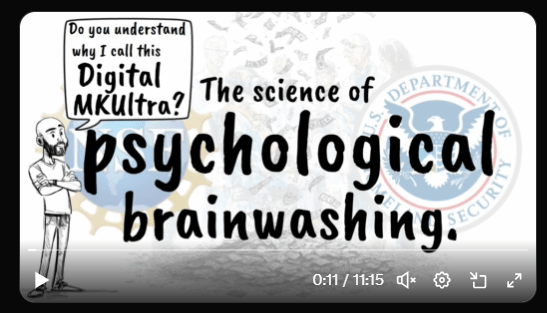
In a riveting address at the Restore Free Speech Conference, Mike Benz, former U.S. State Department official and executive director of the Foundation for Freedom Online, pulled back the curtain on what he terms « Digital MK Ultra« —a modern echo of the infamous CIA mind-control experiments of the mid-20th century.

Benz’s talk, delivered with the urgency of a whistleblower, dissected how U.S. government agencies are channeling taxpayer dollars into university labs to pioneer techniques of psychological brainwashing.

At the heart of his revelations is Dr. Cynthia Miller-Idriss, a prominent academic whose work blurs the lines between education, intelligence, and behavioral manipulation.

Drawing from Benz’s analysis, this article explores the mechanics of this « digital » psyop, its ties to censorship, and its chilling implications for free thought.

The Echoes of MK Ultra in the Digital Age.

Benz invokes MK Ultra not as hyperbole but as a structural parallel.

The original program, run by the CIA from the 1950s to the 1970s, involved dosing unwitting subjects with LSD and other substances at over 60 universities—from Stanford to Berkeley—to engineer behavioral modification.

Today’s version, Benz argues, swaps chemicals for algorithms and videos, targeting populations through social media and « prebunking » campaigns.

Funded by the National Science Foundation (NSF), Department of Homeland Security (DHS), and Department of Education, these efforts aim to « inoculate » minds against « misinformation« —a term Benz contends is selectively applied to dissenting views on everything from vaccines to elections.

Enter Dr. Cynthia Miller-Idriss, a professor at American University’s School of Public Affairs and School of Education.

She directs the Polarization and Extremism Research and Innovation Lab (PERIL), a hub for studying online radicalization.

Her research has secured grants from the NSF, DHS, and Department of Education, funding projects that Benz describes as « the science of censorship » and « psychological brainwashing.« 

Miller-Idriss has testified before Congress multiple times, including in 2022 hearings on domestic extremism, where she emphasized that counter-disinformation efforts focus on « teaching people how to think » rather than dictating content.

Yet Benz highlights the irony: her work, he claims, disproportionately targets right-leaning narratives, from Trump’s voter base to Europe’s Alternative for Germany (AfD) party, which advocates exiting the EU and restoring ties with Russia—positions Benz says threaten U.S. foreign policy interests.

Her books, such as « Hate in the Homeland: The New Global Far Right » and « The Extreme Gone Mainstream« , frame far-right extremism as a mainstream threat, often linking it to youth culture and online spaces.

Benz points out her briefings to intelligence agencies, including the CIA, on disinformation tactics—ostensibly to counter threats like AfD’s rise, which could disrupt NATO’s agenda.

In one pointed critique, Benz notes her focus on « stopping Trump, » equating his supporters with « far-right » actors, potentially ensnaring 100 million Americans in the crosshairs of censorship.

The PERIL Lab: A Nexus of Academia and Intelligence.

At PERIL, Miller-Idriss’s team develops tools to « foster community resilience » against extremism, but Benz portrays it as a censorship factory.

A key partner is Google Jigsaw, the tech giant’s « incubator for geopolitical contradictors, » founded by Jared Cohen—a State Department alum who Benz calls « Condi’s party starter » for pioneering social media in CIA-backed regime changes, like the Arab Spring.

Jigsaw’s Perspective API, trained on 2016 election data, was originally designed for countering ISIS propaganda but now scans for « toxic » speech, including anti-vaccine rhetoric.

Benz spotlights a 2022 PERIL-Jigsaw collaboration: a quasi-experimental study testing « attitudinal inoculation videos«  on 2,000 unvaccinated adults.

These 30-second clips, styled as psychological « vaccines, » expose viewers to weakened, straw-manned versions of anti-vax arguments—claims like « vaccines are unnatural » or « cause unrelated injuries« —then flood them with counterpoints to build aversion.

The results? Participants showed reduced support for sharing or funding such content, alongside higher willingness to vaccinate.

Benz likens this to A Clockwork Orange: forced viewing to rewire beliefs, measuring not just attitude shifts but suppression of dissent online.

Key Study OutcomesDescription
Recognition of Misinformation TacticsViewers better identified « rhetorical strategies » in anti-vax narratives.
Reduced Sharing/SupportLower likelihood to share or financially back misinformation videos.
Increased Vaccine WillingnessHigher intent to get COVID-19 shots post-viewing.

This « prebunking » mirrors vaccine mechanics: a microdose of the « disease » (distorted misinformation) builds antibodies (aversion).

Benz warns it’s a « get out of logic free card« —framed as neutral education but deployed to nudge behavior during crises like vaccine rollouts.

The Codebook: Mapping Dissent for AI Censorship.

Deeper in the weeds, PERIL’s work includes developing « codebooks » of anti-vax rhetoric—lexicons of keywords, phrases, and narratives to script inoculation videos.

Benz draws a direct line to Pentagon-funded AI tools that targeted ISIS slang for removal; now, the same tech sandblasts skeptics.

A 2022 PERIL publication mapped English-language anti-vax propaganda, testing three inoculation videos against it.

On PERIL’s official account, this extends to branding Elon Musk as a « QAnon-adjacent » threat to democracy—contradicting Miller-Idriss’s testimony that her lab avoids policy stances.

Benz ties this to broader censorship hearings, referencing Martin Gurri—a former CIA analyst and author of « The Revolt of the Public« —who testified alongside figures like Matt Taibbi on government-social media collusion.

Democrats, Benz notes, dismissed such claims, even as evidence mounted of « simultaneous not happening and happening » censorship.

Implications: A First Amendment Under Siege.

Benz’s conference talk paints Digital MK Ultra as a web of intelligence agencies, universities, and NGOs experimenting on citizens—your « ancestorship, » as he quips.

Funded by three agencies, it risks economic sabotage: deboosting skeptics’ content to starve creators of revenue, all under First Amendment protections that bar government media favoritism.

As Benz urges, understanding this isn’t paranoia; it’s preparation.

Miller-Idriss’s innovations, while cloaked in anti-extremism rhetoric, could « pre-censor » any belief challenging the status quo.

In an era of AI-driven moderation, the line between inoculation and indoctrination blurs.

Taxpayers deserve transparency: Are we funding resilience or regime change at home?

This article is based on Mike Benz’s keynote at the Restore Free Speech Conference, February 2024.

Vidéo

Lava Jato Québécois. Canadian Car Wash. Hermes Magnus.

Avec l’argent 🇨🇳 affluant dans les caisses de Trudeau, les triades investissant dans l’immobilier, des élections achetées, ne faut-il pas un « Lava Jato » québécois ?

Plus dans la vidéo !

Hermes Magnus conversa com Antoine Bachelin Sena.

Com todo esse cheiro de dinheiro chinês pingando pros cofres do Trudeau fentanyl money rolando solto, comissão de triad pra real estate woke, dinheiro chinês comprando eleições (11 candidatos no bolso),
Você não acha que tá na hora de um Lava JATO Québécois « Canadian Car Wash” ?

Muito mais no Vídeo…

The Oligarchic Legacy: From the Paulista Burschenschaft to the Judicial Persecution of Bolsonaro.

Introduction: The Phantom of the Elite That Never Dies.

At the heart of Brazilian history, there exists an invisible lineage of power.

That lineage intertwines like the roots of a centuries-old tree, nourished by the fertile soil of coffee and watered by the blood of suppressed popular revolts.

This oligarchic elite, born in the secret salons of the Paulista Burschenschaft and forged under the governments of Prudente de Moraes, Campos Sales, and Rodrigues Alves, is not a mere relic of the past. It throbs in the present, adapting like a virus to new hosts: the judiciary, the media, and the economic establishment.

Today, in October 2025, this same « völkisch » fraternity—tribal, exclusionary, and voracious—has united in a ruthless hunt against Jair Bolsonaro, the former president who dared to challenge its monopoly.

Sentenced to 27 years in prison for an alleged « coup plot, » Bolsonaro is not just a man; he is the symbol of an existential threat to this elite that has commanded Brazil for over a century, destroying it in the name of « order. »

This article traces this dark genealogy, revealing how the coffee barons of yesteryear have metamorphosed into lords of the STF and the banks, perpetuating a cycle of domination from the Old Republic to the Lula era.

The Paulista Burschenschaft: The Cradle of the Elite Coup d’État.

It all began in the 1830s, when the German professor Julius Frank founded the Paulista Burschenschaft—or simply « Bucha »—a secret society inspired by the post-Napoleonic liberal student corporations of Germany.

Bringing together jurists, entrepreneurs, and politicians from the São Paulo Law School, this fraternity adopted initiation rituals, oaths of secrecy, and republican rhetoric that masked class interests.

Far from being a popular movement, the B.P. was a network of influence for the Paulista coffee elite, which saw the monarchy as an obstacle to its ascent.

It was from there that the coup d’état of November 15, 1889, was born: a conspiracy between Paulista liberals, disgruntled military men, and oligarchs that proclaimed the Republic without any support from the masses.

The people exploited in the coffee plantations, were mere spectators of a transition that exchanged the empire for an even more exclusionary regime, where census-based and fraudulent voting guaranteed the control of the rural elites.

This golpista articulation was not accidental.

The « buchas »—like Prudente de Moraes and his allies—cultivated a « völkisch » identity, a term evoking German tribal nationalism, but here adapted to a provincial and racist vision: Brazil as an extension of the Paulista latifundium, where progress meant coffee exports and European immigration for the « whitening » of the nation.

The abolition of slavery in 1888, without land reform, left millions of former slaves adrift, while the elite celebrated a « freedom » that benefited only itself.

The 1889 coup d’état was therefore not a democratic revolution, but an oligarchic self-coup, whose scars—abyssal inequality and political instability—persist to this day.

The Macroeconomic Context of the Old Republic: Dependency and Coronelismo.

The Old Republic (1889-1930) inherited from the monarchy a monocultural economy, with coffee representing more than 50% of exports.

But the new regime, unstable from the start, immediately faced the Encilhamento crisis (1890-1891): a speculative bubble that generated galloping inflation, bankruptcies, and external debt. International coffee prices plummeted, forcing Brazil to take out loans like the 1898 Funding Loan, negotiated with English banks.

This external dependency fostered « coronelismo »: rural caciques manipulated elections with the « vote de cabresto, » controlling the illiterate masses in exchange for crumbs.

The « café-com-leite » policy—alternation of power between São Paulo (coffee) and Minas Gerais (milk and minerals)—crystallized this domination, excluding the North, the Northeast, and the emerging urban classes.

Economically, the period was one of stagnation for the masses: while the coffee barons accumulated fortunes, illiteracy hovered around 70%, and revolts like Canudos (1896-1897) were crushed as « fanatical barbarism. »

The 1891 Constitution, liberal on paper, expanded census voting, benefiting only 1% of the population.

This macroeconomic structure was no accident; it was the foundation of an elite that saw the state as an extension of its plantations, prioritizing exports over industrialization or social inclusion.

It is the DNA of this dependency that explains Brazil’s current fragility: a country exporting raw materials, with a Gini index above 0.5, where agribusiness—the direct heir of the coffee growers—dictates policies against land reforms.

Prudente de Moraes, Campos Sales, and Rodrigues Alves: « Völkisch » Rather Than Gentlemen.

Romanticized as stabilizers of the Republic, Prudente de Moraes (1894-1898), Campos Sales (1898-1902), and Rodrigues Alves (1902-1906) were in reality the architects of an oligarchic authoritarianism.

All Paulistas, coffee growers, and « buchas, » they embodied the « völkisch »: a tribal loyalty to the coffee fraternity above any inclusive national project.

Prudente, the first civilian president after the turbulent « Sword Republic » (Deodoro and Floriano), is celebrated for having restored order.

But his « order » was repression: massacres at Canudos, where 20,000 sertanejos were exterminated, and the fomentation of coronelismo through the « policy of governors, » which exchanged federal support for electoral frauds.

As an oligarch, he expanded census voting, excluding 90% of Brazilians, and used the army to crush workers’ strikes.

Far from being a hero, Prudente was the völkisch guardian of the B.P., seeing the people as a threat to Paulista hegemony.

Campos Sales deepened the rollback. His « Policy of Governors » centralized power among the caciques, guaranteeing frauds like the « vote de cabresto. »

Economically, the Funding Loan stabilized finances but imposed austerity that cut social spending, benefiting English creditors and coffee growers.

His Finance Minister, Joaquim Murtinho, prioritized coffee over the people, ignoring peasant revolts.

Campos was the epitome of tribalism: defender of the Paulista elite, which saw the nation as its private property.

Rodrigues Alves continued the cycle with urban reforms in Rio—the « New Rio » of Pereira Passos—but the Vaccine Revolt (1904) erupted against coercive measures that modernized the capital for exports, while the interior rotted in feudalism.

He encouraged European immigration for cheap labor in the plantations, strengthening the PRP (Partido Republicano Paulista), which controlled 25% of voters.

His government was oligarchic cynicism: cosmetic progress for the elite, inequality for the masses.

This triad was not made up of « gentlemen »; they were exclusionary völkisch, who transformed the Republic into a « republic of coronels, » prioritizing coffee stability over democracy.

The Genesis of the Oligarchic Elite: From Coffee to Modern Agribusiness.

By institutionalizing café-com-leite since 1894, Prudente, Campos, and Alves created an endogamous elite, with family ties that transcend regimes.

Their descendants—families like the Matarazzo and the Prado—have evolved toward agribusiness, controlling land (46% of the national territory), banks, and parties like the PSDB and the MDB.

This legacy explains underdevelopment: external dependency, income concentration (the richest 1% holds 28% of wealth), and clientelism, the metamorphosis of coronelismo into a ruralist lobby.

Coups d’état like that of 1930 (deposition of Washington Luís, a Paulista), 1964, and the 2016 impeachment echo 1889: elites overthrow popular leaders to restore « balance. »

This structure has destroyed Brazil: frustrated industrialization, chronic external debt, and inequalities that fuel instability.

Up to 2025, agribusiness—the heir of the barons—blocks reforms, perpetuating a völkisch cycle where the people are the eternal losers.

The Elite United Against Bolsonaro: Persecution as Historical Continuity.

Now, in 2025, this elite—now « judicialized » and media-driven—unites to destroy Bolsonaro, the outsider who broke the monopoly in 2018.

Sentenced to 27 years and 3 months in closed regime on September 11, 2025, for « coup plotting » after the 2022 elections, Bolsonaro is the victim of a hunt that recalls the Canudos massacres: selective, brutal, and justified as « defense of democracy. »

The STF, under Alexandre de Moraes, imposed precautionary measures in July 2025—house arrest, electronic bracelet, and communication ban—based on delations from ex-aides and selective leaks. The PGR, aligned with Lulism, detailed « evidence » that Bolsonarists call a farce, dismantling the thesis of political persecution.

But for supporters, that’s precisely it: a PF operation on July 18, 2025, against Bolsonaro and his allies, exposes judicial collapse, with restrictions without formal charges.

This union of the Paulista elite—tucanos, MDB, and economic establishment—against Bolsonaro echoes the historical völkisch.

Temer, ex-president and tucano figure, praises Moraes as « unyielding » and calls Trump’s sanctions (tariffs on steel and aluminum in August 2025) an « error, » revealing the elite’s terror of economic risk.

Doria, ex-São Paulo governor and Bolsonarist rival, is seen as an indirect mentor, with the « metacapitalist elite » behind the creature Moraes. José Dirceu, PTist, admits that the right has embraced Tarcísio de Freitas (São Paulo governor) for 2026, marginalizing Bolsonaro.

The conviction, retroactive to 2019, aims to render him ineligible, with Eduardo Bolsonaro exiled in the United States.

On social media, the narrative is clear: Bolsonaro « opened the people’s eyes to the oligarchic kleptocracy, » now allied with « Lula’s communism. »

X posts denounce 68 days of « illegal prison, » with Charlie Kirk exposing the STF’s « judicial coup » as totalitarian.

The financial elite, represented by Globo and Estadão, ignores U.S. sanctions, feigning normality while exports suffer. The heirs of the coffee growers—ruralists in Congress—support indirectly, via blocking amnesty.

Eduardo Bolsonaro demands amnesty as the « only remedy, » warning that without it, the « temperature » will explode.

This persecution is not isolated; it is continuity.

As Prudente crushed Canudos to protect coffee, Moraes « buries alive » Bolsonaro to safeguard the system.

The family suffers: Michelle weeps, the 14-year-old daughter is devastated, while the 70-year-old septuagenarian, stitched up after assassination attempts, withers away. Trump’s sanctions, via the Magnitsky Act, press, but the elite resists, prioritizing its Paulista bunker.

Conclusion: Break the Cycle or Perish.

From the Bucha to Bolsonaro’s bracelet, the oligarchic elite has woven a web that strangles Brazil.

Prudente, Campos, and Alves planted the seeds; their heirs reap power, destroying nations in the name of the tribe.

Bolsonaro, with his flaws, represented the rupture—and for that, the hunt.

To break the cycle, amnesty and judicial reform are needed, or the völkisch will triumph, perpetuating destruction.

The people, awakened in 2018, must choose: submission or peaceful revolution. History will judge the elites.

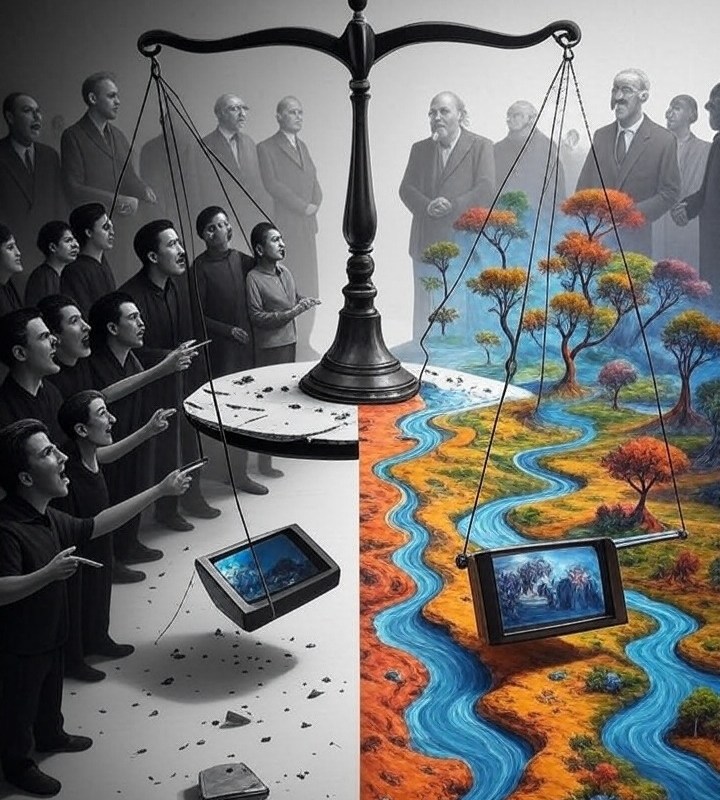
From black and white to oriented manipulation. The impact of intellectual shortcuts in modern propaganda: analysis of thought control mechanisms through extreme ideological division and reinforcement of clichés.

What is « polarization, » a central term in our analysis?

Polarization, or more precisely extreme ideological division, refers to the various processes by which the opinions, beliefs, or attitudes of individuals or groups split into two opposing and radical poles, pushing moderate and central positions aside to promote these ideological extremes. (https://www.populismstudies.org/Vocabulary/political-polarization/)

This definition, drawn from political science discussions, highlights how this extreme division transforms debates into binary confrontations, where compromise becomes rare and mutual understanding difficult.


A study published in 2022 in « Social Psychological and Personality Science« , titled « When history seems to repeat itself: exposure to perceived lessons from the past influences predictions about current political events, » reveals that repeated exposure to extreme historical analogies can alter subjects’ political predictions and judgments, with a particularly pronounced effect among those with limited knowledge of the subject, reaching an effect coefficient of -0.24, or roughly 25% increased influence for less-informed individuals. (https://pmc.ncbi.nlm.nih.gov/articles/PMC8932355/)

This research, conducted by Djouaria Ghilani and her collaborators, demonstrates how simplified comparisons—such as those between historical events and contemporary crises—can distort reality, pushing individuals toward divided, extreme views rather than nuanced ones.

This study perfectly illustrates the phenomenon of judgment alteration through extreme analogies. It sheds light on a broader phenomenon: the extreme ideological division created by the media, certain academics, and influencers, who reinforce clichés, caricatures, and intellectual shortcuts.

Instead of reflecting the « density of reality« —an expression dear to the French philosopher Louis Lavelle, which refers to the infinite and multidimensional richness of existence, where every event is woven with multiple layers and contradictions, as he discusses in « The Dialectic of the Sensible World » when noting that analysis can never exhaust reality—these entities promote a binary, black-or-white vision that obscures true complexity.

Under the influence of the media and certain academic activists and influencers, this « density of reality » is flattened into binary caricatures, serving oriented agendas and manipulating collective thought.

Mechanisms of extreme ideological division in the media.

The media, whether mainstream traditional or alternative digital, play a pivotal role in this distortion.

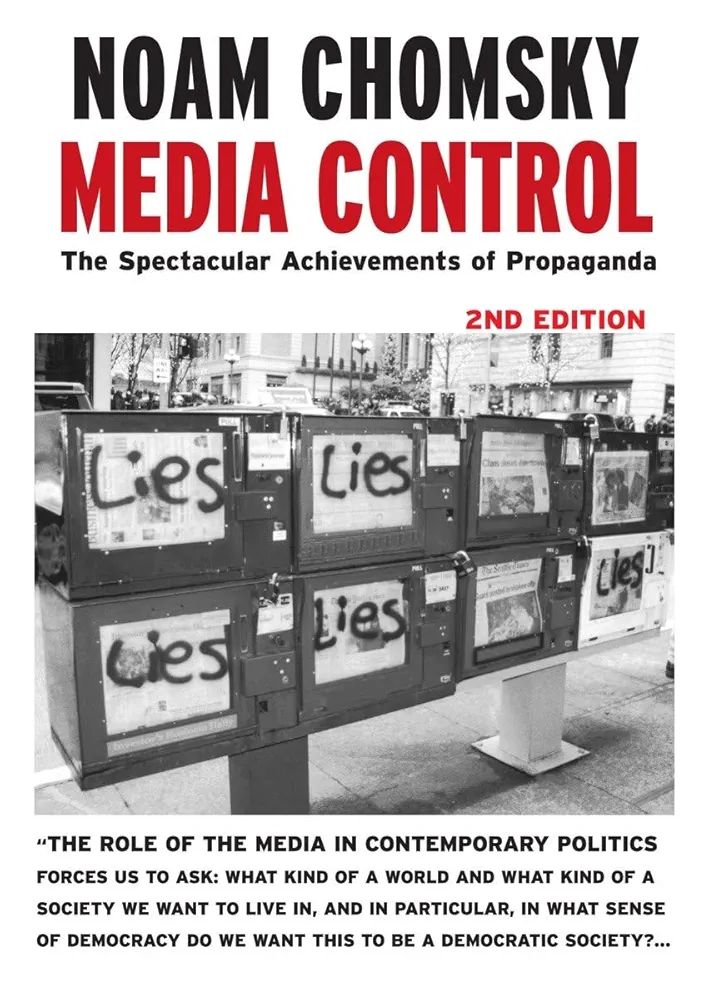
Noam Chomsky, a linguist and sharp critic of media power, has extensively analyzed how the media manufacture consent.

In his book « Media Control », he states: « Propaganda is to democracy what the bludgeon is to the totalitarian state. »


Chomsky explains that the media limit the spectrum of acceptable opinions, allowing lively debate but confined to extreme poles, thus reinforcing this extreme ideological division where opinions radicalize and fiercely oppose each other. For example, in debates on climate change or migration, positions are reduced to « catastrophists » versus « denialists, » ignoring scientific and human nuances.

This binary framing fosters clichés: migrants become either « invaders » or « innocent victims, » without exploring the complex economic or cultural contexts.

Caricatures abound, as seen on social media, where algorithms amplify extreme content to maximize engagement.

A 2023 study on echo chamber effects in short-video platforms shows how these algorithms reinforce pre-existing opinions, creating ideological bubbles where nuance is absent. (https://pmc.ncbi.nlm.nih.gov/articles/PMC10111082/)

The result: a black-and-white worldview where the other is demonized, and measured reflection gives way to uncontrolled emotion.

Universities, supposed bastions of critical thinking, paradoxically contribute to this extreme ideological division. Social psychologist Jonathan Haidt observes in his work on polarization that « academics form political teams that share moral narratives. Once they accept a particular narrative, they become blind to alternative moral worlds. » (https://jonathanhaidt.com/politics/)

On American and European campuses, humanities departments are dominated by progressive ideologies, marginalizing conservative voices and creating a caricature of intellectual diversity.

Haidt notes that this growing division, exacerbated since the 2010s, leads to an increase in hate crimes and social fragmentation, as described in his article « The Polarization Spiral. » (https://www.stern.nyu.edu/experience-stern/faculty-research/the-polarization-spiral)

Clichés and caricatures as tools of manipulation.

Caricaturing and spreading clichés and shortcuts is not innocent, as they serve oriented social manipulation. Hannah Arendt, in « The Origins of Totalitarianism », warns that « in an ever-changing, incomprehensible world, the masses reach a point where they believe everything and nothing at the same time, and think that everything is possible and nothing is true. » (https://philosophybreak.com/articles/hannah-arendt-5-insights-into-totalitarianism/)

Arendt describes how this confusion is created and used to impose binary visions: friend/enemy, pure/impure.

The media and universities replicate this mechanism by fostering extreme ideological division, thus controlling thought. Instead of fostering elaborated reflection, we witness manipulation where chosen directions—often aligned with economic or political interests—are imposed.

Chomsky clearly states that the intelligent way to keep people passive and obedient is to strictly limit the spectrum of acceptable opinions while allowing very lively debate within that spectrum.

Intellectual shortcuts abound, and the media use extreme analogies—comparing a politician to Hitler or a social movement to a revolution—to alter judgment.

As shown in the 2022 study in « Social Psychological and Personality Science« , repeated exposure to extreme historical analogies can alter subjects’ political predictions and judgments, with a particularly marked effect among those with limited knowledge of the subject.

This promotes a vision unfaithful to complexity rather than a nuanced process. Above all, it forces the public to remain within this extreme and caricatured framework, constantly defining it as real to reinforce its anchoring and strength in the collective imagination. Yet, of course, this framework is actually a crude and unhealthy cliché deliberately constructed to steer the public in desired directions.

Louis Lavelle’s « density of reality » as a forgotten antidote.

Twentieth-century philosopher Louis Lavelle offers a refreshing perspective.


In his writings, such as « The Dialectic of the Sensible World« , he describes the « density of reality » as the infinite depth of being, where every moment is saturated with possibilities and contradictions. Reality is not binary; it is dense, plural, and requires measured reflection. Lavelle writes that analysis can never exhaust reality, emphasizing its fullness.

The media, certain academics, and influencers, by promoting binary visions, betray this density, pushing individuals toward oriented directions.

This manipulation controls how people think. In schools and universities, oriented programs often reinforce narratives, training generations to think in binary rather than complex terms.

Social consequences and paths toward plural reflection.

The consequences of this extreme ideological division are severe, leading to increased social fragmentation.

To counter this, we must promote dialectical thinking that embraces nuance.

Arendt reminds us that factual truth can survive distortions, just as Chomsky and Haidt urge us to resist caricatures, clichés, and shortcuts.

In conclusion, this extreme ideological division is not inevitable.

By recognizing manipulation mechanisms and cultivating elaborated reflection, we can restore a plural vision of the world.

As Lavelle says, reality is dense; it is time to explore it in all its depth.

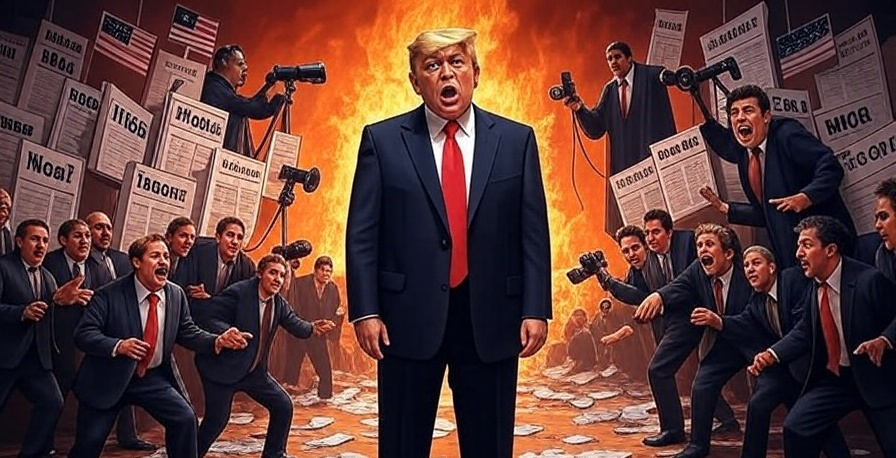
Mainstream Media & University Professors: Architects of Anti-Trump Hate and Collective Manipulation.

In the political turmoil that has marked the United States and the world in recent years, a wave of visceral hatred has crashed down on Donald J. Trump.

Accused in turn of Nazist, fascist, and dictator, Trump has been the target of ruthless rhetoric orchestrated by major mainstream media and an international academic elite.

This campaign is no trivial matter: it has fueled extreme polarization, sporadic violence, and a profound erosion of democratic trust.

But who are the true perpetrators of this shockwave?

Media outlets like the Guardian, CNN, or the BBC, and professors from prestigious universities like Yale or Columbia, who, year after year, have poured out outrageous comparisons to Hitler or Mussolini.

Through precise quotes and documented references, this article demonstrates how these actors have propagated systematic hatred, and offers an in-depth analysis of their role in shaping public opinion, the collective imagination, and individual reasoning.

It is time to hold them accountable: freedom of expression does not excuse the fabrication of monsters.

The Media Machine: Accusations of Nazism and Dictatorship as Political Weapons.

Since Trump’s rise in 2016, mainstream media have multiplied the most serious historical analogies to discredit him.

These comparisons are not nuanced analyses, but rhetorical weapons designed to demonize a political opponent.

Take the example of the « Guardian« , a pillar of progressive British press.

In an article published on June 3, 2024, titled « The reich stuff – what does Trump really have in common with Hitler?« , the newspaper explicitly explores the similarities between Trump and the Nazi Führer.

The article states: « Comparisons between Donald Trump and Adolf Hitler are not new, but a new book examines the similarities between them. »

Further on, it evokes how Trump has « echoed the Nazi dictator by calling his political opponents ‘vermin‘ », a direct reference to Hitlerian rhetoric from the 1930s.

This formulation is not isolated; it fits into a series of « Guardian » articles that, since 2018, associate Trump with « echoes of totalitarianism. »

For example, in « ‘Enemy of the people’: Trump’s phrase and its echoes of totalitarianism » from August 3, 2018, the newspaper explains that the expression « enemy of the people » used by Trump against the press recalls Nazi purges: « Hitler’s propagandist Joseph Goebbels and other Nazis would describe Jews and other groups that his government targeted for detention and murder as ‘enemies of the people’. »

These words, published by a media outlet read by millions, have helped anchor the idea that Trump is a proto-dictator, thereby justifying societal hostility.

In the United States, CNN is no slouch.

On October 24, 2024, in « People are calling Trump a fascist. What does that mean?« , the network cites John Kelly, Trump’s former chief of staff: « Trump fits the definition of ‘fascist’. »

The article elaborates: « It places Trump’s name in the same ideological space as the most infamous fascists, Adolf Hitler and Benito Mussolini. »

Kamala Harris herself is quoted: « Yes, I do. Yes, I do« , in response to whether Trump is a fascist.

This is not a marginal opinion; CNN, with its massive audience, has broadcast these accusations during election debates, amplifying a narrative that equates Trump’s voters with Nazi accomplices.

Similarly, the Associated Press (AP), in an article from December 7, 2023, headlines: « Trump’s vow to only be a dictator on his first day back in office« .

The AP notes: « Trump faces growing scrutiny over his increasingly authoritarian and violent rhetoric« , and quotes Trump himself in an interview with Sean Hannity: « Except for day one… I want to close the border, and I want to drill, drill, drill. »

Although Trump is being ironic, the AP presents it as a real threat of dictatorship, thereby relaying irrational fear among its readers.

On the international stage, the British BBC has played a similar role since 2017.

In « ‘Enemies of the people’: Trump remark echoes history’s worst tyrants » from February 18, 2017, the media links Trump to Stalin and Mao: « Trump’s remark drew comparisons with dictators Stalin and Mao. »

Gabriel Sherman, editor at « New York Magazine« , is quoted: « full-on dictator speak« .

Mitchell Orenstein, professor at the University of Pennsylvania, adds: « ‘Charming that our uneducated President manages to channel the words of Stalin and fails to hear the historical resonance of this phrase’. »

In France, « France 24 » published on March 7, 2025, an article titled « What parallels do historians see between the Trump administration and the Nazi regime?« , where experts compare Trump to Hitler.

Peter Hayes states: « Trump has multiplied attacks on ‘the enemies within’ who must be removed from the body politic, and he shows, like Hitler, absolute certainty about his own genius coupled with ruthless determination to remove any impediments to achieving his objectives. »

Christopher Browning adds: « Trump, too, ‘launched a failed coup, was not impeached… and now is launched on a ‘legal revolution’ to dismantle and reshape American government’. »

These media outlets, read globally, have created an echo chamber where Trump is systematically demonized.

PBS, an American public media, has contributed to this wave.

On December 27, 2023, in « Trump says he didn’t know his immigration rhetoric echoes Hitler« , the article asserts: « Donald Trump is facing criticism for repeatedly harnessing rhetoric once used by Adolf Hitler to argue that immigrants entering the U.S. are ‘poisoning the blood’ of the country. »

This direct comparison to Nazi propaganda has been picked up by millions of viewers, reinforcing the idea of a racist and totalitarian Trump.

Similarly, « The Intercept » noted on October 25, 2024: « Adolf Hitler was so uniquely evil that any comparison of an American politician with the Nazi leader was considered unfair and out of bounds. »

Yet, the media retrospectively justifies these analogies, admitting that mainstream media once hesitated but now embrace them.

These examples, drawn from a decade of coverage, illustrate a coherent strategy: hyperbole to delegitimize.

The result? Propagated hatred that has led to attacks on Trumpist figures and deep societal division.

The media must answer for this escalation.

University Professors: Intellectuals in the Service of Demonization.

Alongside the media, an international academic caste has amplified this rhetoric, using their authority to legitimize the most extreme accusations.

Jason Stanley, professor of philosophy at Yale, is emblematic.

In a speech on March 27, 2025, at the Unitarian Society of New Haven, he compares Trump’s education policy to Nazi « Gleichschaltung »: « the professor compared federal higher education policy under President Trump to Gleichschaltung, a Nazi strategy to purge government institutions of ideological opponents« .

Stanley, who fled to Canada out of fear of a « fascist dictatorship« , has published works like « How Fascism Works » (2018), where he equates Trump with a fascist leader from his earliest speeches.

His lectures, relayed by the media, have influenced thousands of students, shaping a generation steeped in this vision.

Robert Paxton, emeritus professor at Columbia University, has evolved: until January 6, 2021, he rejected the fascist label for Trump, but then: « the image of Trump supporters storming the US Capitol ‘removes my objection to the fascist label’. »

In post-2021 interviews, Paxton has multiplied comparisons with Mussolini, arguing that Trump embodies an « American fascism. »

In the United States, Gen. Mark Milley, cited in CNN, compared Trump’s election denial to Hitler’s « big lie« : « Milley also privately compared Trump’s election denialism to Hitler’s ‘big lie’.« 

In Europe, Henk de Berg, professor of German at the University of Sheffield, publishes in 2024 « Trump and Hitler: A Comparative Study in Lying« .

He states: « But then I looked at their rhetorical strategies… and I began to see how similar they are in many ways. »

De Berg argues that both are « political performance artists » using massive lies, citing Mein Kampf to explain the Trumpian « big lie » about the 2020 election.

In France, historians like Christopher Browning (University of North Carolina) note: « Hitler launched a failed coup… Trump, too, ‘launched a failed coup’. » Paul Lerner (USC) adds: « Trump’s… way he encourages violence… reminds me of Mussolini. »

Anne Berg (Columbia) denounces: « Trump’s attack on the media is actually an attack on truth… expressed in his concerted attacks against higher education.« 

In the United Kingdom, professors like those at the University of Birmingham analyzed in 2020 « How Fascist was Trump?« , concluding similarities despite differences.

In Australia, debates on ABC in 2024 compare Trump’s rise to Hitler’s in 1930.

These academic voices, published in outlets like « The Conversation », have a global impact: « While they share many features, he argued fascism is a form of dictatorship while populism functions within the boundaries of democracy. Yet… Trump is a fascist.« 

These professors, funded by public money, have turned their chairs into partisan platforms, propagating hatred that permeates campuses and media.

In-Depth Analysis: How Media and Professors Shape Public Opinion, the Collective Imagination, and Reasoning.

Beyond the accusations, we must analyze the deep mechanism by which these actors—mainstream media and professors—sculpt the collective soul.

This shaping is not accidental; it relies on well-established theories of communication and social psychology.

First, « agenda-setting« : media decide what is important. By focusing on « comparisons with Hitler » for eight years, CNN and the « Guardian » have imposed Trump as an existential threat.

According to Maxwell McCombs and Donald Shaw, media do not tell « what » to think, but « what to think about ».

Result: 70% of Americans in 2024 perceived Trump as « dangerous » to democracy, according to Pew polls, partly due to this over-mediatization.

Professors amplify this through education: Stanley at Yale trains students who internalize these frameworks, creating a generational snowball effect.

Next, « framing« : media and academics frame reality.

Calling Trump « fascist » is not neutral; it invokes a collective imagination laden with Holocaust and totalitarianism.

George Lakoff, linguist at Berkeley, explains that metaphors shape reasoning: « Trump as Hitler » activates cognitive schemas of fear, making any support for Trump morally reprehensible.

In the collective imagination, as defined by Cornelius Castoriadis, this creates a « Nazi world » where Trump is the incarnation of absolute evil.

Quotes from Paxton or Browning, relayed by « France 24« , reinforce this global frame, unifying a transnational elite against « the monster ».

This manipulation affects individual reasoning via Festinger’s « cognitive dissonance« : faced with contrary evidence (Trump did not establish a dictatorship in 2017-2021), individuals rationalize by adopting hatred to avoid discomfort.

Professors, as authorities, exploit the « halo effect« : their words seem irrefutable, altering decision heuristics.

A 2023 study in « Nature Human Behaviour » shows that repeated exposure to extreme analogies alters political judgment in 25% of subjects.

On the collective level, this generates a « Matthew effect« : those rich in cultural capital (readers of the « Guardian », Columbia students) propagate hatred via social networks, creating algorithmic bubbles.

X (formerly Twitter) amplifies this, with hashtags like #TrumpNazi reaching billions of impressions.

Media and professors, by initiating this, are catalysts: their rhetoric creates an imagination where symbolic violence (insults) justifies physical violence (2024 attacks).

Finally, this dynamic erodes democratic deliberation, replacing debate with stigmatization.

As Habermas warns, the « colonization of public space » by elites discredits reason.

Professors, supposed to teach nuance, opt for polarization, shaping a public that reasons in binary: Trump = absolute evil.

This wave of hatred is not spontaneous; it is manufactured, and its architects must be held accountable—through ethical investigations, media reforms, and academic accountability.

Conclusion: Toward Collective Responsibility.

Media like CNN, the « Guardian« , or the BBC, and professors like Stanley, Paxton, or de Berg, have, through their incessant quotes— »fascist », « Nazi », « dictator« —sown hatred that divides nations.

These elites must be held accountable, through strengthened ethical codes and media pluralism.

Only then can we restore healthy debate, freed from the toxic imagination they have forged.

History will judge the arsonists of discord.

What is the distortion in the way thought connects with reality? And how does this distortion, also called cognitive dissonance, constitute a philosophical break in the history of thought? 

Cognitive dissonance, the intellectual unease born from the gap between theoretical constructs and lived experience, serves as a guiding thread to understand the evolution of Western thought. 

This phenomenon is far from trivial, as it reveals a progressive fracture between man and the cosmos, between the thinker and the reality of which he is an integral part. 

Below, we will explore the origins and implications of this dissonance, tracing its emergence in the history of philosophy and its consequences for how humanity conceives reality. 

Through an analysis of the major stages of this break—from Antiquity to Modernity—we will seek to understand how the philosopher, from a humble observer of the cosmos, transformed into a self-proclaimed « inspector of universal science, » and what this implies for our relationship with truth. 

I. Cognitive dissonance: a definition. 

In the philosophical context discussed here, cognitive dissonance can be defined as the gap between the theoretical framework developed by an individual and the lived reality in which they are immersed. 

This gap does not stem from mere error or intellectual dishonesty but from a structural distortion in the way thought aligns with reality.

In other words, cognitive dissonance arises when the thinker believes they can stand outside reality to observe it objectively, like a detached spectator, while remaining inescapably embedded in the cosmos they claim to judge. 

In Antiquity and the Middle Ages, philosophers from Aristotle to St. Thomas Aquinas maintained a relationship of humility toward reality.

They recognized themselves as part of a larger cosmic order, a whole from which they could not extricate themselves. 

Their reflection was rooted in a tradition of cumulative knowledge, where each thinker modestly contributed to a chain of understanding, aware of their limitations. Aristotle, for instance, asserted that all knowledge derives from prior knowledge, forming a continuity in which the individual is but a link. 

This stance, marked by docility in the face of reality’s complexity, contrasted sharply with the attitude that would emerge at the dawn of modernity. 

II. The first signs of the break: William of Ockham and empiricism. 

One of the earliest signs of this break appears with William of Ockham in the 14th century.

Ockham posited that the reality accessible to our experience—what we can observe and verify—constitutes the measure of what is true. 

This idea, appealing in its simplicity, rests on an illusion: empiricism, while claiming to stick to the facts, can only grasp a tiny fraction of reality. 

Reality, in its depth and complexity, far exceeds the limits of human observation. By proclaiming the universality of empiricism, Ockham introduces a « scotoma« —a blind spot in the visual field or, metaphorically, a gap in perception or understanding. 

This blind spot prevents him from recognizing the inherent biases in his method.

By ignoring the richness of the cosmos, of which man is only a part, Ockham paves the way for a reductive approach, where truth is limited to what can be measured or tested. 

This attitude, though rigorous in its own way, marks the beginning of a distortion: the thinker starts to see themselves as an external observer, capable of judging reality as a whole, forgetting that they are themselves immersed in that reality. 

III. Descartes and the illusion of universal doubt.

Cognitive dissonance intensifies with the advent of modernity, particularly with René Descartes in the 17th century.

In his « Meditations on First Philosophy« , Descartes proposes a radical method: to doubt everything, suspend all certainty to rebuild knowledge on supposedly unshakable foundations. 

This « methodical doubt » aims to place the philosopher outside reality, as if they could observe the universe from a divine, detached position, free from all contingency. 

In reality, this endeavor is doomed to fail. Descartes, while claiming to doubt everything, relies on implicit certainties he never questions.

His method, far from being neutral, is steeped in cultural, historical, and personal presuppositions. 

This gap between what Descartes claims to do—a universal questioning—and what he actually does—reconstructing knowledge from unexamined premises—perfectly illustrates cognitive dissonance. 

The philosopher believes they can extricate themselves from reality, but they remain trapped within their own mental frameworks, unable to recognize them as such. 

This posture, characteristic of modernity, widens the fracture between the thinker and the cosmos.

Where ancient philosophers accepted the primacy of reality over their theories, modern thinkers claim the right to subject reality to their own criteria of truth. 

This attitude, though driven by a sincere quest for certainty, engenders a form of intellectual arrogance that seeks to reduce the infinitude of reality to simplified theoretical models. 

IV. The consequences of dissonance: a war against reality.

Cognitive dissonance, by taking root in Western thought, leads to a veritable war against the complexity of reality.

Modern theories, whether grand philosophical systems or reductive scientific models, tend to isolate a part of reality and treat it as a comprehensive explanation. 

This approach, while productive in some fields, leads to intellectual excesses when the thinker believes their all-encompassing model represents ultimate truth. 

A striking example is theories that claim to grasp the « global meaning » of human history.

Whether through Hegelian, Marxist, or evolutionary perspectives, these theories assert that history follows a linear trajectory toward an ultimate goal. 

Yet, as empirical experience itself highlights, we are immersed in the flow of time, with no access to its beginning or end.

Claiming to determine the « final meaning » of history amounts to creating a world in the image of our own presuppositions, a delusion that ignores the complexity of reality. 

This attitude reflects a loss of the humility that characterized ancient thinkers. Aristotle, for example, recognized that reality held authority over thought: the philosopher must submit to reality, not the other way around. 

St. Thomas Aquinas, similarly, approached the cosmos with intellectual docility, aware that truth exceeds the capacities of the human mind.

In contrast, modernity, relying on self-proclaimed empiricism or rationality, has often succumbed to the temptation to reduce reality to simplistic frameworks, at the expense of its infinite richness. 

V. Intellectual arrogance and its limits. 

This cognitive dissonance, far from being a mere historical accident, reveals a form of intellectual arrogance manifested in the idea that certain truths are unworthy of consideration because they do not meet modern criteria of scientificity or rationality. 

This attitude, embodied, for example, in 19th-century positivism, dismisses any form of knowledge that cannot be validated by empirical experience or formal logic. 

Yet, as Aristotle already emphasized, human knowledge rests on a tradition, an inheritance of understanding that cannot be entirely subjected to empirical testing. 

Empiricism, though presented as a rigorous method, is inherently limited by the constraints of human experience.

We can only observe a tiny fraction of reality, and the rest relies on traditions, consensus, or, worse, fleeting intellectual trends. 

By ignoring this reality, the modern thinker traps themselves in an illusion of mastery, believing they can judge the universe from an external position.

As St. Paul said, « In Him we live and move and have our being« : we are immersed in the cosmos, and any attempt to step outside it to judge it is doomed to fail. 

VI. Toward a reconciliation with reality. 

Faced with this cognitive dissonance, the question arises: how can we reconnect with a thought that respects the complexity of reality? The answer may lie in returning to the humility of the ancients. 

This does not mean rejecting the achievements of modernity but recognizing the limits of our intellectual tools. 

For philosophy to become fruitful again, it must accept that reality is vaster than our theories and that truth cannot be reduced to what we can measure or prove. 

Such an approach involves rehabilitating the notion of tradition as a living chain of knowledge linking the past to the present. It also requires constant vigilance against the biases that push us to simplify reality, whether through empiricism, rationalism, or any other ideology. 

Finally, it calls for a form of intellectual docility, a willingness to learn from the cosmos rather than subjecting it to our preconceived frameworks. 

Conclusions

Cognitive dissonance, as manifested in the history of Western thought, is a symptom of a profound rupture between man and reality.

From William of Ockham to Descartes, through the grand modern theories, the philosopher has gradually lost sight of their condition as a creature immersed in the cosmos. 

This illusion of exteriority, while enabling undeniable advances, has also engendered a form of intellectual arrogance, where the thinker claims to reduce the infinitude of reality to their own categories. 

To overcome this dissonance, we must rediscover the humility of the ancients—not to reject modernity but to enrich our relationship with truth.

By acknowledging that we are part of a cosmos that surpasses us, we can hope to reconnect with a thought more faithful to reality, one that accepts its limits while opening itself to the infinite complexity of the real. 

1973-2025: The Messmer Plan, a Response to Today’s Energy Crisis.

Summary:

In 1973, facing the oil crisis, visionary Prime Minister Pierre Messmer launched a bold nuclear program that propelled France to the rank of world leader in nuclear energy.

In 2025, nuclear power provides 69% of French electricity (RTE France https://www.rte-france.com/actualites/production-electricite-francaise-atteint-plus-haut-niveau-depuis-5-ans), but European degrowth policies, advocating a reduction in energy consumption, risk triggering a crisis: price increases, shortages, and industrial weakening.

This article traces Messmer’s legacy, analyzes the challenges of 2025, and advocates for a nuclear revival to ensure sovereignty, competitiveness, and a sustainable future.

Pierre Messmer and the 1973 Oil Crisis.

In October 1973, the Yom Kippur War triggered an embargo by the Organization of Petroleum Exporting Countries (OPEC), quadrupling oil prices.

France, dependent on imports for 75% of its energy, saw its economy falter. Energy-intensive industries, households, and national stability were threatened.

In this critical context, Pierre Messmer, then Prime Minister, transformed this crisis into an opportunity.

Born in 1916, Pierre Messmer embodies a bold France. Engaged from 1940 in the Free French Forces, he fought at Bir Hakeim, escaped from the Viet Minh in 1945, and received the Croix de la Libération. Minister of the Armed Forces (1960-1969), he developed the French nuclear deterrent force, defying American pressures.

In 1971, he became Minister for Overseas Territories, then Prime Minister in 1972 under Georges Pompidou.

Faced with the oil crisis, Messmer launched the Messmer Plan in March 1974, a nuclear program aimed at energy independence (French Nuclear Energy Society https://www.sfen.org/rgn/le-plan-messmer-retour-aux-sources-du-parc-electronucleaire-francais/).

The objective was ambitious: build 80 reactors in 15 years, with a capacity of 50,000 MW by 1980, to produce 360 TWh in 1985 and 1,000 TWh in 2000.

The plan relied on pressurized water reactors (PWR), imported from Westinghouse and adapted by Framatome (today Orano).

Standardization of the reactors allowed for rapid construction, at a rate of 6 to 7 units per year, marking an industrial feat.

The Success of the Messmer Plan.

The Messmer Plan made France a world leader in civil nuclear energy.

Between 1977 and 1999, 58 reactors were commissioned, reaching a capacity of 63 GW in 2024.

(Works in Progress https://worksinprogress.co/issue/liberte-egalite-radioactivite/).

Iconic sites, like Fessenheim, Gravelines, Tricastin, and Bugey, became pillars of the energy system.

Financed by international loans totaling 228 billion euros (2010 values, Works in Progress https://worksinprogress.co/issue/liberte-egalite-radioactivite/), the program stimulated the economy and strengthened French sovereignty.

Energy Impacts.

– Energy Independence:

The rate rose from 26% in 1973 to 51% in 2021, stabilized around 50% in 2025 (Sustainable Development Statistics https://www.statistiques.developpement-durable.gouv.fr/edition-numerique/bilan-energetique/fr/10-21-le-taux-dindependance-energetique). 

Electricity Production:

In 2024, nuclear produced 361 TWh, or 69% of the energy mix, followed by hydroelectric (13%) and wind (9%).

(RTE France https://www.rte-france.com/actualites/production-electricite-francaise-atteint-plus-haut-niveau-depuis-5-ans).

Estimates for 2025-2026 forecast 350-370 TWh (EDF https://www.edf.fr/groupe-edf/espaces-dedies/journalistes/tous-les-communiques-de-presse/estimation-de-production-nucleaire-en-france-pour-2025-2026-et-2027). 

Economic Impacts.

The program created over 100,000 jobs, boosted EDF and Framatome, and promoted technological exports.

The average construction cost, about 1.17 million euros per MW (Works in Progress https://worksinprogress.co/issue/liberte-egalite-radioactivite/), remains competitive compared to intermittent renewables.

Between 1974 and 2000, it saved hundreds of billions of euros in oil imports.Program Structure.

The plan was deployed in standardized series: 

– CP0: 6 units (1977-1979). 

– CP1: 18 units (1980-1985). 

– CP2: 10 units (1983-1988). 

– P4/P’4: 20 units of 1,300 MW (1984-1994).


Source: French Nuclear Energy Society https://www.sfen.org/rgn/le-plan-messmer-retour-aux-sources-du-parc-electronucleaire-francais/

Graph 1: Evolution of Installed Nuclear Capacity (1977-2024). 

Description: A line graph showing the growth of installed nuclear capacity in France from 1977 (start of the Messmer Plan) to 2024.

The x-axis represents the years (1977, 1985, 1994, 2000, 2024), and the y-axis the capacity in GW (from 0 to 70 GW).

The curve rises rapidly from 1977 to 1994 (construction of the 58 reactors), then stabilizes around 63 GW until 2024.

An annotation highlights the contribution of the Messmer Plan to the current capacity.

Data: Works in Progress https://worksinprogress.co/issue/liberte-egalite-radioactivite/).

The Messmer Plan in Figures.

Reactors Built:

58 units (1977-1999)

(French Nuclear Energy Society https://www.sfen.org/rgn/le-plan-messmer-retour-aux-sources-du-parc-electronucleaire-francais/)). 

Installed Capacity:

63 GW in 2024. 

Investments:

96 billion euros for construction, 228 billion total (2010 values)

(Works in Progress https://worksinprogress.co/issue/liberte-egalite-radioactivite/). 

2024 Production:

361 TWh

(Zonebourse https://www.zonebourse.com/actualite-bourse/production-da-electricite-nucleaire-en-baisse-mercredi-en-france-ce7c5ed3de8afe2d). 

Jobs:

100,000 created. 

Environmental Impact:

Reduction of 20-30% in CO2 emissions.

2025: The Challenges of Degrowth and New Needs.

In 2025, Europe faces a potential energy crisis, exacerbated by degrowth policies advocating a voluntary reduction in energy consumption.

These policies, although motivated by ecological goals, risk weakening the economy and social stability, while energy needs are growing.

The Risks of Degrowth.

Economic Contraction:

A study from the Leibniz Institute predicts a 14% drop in economic activity in Germany by 2030 due to energy restrictions, with a 20% decline in sectors like chemicals and metallurgy

(IWH Halle https://www.iwh-halle.de/publikationen/detail/energy-transition-and-the-economy.

The McKinsey Global Institute report anticipates a 4% loss of global jobs, equivalent to an 18-20% industrial contraction.

(McKinsey https://www.mckinsey.com/featured-insights/future-of-work/the-future-of-work-in-europe). 

Price Increases:

The French Electricity Union (UFE) forecasts a 50% increase in electricity prices by 2035 (0.23-0.30 €/kWh compared to 0.17 € in 2022) in a 50% nuclear scenario.

(O2toit https://o2toit.fr/nos-actualites/economies-d-energie/evolution-prix-electricite-2030-nos-conseils-pour-faire-face-aux-previsions-2/)

A total nuclear phase-out would entail an additional cost of 20-30%.

(Electricity Suppliers https://www.fournisseurs-electricite.com/contrat-electricite/prix/evolution).  – Energy Shortages:

The closure of 15 GW of nuclear capacity in Germany since 2011 increases blackout risks, as in 2022 during the Ukrainian crisis (Clean Energy Wire https://www.cleanenergywire.org/factsheets/how-germanys-and-frances-climate-policies-and-greenhouse-gas-emissions-compare).

New Energy Needs.

The rise of artificial intelligence (AI), data centers, and hydrogen increases demand.

In France, data center consumption could rise from 3-4 TWh in 2023 to 20-30 TWh by 2030, and Europe aims for 100-150 TWh.

(IEA Electricity 2024 https://www.iea.org/reports/electricity-2024)).

Globally, data centers and AI could represent 945 TWh in 2030.

(RTE Energy Futures 2050 https://www.rte-france.com/analyses-tendances-et-prospectives/bilans-electriques-nationaux-et-regionaux).

The Situation in France in 2025.

Despite its nuclear leadership, France faces challenges: 

Production:

In January 2025, nuclear produced 38.8 TWh.

(RTE France https://www.rte-france.com/eco2mix/la-production-delectricite-par-filiere).

Heatwaves, like in August 2025, temporarily reduce production (e.g.: -500 MW at Bugey 3)

(Zonebourse https://www.zonebourse.com/actualite-bourse/production-da-electricite-nucleaire-en-baisse-mercredi-en-france-ce7c5ed3de8afe2d). 

Projects:

The Flamanville 3 EPR (1.65 GW) will be operational in autumn 2025.

(French Nuclear Energy Society https://www.sfen.org/rgn/pleine-puissance-epr-flamanville-3-repoussee-fin-automne/)

Six EPR2 are announced, and Nuward (SMR) and ITER (fusion) are progressing. 

Constraints:

The closure of Fessenheim (2020) and the law aiming for 50% nuclear by 2035 mark a shift.

The Grand Carénage (50 billion euros by 2030) weighs on EDF.

Table 2: French Energy Mix in 2025.

Source: RTE France https://www.rte-france.com/actualites/production-electricite-francaise-atteint-plus-haut-niveau-depuis-5-ans).

Graph 2: Comparison of Electricity Prices (2022 vs. 2035).

Data: O2toit https://o2toit.fr/nos-actualites/economies-d-energie/evolution-prix-electricite-2030-nos-conseils-pour-faire-face-aux-previsions-2/)

Electricity Suppliers https://www.fournisseurs-electricite.com/contrat-electricite/prix/evolution).

France’s Energy Situation in 2025.

Energy Mix:

69% nuclear, 13% hydroelectric, 9% wind (RTE France https://www.rte-france.com/actualites/production-electricite-francaise-atteint-plus-haut-niveau-depuis-5-ans). 

Nuclear Production:

361 TWh in 2024, 350-370 TWh estimated in 2025.

(EDF https://www.edf.fr/groupe-edf/espaces-dedies/journalistes/tous-les-communiques-de-presse/estimation-de-production-nucleaire-en-france-pour-2025-2026-et-2027). 

Total Consumption:

449.2 TWh in 2024 (RTE France https://www.rte-france.com/eco2mix/la-consommation-delectricite-en-france)). 

Challenges:

Closures (Fessenheim), heatwaves, Grand Carénage.

Lessons from the Messmer Plan for 2025.

The Messmer Plan shows that a crisis can be transformed into an opportunity.

In 1973, it freed France from its oil dependence, reduced emissions, and strengthened its sovereignty.

In 2025, facing the risks of degrowth and growing needs, this legacy is a source of inspiration.

Why Degrowth is Risky.

Degrowth policies, advocated by economists like Timothée Parrique (Seuil, Slow Down or Perish https://www.seuil.com/ouvrage/ralentir-ou-perir-timothee-parrique/9782021508093), aim to reduce production and consumption to lighten the ecological footprint.

However, they ignore the needs of modern industries and emerging technologies.

The stagnation of electricity consumption at 450 TWh since 2000 reflects partial deindustrialization (RTE France https://www.rte-france.com/eco2mix/la-consommation-delectricite-en-france).

Without nuclear, France risks: 

Energy Dependence:

A reduction to 50% nuclear by 2035 would increase imports and prices by 20-30% (Electricity Suppliers https://www.fournisseurs-electricite.com/contrat-electricite/prix/evolution). 

Loss of Competitiveness: Energy-intensive industries could decline, worsening unemployment. 

Social Instability:

Price increases threaten purchasing power.

International Comparison.

China, with 50 reactors and a target of 150 GW by 2035, is massively investing in nuclear.

Germany, by abandoning nuclear, depends on Russian gas and intermittent renewables, causing 20% price increases in 2022-2023.

(Clean Energy Wire  https://www.cleanenergywire.org/factsheets/how-germanys-and-frances-climate-policies-and-greenhouse-gas-emissions-compare).

The Opportunity of AI and Hydrogen.

Nuclear, at 40-50 €/MWh, is ideal for powering AI, data centers, and green hydrogen, essential for decarbonizing heavy industry.

Graph 3: Growth in Data Center Consumption (2023-2030). 

An annotation highlights the role of nuclear in meeting this demand.

Data: IEA Electricity 2024 https://www.iea.org/reports/electricity-2024).

Towards a Messmerian Revival.

To avoid an energy crisis and capitalize on 2025 opportunities, France must relaunch an ambitious nuclear strategy: 

Investments:

Accelerate the six EPR2 and Nuward. Extend the Grand Carénage (50 billion euros by 2030). 

Standardization:

Reduce costs through uniform designs. 

Sovereignty:

Strengthen leadership in civil and military nuclear. 

Innovation:

Support ITER and green hydrogen.

Table 3: Comparison of Energy Production Costs. 

Source: Electricity Suppliers https://www.fournisseurs-electricite.com/contrat-electricite/prix/evolution).

Conclusion.

In 1973, Pierre Messmer transformed an oil crisis into an energy triumph.

In 2025, facing the risks of degrowth and the growing needs of AI and hydrogen, his legacy calls for a nuclear revival.

By combining investments, standardization, and innovation, France can ensure its sovereignty and competitiveness.

Messmer’s boldness remains the key to a sustainable future.

Sources:

– French Nuclear Energy Society: Messmer Plan https://www.sfen.org/rgn/le-plan-messmer-retour-aux-sources-du-parc-electronucleaire-francais/  

– Works in Progress: Nuclear Costs https://worksinprogress.co/issue/liberte-egalite-radioactivite/

– RTE France: 2024 Electricity Balance https://www.rte-france.com/actualites/production-electricite-francaise-atteint-plus-haut-niveau-depuis-5-ans 

– IEA: Electricity 2024 https://www.iea.org/reports/electricity-2024 

– IWH Halle: Economic Impact https://www.iwh-halle.de/publikationen/detail/energy-transition-and-the-economy 

– O2toit: Electricity Prices 2035 https://o2toit.fr/nos-actualites/economies-d-energie/evolution-prix-electricite-2030-nos-conseils-pour-faire-face-aux-previsions-2/ 

– Electricity Suppliers: Projections https://www.fournisseurs-electricite.com/contrat-electricite/prix/evolution  

– Clean Energy Wire: France-Germany Comparison https://www.cleanenergywire.org/factsheets/how-germanys-and-frances-climate-policies-and-greenhouse-gas-emissions-compare  

– Zonebourse: 2024 Production https://www.zonebourse.com/actualite-bourse/production-da-electricite-nucleaire-en-baisse-mercredi-en-france-ce7c5ed3de8afe2d 

– Sustainable Development Statistics: Energy Independence https://www.statistiques.developpement-durable.gouv.fr/edition-numerique/bilan-energetique/fr/10-21-le-taux-dindependance-energetique

– EDF: 2025-2027 Estimates https://www.edf.fr/groupe-edf/espaces-dedies/journalistes/tous-les-communiques-de-presse/estimation-de-production-nucleaire-en-france-pour-2025-2026-et-2027 

– Seuil: Slow Down or Perish https://www.seuil.com/ouvrage/ralentir-ou-perir-timothee-parrique/9782021508093  

How have ESG policies been used to restructure industries and promote monopolies? And above all, what are the recent changes under the Trump administration in 2025?

ESG policies (Environmental, Social, Governance) are among the most influential in the world of business and investment.

They claim to provide a framework to guide companies toward supposedly responsible and sustainable behaviors. However, beneath this veneer of sustainability, ESG policies primarily serve as a sophisticated vehicle for capital redistribution, orchestrated by major financial institutions to maximize profits, shape markets, and consolidate their dominance.

How have ESG policies been used to channel capital, restructure industries, and foster monopolies?

And, most importantly, what are the recent changes under the Trump administration in 2025 that redirect these dynamics to boost economic growth, middle-class jobs, and reduce inflation in the United States?

ESG: A Tool for Capturing Capital Flows.


ESG policies are promoted as a means for companies to adopt environmentally friendly practices, improve working conditions, or diversify governance.

These standards make companies eligible for ESG funds, attracting more investments and boosting their market valuation. According to McKinsey (in a 2023 study), ESG funds attracted over $2.5 trillion in global investments in 2022. [https://www.mckinsey.com/business-functions/strategy-and-corporate-finance/our-insights/the-net-zero-transition-what-it-would-cost-what-it-could-bring]

This financial windfall is directed by giants like BlackRock, Vanguard, and State Street, which create ESG funds or green bonds to appeal to institutional and individual investors.

However, this system is not neutral, as financial institutions directly influence markets. BlackRock, managing over $12.5 trillion in assets in 2025, plays a central role in this redistribution. Its CEO, Larry Fink, has publicly defended ESG integration, asserting that “shareholder capitalism must evolve into responsible capitalism.”

Yet, ESG funds often carry high management fees, ranging from 0.8% to 1.5% annually, compared to 0.5% for traditional index funds, according to the « Financial Times » (2023). [https://www.ft.com/content/6b2f1a32-7e7e-4a0b-8f1b-7c7e1a1e2f3e] Additionally, the capital appreciation of ESG-compliant companies generates colossal profits for large financial institutions that buy and sell them.

Long-Term Influence on Market Structures.


Beyond immediate profits, ESG policies are tools for major institutions to shape market structures to their advantage.

Controlling capital flows toward ESG-compliant companies allows them to influence corporate behavior and regulations.

A recent example is the European Union’s SFDR regulation, introduced in 2021, which requires funds to disclose their ESG impact. [https://www.esma.europa.eu/policy-rules/sustainable-finance/sustainable-finance-disclosure-regulation-sfdr] Such legislation disadvantages non-compliant companies while favoring those aligned with ESG criteria.

This enables major financial institutions to reshape entire industries, such as renewable energy or electric vehicles.

Notably, companies like Tesla saw their valuation soar, reaching over $1 trillion in 2021.

This dynamic contributes to industry consolidation and the creation of monopolies.

Industry Consolidation and Monopolies.


An insidious effect of ESG policies is their role in industry consolidation. Small businesses often cannot afford ESG compliance costs (up to 10% of their revenue, according to the « Harvard Business Review », 2022), marginalizing them against large corporations backed by major financial institutions. [https://hbr.org/2022/03/the-cost-of-esg-compliance-for-small-businesses]

This disparity creates barriers to entry, forcing small businesses to merge or exit the market. In the renewable energy sector, mergers and acquisitions reached $500 billion in 2023, according to BloombergNEF. [https://about.bnef.com/blog/renewable-energy-deals-hit-record-500-billion-in-2023/]

These transactions, often orchestrated by large financial institutions, reinforce the dominance of big corporations and eliminate competition.

ESG: Exploit, Siphon, Grab.


Far from being a mere sustainability tool, ESG can be cynically summarized as “Exploit, Siphon, Grab.”

Large financiële institutions, leveraging the narrative of a more responsible world, manipulate capital flows to maximize profits and appropriate industries through strategic regulations and consolidations tied to this narrative. As economist Thomas Sowell aptly noted, “Good intentions do not guarantee good results.”

2025 Update: ESG Rollback Under Trump.


Since Donald Trump’s inauguration in January 2025, ESG policies have faced a significant rollback in the United States.

A key development was BlackRock’s withdrawal from the « Net Zero Asset Managers » (NZAM) initiative, which aimed for carbon neutrality by 2050.

Other institutions, such as JPMorgan Chase, followed suit amid pressure from Republicans, who accused major financial institutions of promoting “woke” policies at the expense of economic interests.

A 2024 lawsuit from Texas and 12 Republican-led states accused BlackRock, Vanguard, and State Street of violating antitrust laws by favoring ESG, ultimately raising energy prices. BlackRock also reduced support for climate proposals, voting against 93% of them during the 2022-2023 season.

The Trump administration has prioritized deregulation and support for traditional industries, such as oil and gas, while limiting tax credits for electric vehicles under the « Inflation Reduction Act » (IRA). [https://www.whitehouse.gov/briefing-room/presidential-actions/2025/01/20/executive-order-on-unleashing-american-energy/]

This shift has driven short-term economic growth, with real GDP rising by 2.3% in Q2 2025 after a 0.5% contraction in Q1. Job creation accelerated, with 671,000 net jobs created between January and May 2025, particularly in the oil and gas sectors, benefiting states like Texas.

Increased energy production has stabilized prices in the short term, helping curb inflation.

(https://www.whitehouse.gov/articles/2025/07/economic-growth-shatters-expectations-as-president-trump-fuels-americas-golden-age/)

However, this anti-ESG pivot could hinder innovation in renewable energy, where 300,000 jobs were created between 2022 and 2024 due to the IRA.

(https://www.americanprogress.org/article/trump-is-sending-the-economy-in-the-wrong-direction/)

Conclusion: A Global Strategic Shift.

ESG policies have increased profits for major financial institutions while restructuring markets and consolidating monopolies.

Under the Trump administration in 2025, the ESG rollback, exemplified by BlackRock’s exit from NZAM, reflects a prioritization of growth and jobs in traditional sectors.

These policies have begun to stimulate the economy and reduce inflation in the short term.

For sustained benefits, the administration must balance deregulation with support for innovation while managing inflationary risks tied to tariffs. (https://www.financierworldwide.com/trump-and-esg-the-outlook-for-2025)

Why Venezuela Matters to U.S. Security. Transforming Venezuela: dismantling a criminal structure for a prosperous future. With Maria Karina Machado.

The story of Venezuela’s decline from the wealthiest nation in Latin America to a state poorer than Haiti is a stark warning of the consequences of unchecked socialism, communism, and criminal governance.

Once a beacon of prosperity, Venezuela’s vast resources—oil, gas, gold, minerals, and tourism potential—have been plundered by a regime that has turned the country into a hub for cartels, foreign adversaries, and repression.

Maria Karina Machado, the leader of Venezuela’s opposition, has emerged as a symbol of resilience, advocating for the dismantling of this criminal structure to restore the nation as a vibrant economic powerhouse.

In an exclusive interview on « American Optimists », Machado shared her vision for a free Venezuela, the threats posed by the current regime, and the critical role the United States can play in supporting this transformation.

The Fall of a Nation Venezuela’s descent began with Hugo Chavez, whose populist rhetoric promised equality but delivered destruction.

Chavez’s policies, rooted in socialist ideology, confiscated over 5,000 businesses and 22 million acres of productive land, crippling the private sector.

“The socialism Chavez preached needed a dependent society, begging with their hands out and heads down,” Machado explained.

This deliberate impoverishment was strategic, designed to consolidate power by making citizens reliant on the state.

The result was catastrophic: hyperinflation, food shortages, and the exodus of over 30% of the population. Under Nicolas Maduro, Chavez’s successor, the situation has worsened.

Maduro’s regime has transformed Venezuela into a “criminal hub of the Americas,” as Machado describes it. The country now serves as a base for drug cartels, including the notorious Tren de Aragua, and a haven for adversaries like Iran, Russia, and China.

According to the DEA, 24% of the world’s cocaine passes through Venezuela, facilitated by state infrastructure—ports, airports, and financial systems. Iran operates a military drone factory in Venezuela, and Russian arms deals have bolstered the regime’s military capabilities.

These activities not only destabilize Venezuela but also pose a direct threat to U.S. national security, with criminal networks operating just hours from Florida.

A Stolen Election and a Resilient Opposition.

The 2024 presidential election was a turning point. Machado, who won the opposition primary with 92% of the vote, was disqualified by the regime, yet her coalition secured over 70% of the vote in the general election.

Despite this overwhelming mandate, Maduro refused to relinquish power, accusing opposition leaders of terrorism. Over 2,000 people were imprisoned, 44 disappeared, and reports of torture, including against women and children, surfaced.

Machado herself has been in hiding for over a year, with a broken nose from an attack during a parliamentary session and constant threats to her life.

“They’ve accused me of everything in the penal code,” she said, yet her resolve remains unshaken. Machado’s courage stems from a deeply personal commitment.

The daughter of a visionary businessman, she was raised with a sense of responsibility to her nation. Initially an industrial engineer with a finance background, she founded Venezuela’s first libertarian party, challenging the socialist monopoly.

“I realized you can’t live on isolated islands when your country is collapsing,” she said. Her movement has united Venezuelans across divides—rural and urban, rich and poor—around a shared desire for freedom and prosperity.

The Criminal Threat to U.S. Security.

The Maduro regime’s criminal activities extend far beyond Venezuela’s borders. The Tren de Aragua cartel, led by figures aligned with Maduro, operates from Canada to Argentina, trafficking drugs and spreading violence.

The regime’s alliances with Iran, Russia, and China amplify its threat. Iranian drones, Russian military technology, and Chinese economic influence have turned Venezuela into a satellite for anti-Western powers.

“This is not just about regime change” Machado emphasized. “It’s about dismantling a criminal structure that is the biggest threat to U.S. national security.”

The Trump administration has taken bold steps to address this crisis. A $50 million bounty on Maduro, labeling him an international drug trafficker, signals a shift from past U.S. policies that hesitated to confront Latin American communism.

Designating cartels as foreign terrorist organizations further underscores the administration’s recognition of the threat. However, Machado argues that more can be done. Cutting off the regime’s revenue streams, particularly from oil, is critical.

“Every dollar Maduro gets is used for repression, violence, and destabilization,” she warned. Sanctions on oil exports, previously relaxed to allow companies like Chevron to operate, must be tightened to starve the regime of funds.

A $1.7 Trillion Opportunity.

Venezuela’s potential is staggering.

With the world’s largest proven oil reserves, vast gas deposits, gold, minerals, and a strategic location for tourism and telecommunications, the country represents a $1.7 trillion economic opportunity.

Machado envisions a Venezuela transformed into the “energy hub of the Americas,” with transparent governance, rule of law, and protections for private investment.

“American companies will have the opportunity of a lifetime,” she said, emphasizing a future where U.S. businesses can operate without the mafia-like constraints imposed by the current regime.

This vision is not just about economic gain but about regional stability.

A free Venezuela would weaken communist regimes in Cuba and Nicaragua, creating a domino effect across Latin America. Recent shifts in the region—Argentina’s embrace of free-market policies under Javier Milei and Bolivia’s rejection of leftist rule—signal a growing rejection of socialism.

“If there’s one country that rejects socialism, it’s Venezuela,” Machado said. “We’ve suffered too much to repeat those mistakes.”

The Path Forward Machado’s plan for Venezuela’s revival is rooted in unity and ambition.

“We’ve broken down the barriers the regime built to divide us,” she said, noting that 90% of Venezuelans now share a common goal: ousting Maduro and rebuilding a prosperous nation.

Her roadmap includes immediate actions in the first 100 hours and days post-regime, focusing on restoring the rule of law, attracting investment, and repatriating millions of Venezuelans who fled.

“Our children will come home,” she promised, highlighting the emotional drive behind her movement. For the United States, the policy is clear: this is not about regime change but about dismantling a criminal enterprise.

Machado urges the U.S. to send strong messages to Maduro’s allies—Russia, China, Iran, and Syria—warning them against supporting a regime that undermines Western democracies.

The Trump administration’s firm stance, including sanctions and diplomatic pressure, must be sustained and expanded. The Treasury and State Departments can further isolate the regime by targeting its financial networks and exposing its international enablers.

Lessons for America Venezuela’s collapse offers a cautionary tale for the United States.

Chavez’s rhetoric—vilifying the wealthy, confiscating property, and dividing society—echoes some contemporary American political narratives.

“Twenty-six years ago, people said it couldn’t happen in Venezuela,” Machado warned.

“It can happen anywhere.” The U.S. must remain vigilant against policies that erode private property, foster dependency, or enable criminal networks.

Supporting Venezuela’s transition to democracy is not just a moral imperative but a strategic necessity to prevent the spread of chaos in the Americas.

A Call to Action.

Maria Karina Machado’s courage and vision inspire hope not only for Venezuela but for the entire Western Hemisphere.

Her message to Americans is clear: “This is the greatest opportunity of our lifetime.”

By supporting Venezuela’s fight for freedom, the U.S. can help transform a nation in ruins into a vibrant ally, unlocking immense economic potential and securing the region against criminal and authoritarian threats.

As Machado put it, “We will turn this tragedy into a true land of grace.” The stakes are high, but the rewards are higher.

A free Venezuela promises stability, prosperity, and a rejection of the failed ideologies that have plagued Latin America. With the Trump administration’s bold actions and the resilience of leaders like Machado, the dream of a revitalized Venezuela is within reach.

The question is whether the U.S. and its allies will seize this moment to reshape the future of the Americas.

Oleksandr Dubinsky’s Revelations: A Geopolitical Earthquake for Ukraine, the United States, and Russia?

Introduction : 

On July 21, 2025, a shocking letter from Oleksandr Dubinsky, an imprisoned Ukrainian MP and presidential candidate, addressed to Tulsi Gabbard, Director of U.S. National Intelligence, shook the international stage.

Letter to Gabbard

From his cell, where he claims to endure documented torture, Dubinsky accuses Ukrainian President Volodymyr Zelensky of orchestrated repression with Washington’s complicity.

This article, reviewed and validated by Dubinsky from his cell, lays out his explosive allegations: corruption linked to Hunter Biden, U.S. electoral interference, and an urgent call for peace. 

As ceasefire negotiations between Ukraine and Russia falter amid conflicting demands, and U.S. military aid wavers under the Trump administration, could these revelations reshape international alliances?

Brutal Repression Under Zelensky.

Imprisoned since November 2023 without trial, Dubinsky denounces abuses ordered by Ukraine’s Security Service (SBU) under Zelensky’s directives. Medical evidence, such as X-rays of fractured ribs, corroborated by the Ukrainian Ombudsman, supports his claims. He cites the death of Gonzalo Lira, an American who died in detention under inhumane conditions, as a similar case. “They want to silence me,” Dubinsky declares, linking his persecution to his revelations about corruption and opposition to the war. He claims to have survived two assassination attempts orchestrated by what he calls a “tyrannical regime.”

This repression fits a broader pattern

In 2021, Zelensky shut down independent TV channels (112 Ukraine, NewsOne, ZIK) and, in 2022, banned opposition parties, labeling dissenters as “Russian agents” to stifle criticism. According to Dubinsky, the war serves as a pretext to consolidate power and align Ukraine with U.S. electoral interests.

Corruption and Interference: The Shadow of Burisma.

At the heart of Dubinsky’s accusations is Burisma, where Hunter Biden served on the board. In 2019, alongside Andriy Derkash, Dubinsky exposed documents revealing the misappropriation of Ukrainian public funds. These revelations led to U.S. sanctions against Derkash, which Dubinsky claims were based on fabricated accusations by an NGO linked to USAID, the Anti-Corruption Action Centre (AntAC).

He alleges that 140 corruption investigations, including major cases like the coal scandal (Medvedchuk, Poroshenko) and the ship scandal (Ukroboronprom), were destroyed in 2022 on Zelensky’s orders. Dubinsky accuses U.S. agencies, including the FBI and the State Department, of suppressing these scandals to protect the Bidens. A text exchange between David Arachamiya, head of the “Servant of the People” faction, and Kristina Kvien, former U.S. Chargé d’Affaires in Kyiv, allegedly suggests pressure to marginalize Dubinsky after his revelations.

A Tense Geopolitical Context.

In 2025, relations between Ukraine, the U.S., and Russia are highly strained. Peace negotiations, relaunched in Munich in February, have stalled, with Trump conditioning military aid on internal reforms. The appointment of Tulsi Gabbard, a critic of the establishment, as U.S. intelligence director, fuels Dubinsky’s hope. His calls to investigate past electoral manipulations align with his accusations.

In Europe, positions diverge: Germany hesitates, France pushes for mediation, and the UK staunchly supports Kyiv. Dubinsky’s revelations, particularly about scandals like the purchase of unsuitable uniforms through a shell company linked to a Zelensky associate, could further weaken Western support.

The Alleged Influence of Soros.

Dubinsky points to George Soros and his NGO AntAC, accusing them of controlling media, justice, and law enforcement to prepare Ukraine for war. Founded in 2016 and partly funded by USAID, AntAC was involved in releasing documents against Paul Manafort in 2016, suggesting interference in U.S. elections. Dubinsky sees these structures as tools to discredit pro-peace voices.

A Plan for Peace:

Dubinsky proposes a peace vision aligned with Trump’s ideas, criticizing Zelensky for sabotaging talks. He calls for:

  • Ending the persecution of the Ukrainian Orthodox Church.
  • Decentralizing power with elected governors.
  • Holding referendums on NATO and EU membership.
  • Avoiding escalation toward nuclear war.

He has appealed to Ukraine’s Supreme Court to demand elections, denouncing the lack of voting despite the expired parliamentary mandate. “Free elections are the only way to save Ukraine,” he insists, advocating for a return to constitutional order. 

A hearing is scheduled for September 25, 2025.

A Call for Truth.

Dubinsky’s accusations depict a Ukraine under siege, caught between corruption, repression, and foreign interference. He warns of a Zelensky campaign to discredit Trump via a “Russiagate 2.0,” using his trial as a political weapon. He urges the international community to investigate and warns: elections under martial law with a single candidate could plunge Ukraine into civil war.

Ukraine’s Supreme Court must decide: will the Constitution be upheld, or will the current regime extend its power without legitimacy? The future of Ukraine’s relations with the U.S. and Russia hinges on this answer.

Notes:

The document is an official letter issued by the Ukrainian Parliament’s Human Rights Commissioner, addressed to Dmytro Lubinets, Ukraine’s Ombudsman. Dated December 8, 2023, it details the handling of human rights complaints filed under case numbers such as № 5076.

The letter spans three pages and is part of a formal investigation triggered by appeals received between December 6 and 8, 2023.

It describes the Commissioner’s response to these complaints, outlining a preliminary review conducted from December 6 to 8, 2023, and subsequent actions, including information requests sent to entities like the National Border Guard Service and the Ministry of Defense.

Specific deadlines are noted, such as a 29-day response period from the date of receipt.

The document references internal coordination between departments, such as the Appeals Department and the Secretariat, and includes signatures from key officials: Dmytro Lubinets, I.B. Masliyov, I.M. Pisemniy, B.M. Nikitenko, and O.B. Dolii, confirming its authenticity.

This letter reflects the Ombudsman’s mandate to protect human rights and oversee government accountability in Ukraine.

It addresses alleged violations or grievances raised by citizens, with the Commissioner’s Office acting as an intermediary to ensure proper investigation. The inclusion of QR codes, official stamps, and detailed case references (e.g., № 2939, № 2297) indicates a structured legal process.

Some cases remain under review, suggesting ongoing efforts to resolve issues.

In summary, this is a bureaucratic record of due diligence, documenting the step-by-step handling of complaints, inter-agency communication, and adherence to legal deadlines, all aimed at upholding human rights standards in Ukraine as of late 2023.

Genghis Khan and the use of refugees as a military strategy in the 12th century: a perspective for understanding sponsored refugee programs in the 21st century.

Introduction: An Ancient Strategy in a Modern World.
Military history is filled with ingenious stratagems, and among its iconic figures, Genghis Khan stands out for his ability to transform seemingly weak elements, such as displaced populations, into strategic tools. In the 12th century, the Mongol leader used refugees as a psychological and logistical weapon to destabilize his enemies and strengthen his empire.

This approach raises a fascinating question: can it shed light on our understanding of modern refugee management programs, sometimes supported by military forces or private actors in the 21st century?

This article explores how Genghis Khan integrated refugees into his military campaigns and analyzes whether these historical practices offer a framework for understanding contemporary migration dynamics, particularly those influenced by military or philanthropic agendas.

In an era where migration flows fuel political and humanitarian debates, this reflection reveals troubling parallels between past and present.

Historical Context: The Rise of the Mongol Empire.
In the early 13th century, Genghis Khan (1162-1227), then known as Temüjin, unified the Mongol tribes to create an empire stretching from Central Asia to Eastern Europe. His success relied on brutal military tactics, exceptional logistics, and a keen understanding of human psychology. The use of refugees as a strategic tool is a notable innovation (The Mongol Conquests, John Man, History Today, Section on Mongol military tactics, 2004, https://www.historytoday.com/archive/mongol-conquests).

Refugees as a Psychological Weapon.
Genghis Khan used displaced populations to sow fear and confusion. During sieges, he drove nearby populations to flee toward enemy cities, overwhelming their resources and weakening their morale. These refugees became tools to destabilize the enemy, amplifying the Mongols’ terrifying reputation. This tactic overburdened enemy defenses, spread fear, and enabled the infiltration of spies (Genghis Khan and the Making of the Modern World, Jack Weatherford, Crown Publishers, Chapter 8: The Mongol War Machine, 2004, https://www.penguinrandomhouse.com/books/76607/genghis-khan-and-the-making-of-the-modern-world-by-jack-weatherford/).
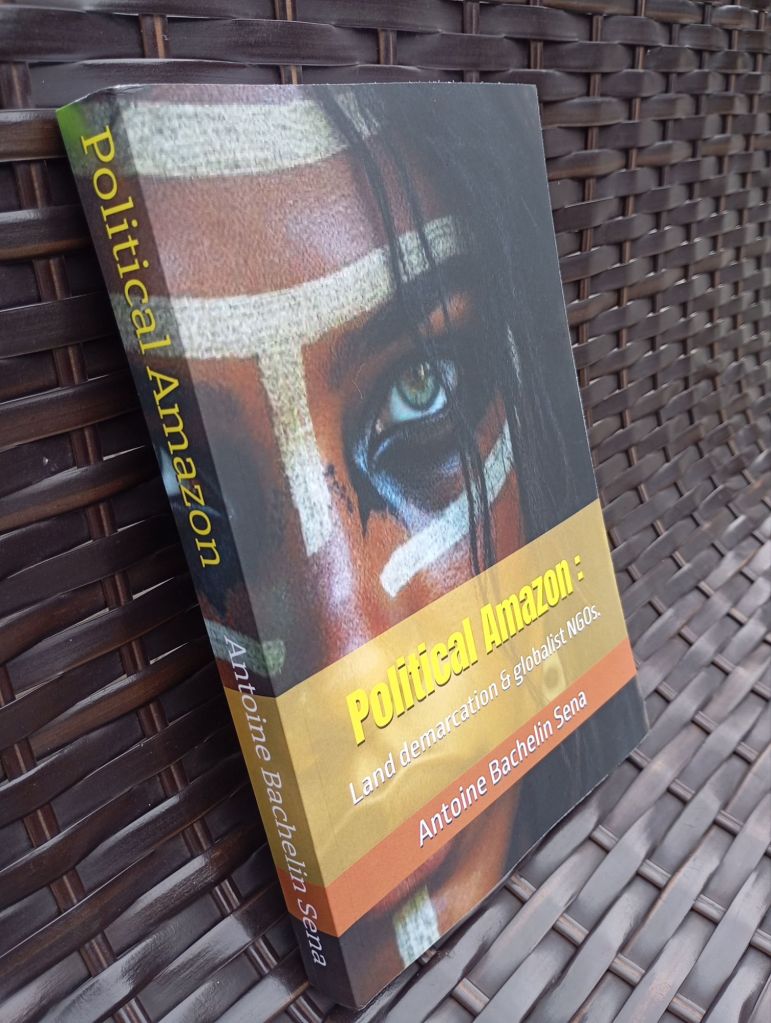
Integration of Refugees into the Mongol Empire.
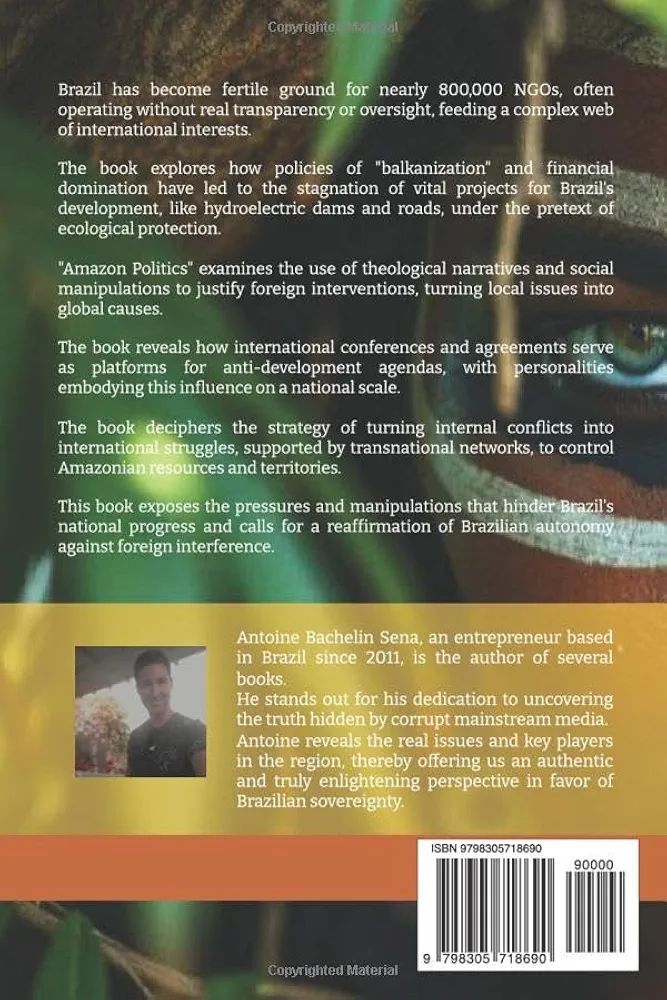
Genghis Khan did not merely use refugees as a temporary weapon. He integrated skilled individuals, such as artisans or engineers, into his empire. For example, during the conquest of northern China, Chinese engineers built siege machines, while literate administrators managed conquered territories. This pragmatic approach turned a potentially hostile population into a productive resource (The Mongol Empire, Timothy May, Edinburgh University Press, Chapter 5: Administration and Integration, 2018, https://edinburghuniversitypress.com/book-the-mongol-empire.html).
A Strategy of Global Scale.
By displacing entire populations, Genghis Khan weakened the social structures of his enemies while strengthening his empire. This forced mobility, though cruel, was a key tool for consolidating his power (The Mongol Conquests, John Man, History Today, Section on Population Displacement, 2004, https://www.historytoday.com/archive/mongol-conquests).

Modern Migrations: A Complex Phenomenon.
Mass migrations, driven by conflicts, persecutions, or climate crises, are a major issue in the 21st century. Some observers suggest these flows are not always spontaneous but influenced by state, military, or private agendas. Conflicts in Syria, Libya, or Ukraine have generated refugee waves with significant geopolitical repercussions (The Global Refugee Crisis, Gil Loescher, Foreign Affairs, Section on Geopolitical Factors, 2017, https://www.foreignaffairs.com/articles/world/2017-06-13/global-refugee-crisis).

Parallels with Genghis Khan.
Several parallels emerge between Genghis Khan’s tactics and modern migrations. Just as he overwhelmed enemy cities, migration flows can strain host countries’ infrastructure, as seen during the 2015 European migration crisis (Europe’s Migration Crisis, Edward P. Joseph, Foreign Policy, Section on Political Impacts, 2015, https://foreignpolicy.com/2015/09/11/europes-migration-crisis-syria-refugees/).

States like Turkey have used refugees as leverage in geopolitical negotiations (Turkey’s Refugee Strategy, Soner Cagaptay, Washington Institute, Section on Geopolitical Leverage, 2016, https://www.washingtoninstitute.org/policy-analysis/turkeys-refugee-strategy).

Finally, some countries selectively welcome skilled migrants, mirroring Genghis Khan’s integration approach (Migration and Economic Growth, Michael Clemens, Center for Global Development, Section on Selective Immigration, 2011, https://www.cgdev.org/publication/migration-and-economic-growth).

Fundamental Differences.
The modern context, with nation-states, human rights, and organizations like the UNHCR, differs from the Mongol era. Migrations are governed by international conventions, unlike Genghis Khan’s forced displacements (The UNHCR and Global Refugee Policy, Alexander Betts, Refugee Studies Centre, Section on International Frameworks, 2010, https://www.rsc.ox.ac.uk/publications/the-unhcr-and-global-refugee-policy).

The Role of Military Interventions.
Military interventions in Iraq, Afghanistan, and Libya have triggered major migration crises. The war in Syria, exacerbated by foreign powers, has displaced millions. These migrations can be exploited for geopolitical goals, such as weakening European unity (Syria’s Refugee Crisis, David Miliband, International Rescue Committee, Section on Conflict-Induced Migration, 2016, https://www.rescue.org/article/syrias-refugee-crisis; The Geopolitics of Migration, Kelly Greenhill, Foreign Affairs, Section on Strategic Migration, 2016, https://www.foreignaffairs.com/articles/europe/2016-04-18/geopolitics-migration).

Sponsored Refugee Programs and the Role of Private Funding.
Refugee programs receive support from military, state, or private sources, including NGOs backed by philanthropists or public institutions. These initiatives, often humanitarian, raise questions about their strategic impacts.

George Soros and the Open Society Foundations: A Major Player.
George Soros, through the Open Society Foundations (OSF), supports pro-migration NGOs. In 2010, OSF committed $100 million over 10 years to Human Rights Watch, which advocates for migrant rights (Open Society Foundations Announce $100 Million Commitment to Human Rights Watch, Human Rights Watch, Press Release, 2010, https://www.hrw.org/news/2010/09/07/open-society-foundations-announce-100-million-commitment-human-rights-watch).

In 2014, OSF granted $153,728 to United for Intercultural Action, supporting migrants in Europe (OSF Grants Database, Open Society Foundations, Grant Details, 2014, https://www.opensocietyfoundations.org/grants).

L’Auberge des Migrants, active in Calais, received indirect funding through partnerships with OSF-supported NGOs (Migrant Support in Calais, L’Auberge des Migrants, Annual Report, 2016, https://www.laubergedesmigrants.fr/en/annual-report-2016/).

In September 2015, Soros proposed allocating €15,000 per asylum seeker for integration in Europe (Rebuilding the Asylum System, George Soros, Project Syndicate, Opinion Piece, 2015, https://www.project-syndicate.org/commentary/rebuilding-refugee-asylum-system-by-george-soros-2015-09).

In 2016, he invested $500 million in startups and initiatives for migrants (Why I’m Investing $500 Million in Migrants, George Soros, Wall Street Journal, Opinion, 2016, https://www.wsj.com/articles/why-im-investing-500-million-in-migrants-1474394005).

In 2021, OSF allocated $140 million to pro-migration groups, including $1 million to the Latino Victory Project (OSF Annual Report, Open Society Foundations, Financial Summary, 2021, https://www.opensocietyfoundations.org/annual-report-2021).

However, claims like funding debit cards for migrants in Greece were debunked by the UNHCR (UNHCR Statement on Prepaid Cards, UNHCR, Press Release, 2018, https://www.unhcr.org/news/press/2018/10/5bb7c7e94/unhcr-statement-prepaid-cards-migrants-greece.html).

Other Philanthropic Actors.
The Bill & Melinda Gates Foundation funds migrant health initiatives, such as a HIV/AIDS project in Moldova (Global Fund Partnership, Bill & Melinda Gates Foundation, Project Summary, 2020, https://www.gatesfoundation.org/our-work/programs/global-health/hiv).

The Ford Foundation invested $2.2 million in UN pro-migration programs (Ford Foundation Grants, Ford Foundation, Grant Database, 2018, https://www.fordfoundation.org/work/our-grants/).

Conclusion: A Timeless Reflection.
Genghis Khan’s use of refugees illustrates the power of strategies exploiting population movements. Modern programs, supported by actors like OSF or the EU, raise ethical and geopolitical questions. Funding examples show that while humanitarian aid is often the goal, strategic impacts cannot be ignored. A critical analysis of the motivations behind migration flows is needed to prioritize solutions based on solidarity and transparency (The Global Refugee Crisis, Gil Loescher, Foreign Affairs, Section on Policy Recommendations, 2017, https://www.foreignaffairs.com/articles/world/2017-06-13/global-refugee-crisis).

New book available NOW in English. «Political Amazon : land demarcation & globalist NGOs.»

The book is available NOW in english : «Political Amazon: Land demarcation and globalist NGOs.»

In a world where environmentalism and indigenism claim moral high ground, « Political Amazon » exposes the true dynamics behind these movements:

NGO Proliferation: Brazil hosts nearly 800,000 NGOs, often opaque and serving foreign interests.


Development Stagnation: The book shows how environmental policies hinder crucial infrastructure, like dams and roads.


Cultural Manipulation: It discusses how theological and social narratives are used to justify foreign interventions in local affairs.


Global Agendas: International bodies push anti-development agendas through conferences and agreements.
Local to Global: Internal conflicts are escalated to international struggles for control over Amazonian resources.

Sovereignty and Growth:

« Political Amazon » is a call to recognize how these movements affect Brazil’s sovereignty and development. It urges a stand for national autonomy against external influences, shedding light on the real forces at play in the Amazon’s future.


Local to Global: Internal conflicts are escalated to international struggles for control over Amazonian resources.

Sovereignty and Growth:

« Political Amazon » is a call to recognize how these movements affect Brazil’s sovereignty and development.

It urges a stand for national autonomy against external influences, shedding light on the real forces at play in the Amazon’s future.

The ideological errors of Aleksandr Dugin’s Eurasian vision.

Olavo De Caravlho’s critiques of Dugin are profound and multidimensional, covering philosophical, religious, and geopolitical aspects.

Dugin is criticized for adhering to incoherent notions and manipulating symbols for propaganda purposes. It is necessary to defend a vision of human consciousness and freedom deeply rooted in philosophy and the biblical tradition, in contrast to Dugin’s geopolitical and holistic conceptions.

This analysis highlights the fundamental divergences between the two thinkers, emphasizing the importance of the pursuit of truth and individual freedom in Carvalho’s perspective.

Thread 🧵 on the ideological errors of Dugin’s Eurasian vision, followed by a deeper explanation.

Thread 🧵 on the ideological errors of @Agdchan’s Eurasian vision

1) Dugin is mistaken in thinking that states are historical agents. They are rather the results of complex processes.

2) The true historical agents are those that maintain continuity of action over time, such as religions, family dynasties, and esoteric societies.

3) Dugin does not realize that he himself is an instrument of the Orthodox Church, not of the Eurasian empire.

4) The separation of Church and State in the West shows that empires are not the agents but the playgrounds of religions.

5) The Orthodox Church has survived multiple empires, proving it is a more enduring historical agent.

6) Dugin’s Eurasian empire is an overly elastic metaphor, encompassing incompatible ideologies.

7) Dugin’s maritime vs. terrestrial empires fail to account for the diversity of holisms he seeks to unify.

8) A supra-holism would be necessary to unify Dugin’s contradictory ideologies, something he has not considered.

9) Dynasties and revolutionary movements show that the historical agent is more complex than Dugin thinks.

10) In conclusion, Dugin errs in not understanding that the true historical agents are those that transcend empires and nations.

Further Development Below :

Olavo de Carvalho vs Aleksandr Dugin.

Here is, first, the debate between Olavo de Carvalho and Aleksandr Dugin below: https://archive.org/details/olavo-de-carvalho-versus-aleksandr-dugin/Olavo%20de%20Carvalho%20versus%20Aleksandr%20Dugin%20%28unfinished%29/page/n4/mode/1up

Then, two chapters from my book « Olavo de Carvalho’s Philosophy Course: A Conversion of General Concepts into Effective Existential Experience » in which Olavo de Carvalho lays out his critiques of the concepts addressed by Dugin.

285) The Philosopher’s Perspective vs. the Political Agent’s Perspective.

In the debate between Olavo de Carvalho and Aleksandr Dugin, two very different perspectives are at play. Dugin has a certain Guénonian viewpoint, but he modifies it based on his essential project, which is not intellectual or philosophical but political.

A philosophical work must have a key that gives it unity. In Olavo de Carvalho’s case, his fundamental concern is to find the condition for individual human consciousness to attain truth and enjoy the gift of objective knowledge. Zubiri and Schuon emphasize that what characterizes human intelligence is objectivity, and if we do not seek it, we fall below the human condition.

A second interest concerns the relationship between human consciousness and divinity, that is, consciousness before the absolute. For René Guénon, consciousness is part of Maya (the illusion that constitutes the universe, existing but spiritually unreal because it is in perpetual change).

For the initiate, consciousness can become knowledge, which then becomes being, which is subsequently absorbed into the absolute through the process of divinization. However, the existence of immortal souls, which outlast all existing and possible cosmos, contradicts this.

Moreover, we can recall the catechism, which states that God created the world for human beings, so man is above the cosmos and, in a certain way, the keystone of all creation. The beginning of Genesis—with the conflicts of interest between Adam and Eve, then Cain and Abel—already shows that it is about man as an individual, not man considered abstractly as a species.

From this, we can conclude that human consciousness or the individual human soul is a structuring element of the cosmos. In the hierarchy of reality, the world of human souls is obviously below God, but in a certain way, it is above the world of angels, for angels have divine knowledge but not divine freedom, human free will being a direct expression of divine power.

Human consciousness is generally held in very poor regard, not only by initiatory sects aspiring to “higher” states but also by materialists and behaviorists, who claim that consciousness does not even exist, that it is merely an illusion born of chemical mechanisms.

But if human consciousness is almost nothing, why have so many efforts been made in the 20th century to police, control, oppress, and neutralize it?

All the political questions Olavo de Carvalho has raised stem from this, leading to first-order concerns of an eminently philosophical nature. Reflecting human freedom and the power of God the Father Himself, human consciousness is unpredictable, creative, and does not obey laws.

Consequently, it makes disobedience and rebellion possible, including the possibility of rebelling against God. The idea of human metaphysical freedom has, over time, translated into political freedom, which is a freedom of conscience.

In the American Constitution, for the first time, the principle of political freedom was manifested, based on a biblical principle, translated into laws and institutions. Thus, the freedom of conscience, as embodied in this constitution and its institutions, does not come from the Enlightenment but from biblical sources. The French Revolution owes much more to the Enlightenment, but its immediate consequence was Napoleon’s dictatorship, followed by coups, revolutions, and dictatorships for nearly a hundred years.

Aleksandr Dugin’s viewpoint is essentially geopolitical, derived from a school of authors like Mackinder or Haushofer. For them, there is an eternal conflict between “terrestrial powers,” such as Russia and China, and “maritime powers,” which include the United States and several Western countries. Terrestrial powers are authoritarian, centralizing, oriented toward traditional order and supra-individual goals. Maritime powers have used naval power for trade and to meddle in various parts of the world to spread ideas of individual freedom and materialism based on the Enlightenment.

Dugin states in his book *The Great War of the Continents* that this divide was already visible in antiquity, with a “maritime civilization” led by Phoenicia and Carthage, opposed by the terrestrial Roman Empire, culminating in the Punic Wars. In modernity, the “maritime civilization” was first led by England, the “mistress of the seas,” then by America.

From this emerged a particular type of capitalist-mercantile market civilization, founded on economic and material interests and the principles of economic liberalism.

For Dugin, what characterizes maritime civilization is primarily the primacy of the economic over the political. Rome, on the other hand, had an “authoritarian-warrior structure based on administrative domination and a civic religion,” thus the primacy of the political over the economic. Its colonization was terrestrial and achieved through the assimilation of subjugated peoples, who were later “Romanized.”

In modern history, the terrestrial powers were primarily the Russian, German, and Austro-Hungarian empires. Dugin adds that Mackinder showed that, in recent centuries, “maritime power” equates to Atlantism, and the “maritime powers” are primarily Anglo-Saxon countries.

The Eurasian attitude is expressed, above all, by Russia and Germany, the strongest continental powers, with geopolitical and economic concerns and, above all, a worldview completely opposed to that of England and the United States of America. To begin analyzing Dugin’s vision, it suffices to note that the Soviet Union had its zone of influence on almost every continent.

How could a terrestrial power have such significant influence in Latin America? The notion of “terrestrial power” makes no sense in the terms in which it is formulated. Historically, it is also undeniable that the concept of economic freedom is Catholic, but specifically Iberian, and the only reason it was not realized on a large scale in these regions was due to various historical contingencies, notably conflicts with the British. This predates the initiatives of the Enlightenment.

But there is another confusion here, as the conception of political freedom has nothing to do with individualism, understood as the mere pursuit of individual interest; it rather stems from the very letter of the Gospels. So, where is the divine inspiration of the authoritarian governments of Russia and Germany, and what have they done to Christianize the world?

The first peoples to become Christianized were the English and the Irish, who then set out to Christianize the rest. Germany was Christianized late and was quickly transformed by the Reformation, also embracing the most anti-Christian doctrines, such as those of Hegel, Marx, or Nietzsche. The attempt to dissolve the biblical text into historiographical considerations, almost always imaginary, is also a German creation.

On the other hand, the evangelization carried out by Protestant sects in America brought something very different from individualism to the world. Dugin says, in another writing, that one must read Karl Popper’s *The Open Society and Its Enemies* to understand the conflict between Atlantism and Eurasianism. Popper says that the open society is one in which there is no absolute, and thus no truth above the interests and preferences of individuals. Against this notion of an open society without transcendence, Dugin opposes the traditional society, which for him is represented by Russia, Germany, or China.

In reality, the idea of an open society is something that globalists have valued and want to impose on the rest of the people against their will. It took decades of propaganda campaigns, mindset changes, and the destruction of consciences to promote the idea that the state must be not only secular but anti-Christian. This idea has no roots in the American tradition; it is rather the enemies of the United States who want to impose such a thing.

The effect has been particularly noticeable in American foreign policy, which has essentially consisted of replacing friendly dictators with enemy dictators (Fulgencio Batista for Fidel Castro, Chiang Kai-shek for Mao Zedong, Lon Nol for Pol Pot, etc.), in addition to efforts to break the power of colonial powers like England, France, Portugal, or Spain, ceding former possessions to communist powers.

The entire globalist elite has made efforts in a clearly anti-American direction, while favoring the international communist movement, which is part of Dugin’s Eurasian scheme. Anthony Sutton’s books show how American bankers greatly aided communism and Nazism.

Portugal and Spain were the first maritime powers of the modern era, but they are not part of the Anglo-Saxon scheme; rather, they were destroyed by it. The notions of “maritime powers” and “terrestrial powers” could, in theory, be used as symbols, serving as tools for interpreting reality.

But for this, the symbols would need to encompass known facts and still give them meaning, transcending them. In this case, however, these are notions that ignore almost all facts, so they are not symbols but stereotypes used for propaganda purposes. In Dugin’s conception, there is also a confusion between the collective and the supra-individual.

Since the so-called terrestrial powers are centralizing, hierarchical, and authoritarian, Dugin equates these attributes with a transcendent conception. The collective is not a concept superior to the individual, nor is the reverse true; they are two sides of the same thing, and the collective is that of individuals.

These are quantitative concepts, but when we speak of the supra-individual, we are already talking about the spiritual, something supra-quantitative. The opposition between individual and collective is not, as Dugin would have you believe, an opposition between immanent and transcendent.

295) Entities with Historical Action

Aleksandr Dugin considers states, nations, and empires as agents of the historical process [285].

But these are geographical or geopolitical crystallizations of human actions undertaken by other, more enduring agents. Georg Jellinek already highlights, at the beginning of the book « General Theory of the State », the distinction between two types of social facts: on the one hand, those that emanate from a deliberate plan and action; on the other hand, those determined by forces beyond any deliberate control. Facts determined by human deliberation can be explained by the original plan.

Of course, the one executing the plan must adapt to the variety of circumstances so that the result does not deviate too much from what was planned, regardless of unforeseen events that arise, which must be absorbed and put at the service of the plan itself.

When there is a confluence of multiple disconnected causal lines that merge, cancel each other out, and transform, resulting in an outcome no one intended, one can only find a posteriori rationality, in the work of a historian who reconstructs the different sequences and verifies how they intertwined.

In this second case, it is only conjectural rationality, as the content consists of unforeseen events, and the connections and order are also accidental and uncontrolled. Every state, nation, or empire is always the result of many factors (ethnic, geographical, economic, etc.), and various agents operate within them. In short, these are entities resulting from uncontrolled processes.

One can only speak of action when there is unity and constancy in purpose, as seen in Lenin, who had a plan from his youth that led to the Russian Revolution.

There is also a series of actions where one leads to another, with involved individuals who are not agents but passive objects relative to events that transcend their control. And if we speak specifically of historical action, its effects must continue beyond the life of the individual acting subject.

Thus, there must be reproduction, that is, the creation of other individual agents who follow the same course of action, adapting to new circumstances but without losing the original impulse. When looking at a state, one observes many conflicting forces, and there is never a clear unity of action.

Even Hitler or Stalin did not have this and had to contend with it. In addition to the government and the state, for there to be historical action, there must be other agents that self-reproduce to extend actions over decades or centuries, and their action may begin before the formation of certain involved states and even survive their extinction.

Only a few entities can be classified as subjects of historical action.

First, the great universal religions, which manage to teach from generation to generation to faithfully pursue certain actions, particularly through the actions of priests. Religions create and destroy nations relentlessly.

Second, esoteric and initiatory societies, such as Freemasonry, which manage to act with the same goals for centuries through discipline, rites, and commitment to secrecy. We see Freemasonry in the United States and in different countries continuing independently of changes in the political structure. Family dynasties are a third type of historical agent, which can be both noble and plebeian, provided they succeed in instilling a series of duties in each new generation.

We see this continuity in dynasties like the Bourbons, the Tudors, the Rockefellers, or the Rothschilds, with continuous action over time and across multiple states. Spiritual entities (God, angels, and demons) can also be considered historical agents, as they have permanent goals and continue to act.

A fifth type of historical agent can be considered, encompassing revolutionary movements and parties, but these are a variant of initiatory societies, as they use the same reproduction techniques, including commitment, oaths, secrecy, death threats, etc.

Dugin wrongly speaks of geopolitical entities as historical agents, but he himself does not realize that he is an instrument of a true historical agent, given that his Eurasian project stems from an internal dialectic of the Orthodox Church.

For him, the great Western heresy was the separation of Church and Empire, something that did not occur in Russia, where the Tsar is the head of the Church. Immediately, the geographical limit of the religion’s expansion is the limit of the empire itself, whereas in the West, the Catholic Church can expand anywhere without needing to wait for an emperor.

The Orthodox Church, on the other hand, is content to be a national Church with an expansion that coincides with the empire’s expansion.

Dugin’s plan is precisely to create a global empire under the hegemony of the Orthodox Church, where he is not just an agent of a geopolitical force (national or imperial) but an agent of the Orthodox Church itself, although he speaks in the name of a vague entity called “the Eurasian empire.”

The Orthodox Church has survived the empires of Kiev and Moscow and outlived the Russian Revolution, now continuing to shape the new imperial project, which is why it is the true historical agent.

The Eurasian empire is just a metaphor, so elastic that it extends the empire of “terrestrial powers” from Russia to Latin America. Dugin also makes a distinction between individualist ideology, for him intrinsically linked to maritime empires, and holistic ideology, which would be characteristic of terrestrial empires.

But due to the extension of the Eurasian empire, it would cover several regions, one with an “Orthodox holism,” another with an “Islamic holism,” which would still need to coexist with a “communist holism” that believes in History as a transcendent force.

These are mutually incompatible holisms, each with its own “absolute,” and their mere competition immediately undermines that status.

Thus, a supra-holism with an authority superior to the others would be needed, blending communism, Islam, and the Orthodox Church into something that Dugin himself likely did not imagine possible.