What is the distortion in the way thought connects with reality? And how does this distortion, also called cognitive dissonance, constitute a philosophical break in the history of thought? 

Cognitive dissonance, the intellectual unease born from the gap between theoretical constructs and lived experience, serves as a guiding thread to understand the evolution of Western thought. 
This phenomenon is far from trivial, as it reveals a progressive fracture between man and the cosmos, between the thinker and the reality of which he is an integral part. 

Below, we will explore the origins and implications of this dissonance, tracing its emergence in the history of philosophy and its consequences for how humanity conceives reality. 

Through an analysis of the major stages of this break—from Antiquity to Modernity—we will seek to understand how the philosopher, from a humble observer of the cosmos, transformed into a self-proclaimed « inspector of universal science, » and what this implies for our relationship with truth. 

I. Cognitive dissonance: a definition. 

In the philosophical context discussed here, cognitive dissonance can be defined as the gap between the theoretical framework developed by an individual and the lived reality in which they are immersed. 

This gap does not stem from mere error or intellectual dishonesty but from a structural distortion in the way thought aligns with reality.

In other words, cognitive dissonance arises when the thinker believes they can stand outside reality to observe it objectively, like a detached spectator, while remaining inescapably embedded in the cosmos they claim to judge. 

In Antiquity and the Middle Ages, philosophers from Aristotle to St. Thomas Aquinas maintained a relationship of humility toward reality.

They recognized themselves as part of a larger cosmic order, a whole from which they could not extricate themselves. 

Their reflection was rooted in a tradition of cumulative knowledge, where each thinker modestly contributed to a chain of understanding, aware of their limitations. Aristotle, for instance, asserted that all knowledge derives from prior knowledge, forming a continuity in which the individual is but a link. 

This stance, marked by docility in the face of reality’s complexity, contrasted sharply with the attitude that would emerge at the dawn of modernity. 

II. The first signs of the break: William of Ockham and empiricism. 

One of the earliest signs of this break appears with William of Ockham in the 14th century.

Ockham posited that the reality accessible to our experience—what we can observe and verify—constitutes the measure of what is true. 

This idea, appealing in its simplicity, rests on an illusion: empiricism, while claiming to stick to the facts, can only grasp a tiny fraction of reality. 

Reality, in its depth and complexity, far exceeds the limits of human observation. By proclaiming the universality of empiricism, Ockham introduces a « scotoma« —a blind spot in the visual field or, metaphorically, a gap in perception or understanding. 

This blind spot prevents him from recognizing the inherent biases in his method.

By ignoring the richness of the cosmos, of which man is only a part, Ockham paves the way for a reductive approach, where truth is limited to what can be measured or tested. 

This attitude, though rigorous in its own way, marks the beginning of a distortion: the thinker starts to see themselves as an external observer, capable of judging reality as a whole, forgetting that they are themselves immersed in that reality. 

III. Descartes and the illusion of universal doubt.

Cognitive dissonance intensifies with the advent of modernity, particularly with René Descartes in the 17th century.

In his « Meditations on First Philosophy« , Descartes proposes a radical method: to doubt everything, suspend all certainty to rebuild knowledge on supposedly unshakable foundations. 

This « methodical doubt » aims to place the philosopher outside reality, as if they could observe the universe from a divine, detached position, free from all contingency. 

In reality, this endeavor is doomed to fail. Descartes, while claiming to doubt everything, relies on implicit certainties he never questions.

His method, far from being neutral, is steeped in cultural, historical, and personal presuppositions. 

This gap between what Descartes claims to do—a universal questioning—and what he actually does—reconstructing knowledge from unexamined premises—perfectly illustrates cognitive dissonance. 

The philosopher believes they can extricate themselves from reality, but they remain trapped within their own mental frameworks, unable to recognize them as such. 

This posture, characteristic of modernity, widens the fracture between the thinker and the cosmos.

Where ancient philosophers accepted the primacy of reality over their theories, modern thinkers claim the right to subject reality to their own criteria of truth. 

This attitude, though driven by a sincere quest for certainty, engenders a form of intellectual arrogance that seeks to reduce the infinitude of reality to simplified theoretical models. 

IV. The consequences of dissonance: a war against reality.

Cognitive dissonance, by taking root in Western thought, leads to a veritable war against the complexity of reality.

Modern theories, whether grand philosophical systems or reductive scientific models, tend to isolate a part of reality and treat it as a comprehensive explanation. 

This approach, while productive in some fields, leads to intellectual excesses when the thinker believes their all-encompassing model represents ultimate truth. 

A striking example is theories that claim to grasp the « global meaning » of human history.

Whether through Hegelian, Marxist, or evolutionary perspectives, these theories assert that history follows a linear trajectory toward an ultimate goal. 

Yet, as empirical experience itself highlights, we are immersed in the flow of time, with no access to its beginning or end.

Claiming to determine the « final meaning » of history amounts to creating a world in the image of our own presuppositions, a delusion that ignores the complexity of reality. 

This attitude reflects a loss of the humility that characterized ancient thinkers. Aristotle, for example, recognized that reality held authority over thought: the philosopher must submit to reality, not the other way around. 

St. Thomas Aquinas, similarly, approached the cosmos with intellectual docility, aware that truth exceeds the capacities of the human mind.

In contrast, modernity, relying on self-proclaimed empiricism or rationality, has often succumbed to the temptation to reduce reality to simplistic frameworks, at the expense of its infinite richness. 

V. Intellectual arrogance and its limits. 

This cognitive dissonance, far from being a mere historical accident, reveals a form of intellectual arrogance manifested in the idea that certain truths are unworthy of consideration because they do not meet modern criteria of scientificity or rationality. 

This attitude, embodied, for example, in 19th-century positivism, dismisses any form of knowledge that cannot be validated by empirical experience or formal logic. 

Yet, as Aristotle already emphasized, human knowledge rests on a tradition, an inheritance of understanding that cannot be entirely subjected to empirical testing. 

Empiricism, though presented as a rigorous method, is inherently limited by the constraints of human experience.

We can only observe a tiny fraction of reality, and the rest relies on traditions, consensus, or, worse, fleeting intellectual trends. 

By ignoring this reality, the modern thinker traps themselves in an illusion of mastery, believing they can judge the universe from an external position.

As St. Paul said, « In Him we live and move and have our being« : we are immersed in the cosmos, and any attempt to step outside it to judge it is doomed to fail. 

VI. Toward a reconciliation with reality. 

Faced with this cognitive dissonance, the question arises: how can we reconnect with a thought that respects the complexity of reality? The answer may lie in returning to the humility of the ancients. 

This does not mean rejecting the achievements of modernity but recognizing the limits of our intellectual tools. 

For philosophy to become fruitful again, it must accept that reality is vaster than our theories and that truth cannot be reduced to what we can measure or prove. 

Such an approach involves rehabilitating the notion of tradition as a living chain of knowledge linking the past to the present. It also requires constant vigilance against the biases that push us to simplify reality, whether through empiricism, rationalism, or any other ideology. 

Finally, it calls for a form of intellectual docility, a willingness to learn from the cosmos rather than subjecting it to our preconceived frameworks. 

Conclusions

Cognitive dissonance, as manifested in the history of Western thought, is a symptom of a profound rupture between man and reality.

From William of Ockham to Descartes, through the grand modern theories, the philosopher has gradually lost sight of their condition as a creature immersed in the cosmos. 

This illusion of exteriority, while enabling undeniable advances, has also engendered a form of intellectual arrogance, where the thinker claims to reduce the infinitude of reality to their own categories. 

To overcome this dissonance, we must rediscover the humility of the ancients—not to reject modernity but to enrich our relationship with truth.

By acknowledging that we are part of a cosmos that surpasses us, we can hope to reconnect with a thought more faithful to reality, one that accepts its limits while opening itself to the infinite complexity of the real. 

The ideological errors of Aleksandr Dugin’s Eurasian vision.

Olavo De Caravlho’s critiques of Dugin are profound and multidimensional, covering philosophical, religious, and geopolitical aspects.

Dugin is criticized for adhering to incoherent notions and manipulating symbols for propaganda purposes. It is necessary to defend a vision of human consciousness and freedom deeply rooted in philosophy and the biblical tradition, in contrast to Dugin’s geopolitical and holistic conceptions.
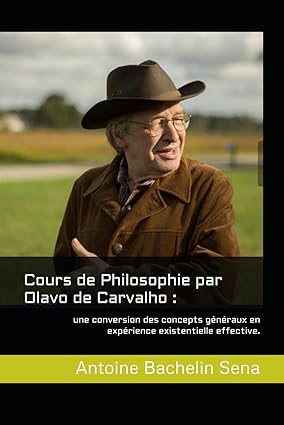
This analysis highlights the fundamental divergences between the two thinkers, emphasizing the importance of the pursuit of truth and individual freedom in Carvalho’s perspective.

Thread 🧵 on the ideological errors of Dugin’s Eurasian vision, followed by a deeper explanation.

Thread 🧵 on the ideological errors of @Agdchan’s Eurasian vision

1) Dugin is mistaken in thinking that states are historical agents. They are rather the results of complex processes.

2) The true historical agents are those that maintain continuity of action over time, such as religions, family dynasties, and esoteric societies.

3) Dugin does not realize that he himself is an instrument of the Orthodox Church, not of the Eurasian empire.

4) The separation of Church and State in the West shows that empires are not the agents but the playgrounds of religions.

5) The Orthodox Church has survived multiple empires, proving it is a more enduring historical agent.

6) Dugin’s Eurasian empire is an overly elastic metaphor, encompassing incompatible ideologies.

7) Dugin’s maritime vs. terrestrial empires fail to account for the diversity of holisms he seeks to unify.

8) A supra-holism would be necessary to unify Dugin’s contradictory ideologies, something he has not considered.

9) Dynasties and revolutionary movements show that the historical agent is more complex than Dugin thinks.

10) In conclusion, Dugin errs in not understanding that the true historical agents are those that transcend empires and nations.

Further Development Below :

Olavo de Carvalho vs Aleksandr Dugin.

Here is, first, the debate between Olavo de Carvalho and Aleksandr Dugin below: https://archive.org/details/olavo-de-carvalho-versus-aleksandr-dugin/Olavo%20de%20Carvalho%20versus%20Aleksandr%20Dugin%20%28unfinished%29/page/n4/mode/1up

Then, two chapters from my book « Olavo de Carvalho’s Philosophy Course: A Conversion of General Concepts into Effective Existential Experience » in which Olavo de Carvalho lays out his critiques of the concepts addressed by Dugin.

285) The Philosopher’s Perspective vs. the Political Agent’s Perspective.

In the debate between Olavo de Carvalho and Aleksandr Dugin, two very different perspectives are at play. Dugin has a certain Guénonian viewpoint, but he modifies it based on his essential project, which is not intellectual or philosophical but political.

A philosophical work must have a key that gives it unity. In Olavo de Carvalho’s case, his fundamental concern is to find the condition for individual human consciousness to attain truth and enjoy the gift of objective knowledge. Zubiri and Schuon emphasize that what characterizes human intelligence is objectivity, and if we do not seek it, we fall below the human condition.

A second interest concerns the relationship between human consciousness and divinity, that is, consciousness before the absolute. For René Guénon, consciousness is part of Maya (the illusion that constitutes the universe, existing but spiritually unreal because it is in perpetual change).

For the initiate, consciousness can become knowledge, which then becomes being, which is subsequently absorbed into the absolute through the process of divinization. However, the existence of immortal souls, which outlast all existing and possible cosmos, contradicts this.

Moreover, we can recall the catechism, which states that God created the world for human beings, so man is above the cosmos and, in a certain way, the keystone of all creation. The beginning of Genesis—with the conflicts of interest between Adam and Eve, then Cain and Abel—already shows that it is about man as an individual, not man considered abstractly as a species.

From this, we can conclude that human consciousness or the individual human soul is a structuring element of the cosmos. In the hierarchy of reality, the world of human souls is obviously below God, but in a certain way, it is above the world of angels, for angels have divine knowledge but not divine freedom, human free will being a direct expression of divine power.

Human consciousness is generally held in very poor regard, not only by initiatory sects aspiring to “higher” states but also by materialists and behaviorists, who claim that consciousness does not even exist, that it is merely an illusion born of chemical mechanisms.

But if human consciousness is almost nothing, why have so many efforts been made in the 20th century to police, control, oppress, and neutralize it?

All the political questions Olavo de Carvalho has raised stem from this, leading to first-order concerns of an eminently philosophical nature. Reflecting human freedom and the power of God the Father Himself, human consciousness is unpredictable, creative, and does not obey laws.

Consequently, it makes disobedience and rebellion possible, including the possibility of rebelling against God. The idea of human metaphysical freedom has, over time, translated into political freedom, which is a freedom of conscience.

In the American Constitution, for the first time, the principle of political freedom was manifested, based on a biblical principle, translated into laws and institutions. Thus, the freedom of conscience, as embodied in this constitution and its institutions, does not come from the Enlightenment but from biblical sources. The French Revolution owes much more to the Enlightenment, but its immediate consequence was Napoleon’s dictatorship, followed by coups, revolutions, and dictatorships for nearly a hundred years.

Aleksandr Dugin’s viewpoint is essentially geopolitical, derived from a school of authors like Mackinder or Haushofer. For them, there is an eternal conflict between “terrestrial powers,” such as Russia and China, and “maritime powers,” which include the United States and several Western countries. Terrestrial powers are authoritarian, centralizing, oriented toward traditional order and supra-individual goals. Maritime powers have used naval power for trade and to meddle in various parts of the world to spread ideas of individual freedom and materialism based on the Enlightenment.

Dugin states in his book *The Great War of the Continents* that this divide was already visible in antiquity, with a “maritime civilization” led by Phoenicia and Carthage, opposed by the terrestrial Roman Empire, culminating in the Punic Wars. In modernity, the “maritime civilization” was first led by England, the “mistress of the seas,” then by America.

From this emerged a particular type of capitalist-mercantile market civilization, founded on economic and material interests and the principles of economic liberalism.

For Dugin, what characterizes maritime civilization is primarily the primacy of the economic over the political. Rome, on the other hand, had an “authoritarian-warrior structure based on administrative domination and a civic religion,” thus the primacy of the political over the economic. Its colonization was terrestrial and achieved through the assimilation of subjugated peoples, who were later “Romanized.”

In modern history, the terrestrial powers were primarily the Russian, German, and Austro-Hungarian empires. Dugin adds that Mackinder showed that, in recent centuries, “maritime power” equates to Atlantism, and the “maritime powers” are primarily Anglo-Saxon countries.

The Eurasian attitude is expressed, above all, by Russia and Germany, the strongest continental powers, with geopolitical and economic concerns and, above all, a worldview completely opposed to that of England and the United States of America. To begin analyzing Dugin’s vision, it suffices to note that the Soviet Union had its zone of influence on almost every continent.

How could a terrestrial power have such significant influence in Latin America? The notion of “terrestrial power” makes no sense in the terms in which it is formulated. Historically, it is also undeniable that the concept of economic freedom is Catholic, but specifically Iberian, and the only reason it was not realized on a large scale in these regions was due to various historical contingencies, notably conflicts with the British. This predates the initiatives of the Enlightenment.

But there is another confusion here, as the conception of political freedom has nothing to do with individualism, understood as the mere pursuit of individual interest; it rather stems from the very letter of the Gospels. So, where is the divine inspiration of the authoritarian governments of Russia and Germany, and what have they done to Christianize the world?

The first peoples to become Christianized were the English and the Irish, who then set out to Christianize the rest. Germany was Christianized late and was quickly transformed by the Reformation, also embracing the most anti-Christian doctrines, such as those of Hegel, Marx, or Nietzsche. The attempt to dissolve the biblical text into historiographical considerations, almost always imaginary, is also a German creation.

On the other hand, the evangelization carried out by Protestant sects in America brought something very different from individualism to the world. Dugin says, in another writing, that one must read Karl Popper’s *The Open Society and Its Enemies* to understand the conflict between Atlantism and Eurasianism. Popper says that the open society is one in which there is no absolute, and thus no truth above the interests and preferences of individuals. Against this notion of an open society without transcendence, Dugin opposes the traditional society, which for him is represented by Russia, Germany, or China.

In reality, the idea of an open society is something that globalists have valued and want to impose on the rest of the people against their will. It took decades of propaganda campaigns, mindset changes, and the destruction of consciences to promote the idea that the state must be not only secular but anti-Christian. This idea has no roots in the American tradition; it is rather the enemies of the United States who want to impose such a thing.

The effect has been particularly noticeable in American foreign policy, which has essentially consisted of replacing friendly dictators with enemy dictators (Fulgencio Batista for Fidel Castro, Chiang Kai-shek for Mao Zedong, Lon Nol for Pol Pot, etc.), in addition to efforts to break the power of colonial powers like England, France, Portugal, or Spain, ceding former possessions to communist powers.

The entire globalist elite has made efforts in a clearly anti-American direction, while favoring the international communist movement, which is part of Dugin’s Eurasian scheme. Anthony Sutton’s books show how American bankers greatly aided communism and Nazism.

Portugal and Spain were the first maritime powers of the modern era, but they are not part of the Anglo-Saxon scheme; rather, they were destroyed by it. The notions of “maritime powers” and “terrestrial powers” could, in theory, be used as symbols, serving as tools for interpreting reality.

But for this, the symbols would need to encompass known facts and still give them meaning, transcending them. In this case, however, these are notions that ignore almost all facts, so they are not symbols but stereotypes used for propaganda purposes. In Dugin’s conception, there is also a confusion between the collective and the supra-individual.

Since the so-called terrestrial powers are centralizing, hierarchical, and authoritarian, Dugin equates these attributes with a transcendent conception. The collective is not a concept superior to the individual, nor is the reverse true; they are two sides of the same thing, and the collective is that of individuals.

These are quantitative concepts, but when we speak of the supra-individual, we are already talking about the spiritual, something supra-quantitative. The opposition between individual and collective is not, as Dugin would have you believe, an opposition between immanent and transcendent.

295) Entities with Historical Action

Aleksandr Dugin considers states, nations, and empires as agents of the historical process [285].

But these are geographical or geopolitical crystallizations of human actions undertaken by other, more enduring agents. Georg Jellinek already highlights, at the beginning of the book « General Theory of the State », the distinction between two types of social facts: on the one hand, those that emanate from a deliberate plan and action; on the other hand, those determined by forces beyond any deliberate control. Facts determined by human deliberation can be explained by the original plan.

Of course, the one executing the plan must adapt to the variety of circumstances so that the result does not deviate too much from what was planned, regardless of unforeseen events that arise, which must be absorbed and put at the service of the plan itself.

When there is a confluence of multiple disconnected causal lines that merge, cancel each other out, and transform, resulting in an outcome no one intended, one can only find a posteriori rationality, in the work of a historian who reconstructs the different sequences and verifies how they intertwined.

In this second case, it is only conjectural rationality, as the content consists of unforeseen events, and the connections and order are also accidental and uncontrolled. Every state, nation, or empire is always the result of many factors (ethnic, geographical, economic, etc.), and various agents operate within them. In short, these are entities resulting from uncontrolled processes.

One can only speak of action when there is unity and constancy in purpose, as seen in Lenin, who had a plan from his youth that led to the Russian Revolution.

There is also a series of actions where one leads to another, with involved individuals who are not agents but passive objects relative to events that transcend their control. And if we speak specifically of historical action, its effects must continue beyond the life of the individual acting subject.

Thus, there must be reproduction, that is, the creation of other individual agents who follow the same course of action, adapting to new circumstances but without losing the original impulse. When looking at a state, one observes many conflicting forces, and there is never a clear unity of action.

Even Hitler or Stalin did not have this and had to contend with it. In addition to the government and the state, for there to be historical action, there must be other agents that self-reproduce to extend actions over decades or centuries, and their action may begin before the formation of certain involved states and even survive their extinction.

Only a few entities can be classified as subjects of historical action.

First, the great universal religions, which manage to teach from generation to generation to faithfully pursue certain actions, particularly through the actions of priests. Religions create and destroy nations relentlessly.

Second, esoteric and initiatory societies, such as Freemasonry, which manage to act with the same goals for centuries through discipline, rites, and commitment to secrecy. We see Freemasonry in the United States and in different countries continuing independently of changes in the political structure. Family dynasties are a third type of historical agent, which can be both noble and plebeian, provided they succeed in instilling a series of duties in each new generation.

We see this continuity in dynasties like the Bourbons, the Tudors, the Rockefellers, or the Rothschilds, with continuous action over time and across multiple states. Spiritual entities (God, angels, and demons) can also be considered historical agents, as they have permanent goals and continue to act.

A fifth type of historical agent can be considered, encompassing revolutionary movements and parties, but these are a variant of initiatory societies, as they use the same reproduction techniques, including commitment, oaths, secrecy, death threats, etc.

Dugin wrongly speaks of geopolitical entities as historical agents, but he himself does not realize that he is an instrument of a true historical agent, given that his Eurasian project stems from an internal dialectic of the Orthodox Church.

For him, the great Western heresy was the separation of Church and Empire, something that did not occur in Russia, where the Tsar is the head of the Church. Immediately, the geographical limit of the religion’s expansion is the limit of the empire itself, whereas in the West, the Catholic Church can expand anywhere without needing to wait for an emperor.

The Orthodox Church, on the other hand, is content to be a national Church with an expansion that coincides with the empire’s expansion.

Dugin’s plan is precisely to create a global empire under the hegemony of the Orthodox Church, where he is not just an agent of a geopolitical force (national or imperial) but an agent of the Orthodox Church itself, although he speaks in the name of a vague entity called “the Eurasian empire.”

The Orthodox Church has survived the empires of Kiev and Moscow and outlived the Russian Revolution, now continuing to shape the new imperial project, which is why it is the true historical agent.

The Eurasian empire is just a metaphor, so elastic that it extends the empire of “terrestrial powers” from Russia to Latin America. Dugin also makes a distinction between individualist ideology, for him intrinsically linked to maritime empires, and holistic ideology, which would be characteristic of terrestrial empires.

But due to the extension of the Eurasian empire, it would cover several regions, one with an “Orthodox holism,” another with an “Islamic holism,” which would still need to coexist with a “communist holism” that believes in History as a transcendent force.

These are mutually incompatible holisms, each with its own “absolute,” and their mere competition immediately undermines that status.

Thus, a supra-holism with an authority superior to the others would be needed, blending communism, Islam, and the Orthodox Church into something that Dugin himself likely did not imagine possible.