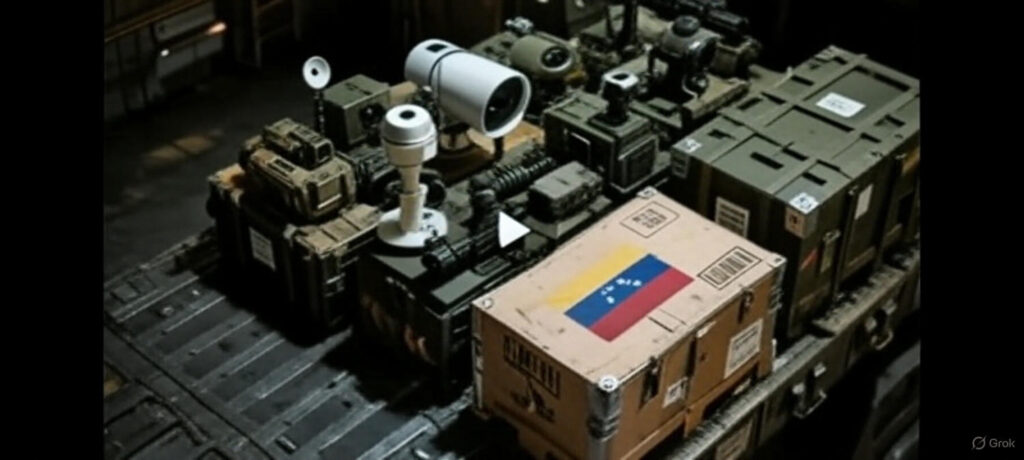
English, Français, Português. Venezuela. Short vidéo, vidéo courte, vidéo curto.

Venezuela in a Short Video, Without Falling into Caricature or Any Bias.

Venezuela en vidéo courte sans verser dans la caricature ni dans un biais partisan quelconque.

Venezuela em vídeo curto, sem cair na caricatura nem em qualquer viés partidário.

This video, specifically designed for an audience eager for an impartial and rigorous analysis, offers a neutral and deeply elaborated synthesis—for a complete immersion—in order to grasp Venezuela from all its angles.

Without resorting to caricature or any partisan bias, we will draw upon irrefutable and verifiable sources, such as the exhaustive reports from international organizations, precise academic analyses, and in-depth journalistic investigations backed by exact data.

Our analysis will provide access to a balanced and constantly updated perspective.

Furthermore, we will not hesitate to firmly denounce the rampant sensationalism of certain influencers: through catchy headlines, crude ideological shortcuts, and viscerally anti-Western binary narratives, they perpetuate gross ignorance, transforming a multidimensional complexity into ephemeral and misleading viral slogans.

These « self-proclaimed informants »—often nursed on the milk of Eurasian propaganda or vulgarized Marxism—scorn the more subtle internal dynamics and deserve to be relegated to the margins in favor of authentically grounded and intellectually rigorous voices.

———————–

Cette vidéo conçu spécifiquement pour un public francophone avide d’une analyse dépassionnée et rigoureuse, propose une synthèse neutre et profondément élaborée – pour une immersion complète – afin d’appréhender le Venezuela sous tous ses angles.

Sans verser dans la caricature ni dans un biais partisan quelconque, nous nous appuierons sur des sources irréfutables et vérifiables, telles que les rapports exhaustifs d’organisations internationales, les analyses académiques pointues, les enquêtes journalistiques fouillées avec données précises.

Notre analyse permettra d’accéder à une perspective équilibrée et constamment actualisée.

Par ailleurs, nous n’hésiterons pas à dénoncer avec fermeté le sensationnalisme effréné de certains influenceurs : par le biais de titres accrocheurs, de raccourcis idéologiques grossiers et de narratifs binaires viscéralement anti-occidentaux, ils perpétuent une ignorance crasse, métamorphosant une complexité multidimensionnelle en slogans viraux éphémères et trompeurs.

Ces « informateurs auto-proclamés » – souvent nourris aux mamelles d’une propagande eurasienne ou d’un marxisme vulgarisé – méprisent les dynamiques internes les plus subtiles et méritent d’être relégués aux marges au profit de voix authentiquement sourcées et intellectuellement rigoureuses.

——————————

Este vídeo, concebido especificamente para um público ávido de uma análise imparcial e rigorosa, propõe uma síntese neutra e profundamente elaborada – para uma imersão completa – a fim de apreender a Venezuela sob todos os seus ângulos.

Sem cair na caricatura nem em qualquer viés partidário, apoiaremo-nos em fontes irrefutáveis e verificáveis, tais como os relatórios exaustivos de organizações internacionais, as análises acadêmicas precisas, as investigações jornalísticas aprofundadas com dados exatos.

Nossa análise permitirá acessar uma perspectiva equilibrada e constantemente atualizada.

Além disso, não hesitaremos em denunciar com firmeza o sensacionalismo desenfreado de certos influenciadores: por meio de títulos chamativos, de atalhos ideológicos grosseiros e de narrativas binárias visceralmente anti-ocidentais, eles perpetuam uma ignorância crassa, metamorfoseando uma complexidade multidimensional em slogans virais efêmeros e enganosos.

Esses « informantes autoproclamados » – frequentemente nutridos com o leite de uma propaganda eurasiática ou de um marxismo vulgarizado – desprezam as dinâmicas internas mais sutis e merecem ser relegados às margens em favor de vozes autenticamente fundamentadas e intelectualmente rigorosas.

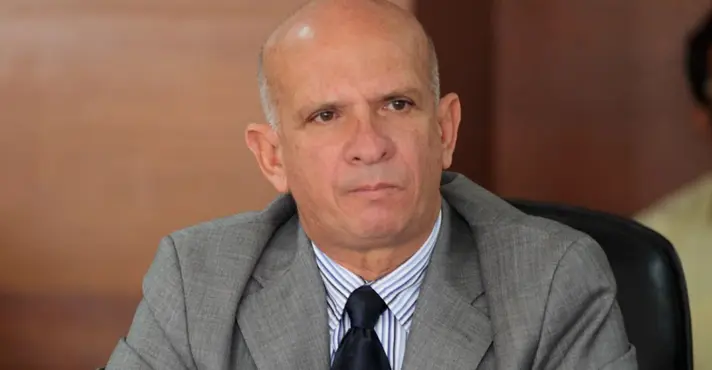
Emprisonné aux États-Unis, l’ancien général vénézuélien accepte un accord de plaidoyer.

Hugo Armando « El Pollo » Carvajal, ancien général vénézuélien | Photo : Wikimedia Commons/Reproduction

L’ancien général vénézuélien Hugo Armando Carvajal Barrios, connu sous le nom de « El Pollo », a accepté de coopérer avec les autorités américaines.

Accusé de diriger le Cartel de los Soles, une organisation criminelle formée par des hauts responsables vénézuéliens, Carvajal est considéré comme l’une des figures centrales reliant le régime chaviste au trafic de drogue et au financement de mouvements politiques à l’étranger.

Selon des documents et des sources cités par le site espagnol « The Objective » vendredi 17 octobre, Carvajal a admis faire partie du cartel et coopérer avec le groupe de guérilla colombien FARC pour envoyer de grandes quantités de cocaïne en Amérique du Nord.

En juin de cette année, il a plaidé coupable de quatre crimes – trafic de drogue, narcoterrorisme, possession et conspiration pour utilisation d’armes à feu – devant la Cour de district sud de New York.

Selon le ministère public nord-américain, l’ancien chef des renseignements sous Hugo Chávez « a utilisé la cocaïne comme une arme, inondant New York et d’autres villes nord-américaines de poison ».

L’accusation soutient que le Cartel de los Soles opérait au sein des Forces armées vénézuéliennes et utilisait des structures étatiques pour transporter et protéger des tonnes de drogue destinées aux États-Unis.

Le dictateur vénézuélien Nicolás Maduro dirige la célébration du 22e anniversaire du retour au pouvoir d’Hugo Chávez, après une tentative de coup d’État ratée en 2002 – 13/4/2024 | Photo : Leonardo Fernandez Viloria/Reuters

La confession de Carvajal pave la voie à une réduction possible significative de sa peine, qui pourrait aller de la prison à vie à environ vingt ans.

La cour a autorisé une audience finale pour évaluer les informations que l’ancien général est prêt à fournir en échange d’avantages judiciaires.

Selon « The Objective », Carvajal «est prêt à tout dire» (https://theobjective.com/espana/2025-10-17/exjefe-espias-chavistas-financiado-izquierda/), y compris des détails sur les accords entre le chavisme et les FARC et le transfert de ressources vers des partis et leaders de gauche dans divers pays.

Des sources proches de l’ancien officier militaire affirment qu’il a remis des documents inédits sur des réseaux de financement politique associés au gouvernement vénézuélien.

Le Venezuela a financé des mouvements de gauche dans le monde entier.

Carvajal a été extradé d’Espagne vers les États-Unis en 2023, après avoir passé deux ans en fuite. Pendant cette période, il a soumis un document de sept pages au système judiciaire dans lequel il déclarait que « le gouvernement vénézuélien a financé illégalement des mouvements politiques de gauche dans le monde entier pendant au moins 15 ans ».

L’ancien directeur du Renseignement militaire et de la Contre-intelligence a également écrit que, pendant son mandat, il avait reçu « une grande quantité de rapports indiquant que ce financement international avait lieu ».

Dans le même texte, il a listé des leaders et partis prétendument bénéficiaires de ressources envoyées depuis Caracas :

+ [Luiz Inácio Lula da Silva (Brésil) ;
+ Néstor Kirchner (Argentine) ;
+ Evo Morales (Bolivie) ;
+ Fernando Lugo (Paraguay) ;
+ Ollanta Humala (Pérou) ;
+ Mel Zelaya (Honduras) ;
+ Gustavo Petro (Colombie) ;
+ Mouvement des Cinq Étoiles (Italie) ; et
+ Parti Podemos (Espagne).

Selon le document, « tous étaient mentionnés comme destinataires d’argent envoyé par le gouvernement vénézuélien ».

Carvajal a également affirmé que la pratique s’était poursuivie sous le commandement de Nicolás Maduro, qui utilisait la compagnie pétrolière d’État PDVSA comme principale source de ressources.

Former Venezuelan General Accepts Plea Deal

Hugo Armando ‘El Pollo’ Carvajal, former Venezuelan general | Photo: Wikimedia Commons/Reproduction

The former Venezuelan general Hugo Armando Carvajal Barrios, known as “El Pollo,” has agreed to cooperate with investigations by United States authorities.
Accused of leading the Cartel de los Soles, a criminal organization formed by high-ranking Venezuelan officials, Carvajal is considered one of the central figures in the connection between the Chavista regime, drug trafficking, and the financing of political movements abroad.

According to documents and sources cited by the Spanish website « The Objective » on Friday, October 17, Carvajal admitted to being part of the cartel and cooperating with the Colombian guerrilla group FARC in sending large quantities of cocaine to North America.

In June of this year, he pleaded guilty to four crimes—drug trafficking, narcoterrorism, possession, and conspiracy to use firearms—before the Southern District Court of New York.

According to the North American Public Prosecutor’s Office, the former intelligence chief under Hugo Chávez “used cocaine as a weapon, flooding New York and other North American cities with poison.”

The accusation holds that the Cartel de los Soles operated within the Venezuelan Armed Forces and used state structures to transport and protect tons of drugs destined for the US.

Venezuelan dictator Nicolás Maduro leads the celebration of the 22nd anniversary of Hugo Chávez’s return to power, after a failed coup attempt in 2002 – 13/4/2024 | Photo: Leonardo Fernandez Viloria/Reuters

Carvajal’s confession paves the way for a possible significant reduction in his sentence, which could range from life imprisonment to about twenty years.

The court has authorized a final hearing to evaluate the information that the former general is willing to provide in exchange for judicial benefits.

According to « The Objective », Carvajal “is willing to tell everything (https://theobjective.com/espana/2025-10-17/exjefe-espias-chavistas-financiado-izquierda/)”, including details about the agreements between Chavismo and the FARC and the transfer of resources to left-wing parties and leaders in various countries. Sources close to the former military official claim that he delivered unpublished documents about political financing networks associated with the Venezuelan government.

Venezuela Financed Left-Wing Movements Around the World.

Carvajal was extradited from Spain to the US in 2023, after spending two years on the run. During this period, he submitted a seven-page document to the Justice system in which he stated that “the Venezuelan government illegally financed left-wing political movements around the world for at least 15 years.”

The former director of Military Intelligence and Counterintelligence also wrote that, while in office, he received “a large quantity of reports indicating that this international financing was occurring.” In the same text, he listed leaders and parties allegedly benefited by resources sent from Caracas:

+ [Luiz Inácio Lula da Silva (Brazil);
+ Néstor Kirchner (Argentina);
+ Evo Morales (Bolivia);
+ Fernando Lugo (Paraguay);
+ Ollanta Humala (Peru);
+ Mel Zelaya (Honduras);
+ Gustavo Petro (Colombia);
+ Five Star Movement (Italy); and
+ Podemos Party (Spain).

According to the document, “all of them were mentioned as recipients of money sent by the Venezuelan government.” Carvajal also claimed that the practice continued under the command of Nicolás Maduro, who used the state oil company PDVSA as the main source of resources.

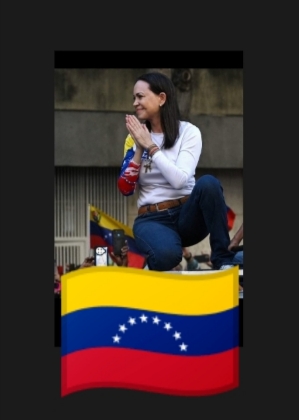
Why Venezuela Matters to U.S. Security. Transforming Venezuela: dismantling a criminal structure for a prosperous future. With Maria Karina Machado.

The story of Venezuela’s decline from the wealthiest nation in Latin America to a state poorer than Haiti is a stark warning of the consequences of unchecked socialism, communism, and criminal governance.

Once a beacon of prosperity, Venezuela’s vast resources—oil, gas, gold, minerals, and tourism potential—have been plundered by a regime that has turned the country into a hub for cartels, foreign adversaries, and repression.

Maria Karina Machado, the leader of Venezuela’s opposition, has emerged as a symbol of resilience, advocating for the dismantling of this criminal structure to restore the nation as a vibrant economic powerhouse.

In an exclusive interview on « American Optimists », Machado shared her vision for a free Venezuela, the threats posed by the current regime, and the critical role the United States can play in supporting this transformation.

The Fall of a Nation Venezuela’s descent began with Hugo Chavez, whose populist rhetoric promised equality but delivered destruction.

Chavez’s policies, rooted in socialist ideology, confiscated over 5,000 businesses and 22 million acres of productive land, crippling the private sector.

“The socialism Chavez preached needed a dependent society, begging with their hands out and heads down,” Machado explained.

This deliberate impoverishment was strategic, designed to consolidate power by making citizens reliant on the state.

The result was catastrophic: hyperinflation, food shortages, and the exodus of over 30% of the population. Under Nicolas Maduro, Chavez’s successor, the situation has worsened.

Maduro’s regime has transformed Venezuela into a “criminal hub of the Americas,” as Machado describes it. The country now serves as a base for drug cartels, including the notorious Tren de Aragua, and a haven for adversaries like Iran, Russia, and China.

According to the DEA, 24% of the world’s cocaine passes through Venezuela, facilitated by state infrastructure—ports, airports, and financial systems. Iran operates a military drone factory in Venezuela, and Russian arms deals have bolstered the regime’s military capabilities.

These activities not only destabilize Venezuela but also pose a direct threat to U.S. national security, with criminal networks operating just hours from Florida.

A Stolen Election and a Resilient Opposition.

The 2024 presidential election was a turning point. Machado, who won the opposition primary with 92% of the vote, was disqualified by the regime, yet her coalition secured over 70% of the vote in the general election.

Despite this overwhelming mandate, Maduro refused to relinquish power, accusing opposition leaders of terrorism. Over 2,000 people were imprisoned, 44 disappeared, and reports of torture, including against women and children, surfaced.

Machado herself has been in hiding for over a year, with a broken nose from an attack during a parliamentary session and constant threats to her life.

“They’ve accused me of everything in the penal code,” she said, yet her resolve remains unshaken. Machado’s courage stems from a deeply personal commitment.

The daughter of a visionary businessman, she was raised with a sense of responsibility to her nation. Initially an industrial engineer with a finance background, she founded Venezuela’s first libertarian party, challenging the socialist monopoly.

“I realized you can’t live on isolated islands when your country is collapsing,” she said. Her movement has united Venezuelans across divides—rural and urban, rich and poor—around a shared desire for freedom and prosperity.

The Criminal Threat to U.S. Security.

The Maduro regime’s criminal activities extend far beyond Venezuela’s borders. The Tren de Aragua cartel, led by figures aligned with Maduro, operates from Canada to Argentina, trafficking drugs and spreading violence.

The regime’s alliances with Iran, Russia, and China amplify its threat. Iranian drones, Russian military technology, and Chinese economic influence have turned Venezuela into a satellite for anti-Western powers.

“This is not just about regime change” Machado emphasized. “It’s about dismantling a criminal structure that is the biggest threat to U.S. national security.”

The Trump administration has taken bold steps to address this crisis. A $50 million bounty on Maduro, labeling him an international drug trafficker, signals a shift from past U.S. policies that hesitated to confront Latin American communism.

Designating cartels as foreign terrorist organizations further underscores the administration’s recognition of the threat. However, Machado argues that more can be done. Cutting off the regime’s revenue streams, particularly from oil, is critical.

“Every dollar Maduro gets is used for repression, violence, and destabilization,” she warned. Sanctions on oil exports, previously relaxed to allow companies like Chevron to operate, must be tightened to starve the regime of funds.

A $1.7 Trillion Opportunity.

Venezuela’s potential is staggering.

With the world’s largest proven oil reserves, vast gas deposits, gold, minerals, and a strategic location for tourism and telecommunications, the country represents a $1.7 trillion economic opportunity.

Machado envisions a Venezuela transformed into the “energy hub of the Americas,” with transparent governance, rule of law, and protections for private investment.

“American companies will have the opportunity of a lifetime,” she said, emphasizing a future where U.S. businesses can operate without the mafia-like constraints imposed by the current regime.

This vision is not just about economic gain but about regional stability.

A free Venezuela would weaken communist regimes in Cuba and Nicaragua, creating a domino effect across Latin America. Recent shifts in the region—Argentina’s embrace of free-market policies under Javier Milei and Bolivia’s rejection of leftist rule—signal a growing rejection of socialism.

“If there’s one country that rejects socialism, it’s Venezuela,” Machado said. “We’ve suffered too much to repeat those mistakes.”

The Path Forward Machado’s plan for Venezuela’s revival is rooted in unity and ambition.

“We’ve broken down the barriers the regime built to divide us,” she said, noting that 90% of Venezuelans now share a common goal: ousting Maduro and rebuilding a prosperous nation.

Her roadmap includes immediate actions in the first 100 hours and days post-regime, focusing on restoring the rule of law, attracting investment, and repatriating millions of Venezuelans who fled.

“Our children will come home,” she promised, highlighting the emotional drive behind her movement. For the United States, the policy is clear: this is not about regime change but about dismantling a criminal enterprise.

Machado urges the U.S. to send strong messages to Maduro’s allies—Russia, China, Iran, and Syria—warning them against supporting a regime that undermines Western democracies.

The Trump administration’s firm stance, including sanctions and diplomatic pressure, must be sustained and expanded. The Treasury and State Departments can further isolate the regime by targeting its financial networks and exposing its international enablers.

Lessons for America Venezuela’s collapse offers a cautionary tale for the United States.

Chavez’s rhetoric—vilifying the wealthy, confiscating property, and dividing society—echoes some contemporary American political narratives.

“Twenty-six years ago, people said it couldn’t happen in Venezuela,” Machado warned.

“It can happen anywhere.” The U.S. must remain vigilant against policies that erode private property, foster dependency, or enable criminal networks.

Supporting Venezuela’s transition to democracy is not just a moral imperative but a strategic necessity to prevent the spread of chaos in the Americas.

A Call to Action.

Maria Karina Machado’s courage and vision inspire hope not only for Venezuela but for the entire Western Hemisphere.

Her message to Americans is clear: “This is the greatest opportunity of our lifetime.”

By supporting Venezuela’s fight for freedom, the U.S. can help transform a nation in ruins into a vibrant ally, unlocking immense economic potential and securing the region against criminal and authoritarian threats.

As Machado put it, “We will turn this tragedy into a true land of grace.” The stakes are high, but the rewards are higher.

A free Venezuela promises stability, prosperity, and a rejection of the failed ideologies that have plagued Latin America. With the Trump administration’s bold actions and the resilience of leaders like Machado, the dream of a revitalized Venezuela is within reach.

The question is whether the U.S. and its allies will seize this moment to reshape the future of the Americas.