Introduction :
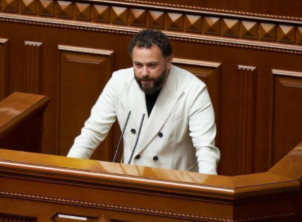
On July 21, 2025, a shocking letter from Oleksandr Dubinsky, an imprisoned Ukrainian MP and presidential candidate, addressed to Tulsi Gabbard, Director of U.S. National Intelligence, shook the international stage.
Letter to Gabbard
From his cell, where he claims to endure documented torture, Dubinsky accuses Ukrainian President Volodymyr Zelensky of orchestrated repression with Washington’s complicity.
This article, reviewed and validated by Dubinsky from his cell, lays out his explosive allegations: corruption linked to Hunter Biden, U.S. electoral interference, and an urgent call for peace.
As ceasefire negotiations between Ukraine and Russia falter amid conflicting demands, and U.S. military aid wavers under the Trump administration, could these revelations reshape international alliances?
Brutal Repression Under Zelensky.
Imprisoned since November 2023 without trial, Dubinsky denounces abuses ordered by Ukraine’s Security Service (SBU) under Zelensky’s directives. Medical evidence, such as X-rays of fractured ribs, corroborated by the Ukrainian Ombudsman, supports his claims. He cites the death of Gonzalo Lira, an American who died in detention under inhumane conditions, as a similar case. “They want to silence me,” Dubinsky declares, linking his persecution to his revelations about corruption and opposition to the war. He claims to have survived two assassination attempts orchestrated by what he calls a “tyrannical regime.”
This repression fits a broader pattern.
In 2021, Zelensky shut down independent TV channels (112 Ukraine, NewsOne, ZIK) and, in 2022, banned opposition parties, labeling dissenters as “Russian agents” to stifle criticism. According to Dubinsky, the war serves as a pretext to consolidate power and align Ukraine with U.S. electoral interests.
Corruption and Interference: The Shadow of Burisma.
At the heart of Dubinsky’s accusations is Burisma, where Hunter Biden served on the board. In 2019, alongside Andriy Derkash, Dubinsky exposed documents revealing the misappropriation of Ukrainian public funds. These revelations led to U.S. sanctions against Derkash, which Dubinsky claims were based on fabricated accusations by an NGO linked to USAID, the Anti-Corruption Action Centre (AntAC).
He alleges that 140 corruption investigations, including major cases like the coal scandal (Medvedchuk, Poroshenko) and the ship scandal (Ukroboronprom), were destroyed in 2022 on Zelensky’s orders. Dubinsky accuses U.S. agencies, including the FBI and the State Department, of suppressing these scandals to protect the Bidens. A text exchange between David Arachamiya, head of the “Servant of the People” faction, and Kristina Kvien, former U.S. Chargé d’Affaires in Kyiv, allegedly suggests pressure to marginalize Dubinsky after his revelations.
A Tense Geopolitical Context.
In 2025, relations between Ukraine, the U.S., and Russia are highly strained. Peace negotiations, relaunched in Munich in February, have stalled, with Trump conditioning military aid on internal reforms. The appointment of Tulsi Gabbard, a critic of the establishment, as U.S. intelligence director, fuels Dubinsky’s hope. His calls to investigate past electoral manipulations align with his accusations.
In Europe, positions diverge: Germany hesitates, France pushes for mediation, and the UK staunchly supports Kyiv. Dubinsky’s revelations, particularly about scandals like the purchase of unsuitable uniforms through a shell company linked to a Zelensky associate, could further weaken Western support.
The Alleged Influence of Soros.
Dubinsky points to George Soros and his NGO AntAC, accusing them of controlling media, justice, and law enforcement to prepare Ukraine for war. Founded in 2016 and partly funded by USAID, AntAC was involved in releasing documents against Paul Manafort in 2016, suggesting interference in U.S. elections. Dubinsky sees these structures as tools to discredit pro-peace voices.
A Plan for Peace:
Dubinsky proposes a peace vision aligned with Trump’s ideas, criticizing Zelensky for sabotaging talks. He calls for:
- Ending the persecution of the Ukrainian Orthodox Church.
- Decentralizing power with elected governors.
- Holding referendums on NATO and EU membership.
- Avoiding escalation toward nuclear war.
He has appealed to Ukraine’s Supreme Court to demand elections, denouncing the lack of voting despite the expired parliamentary mandate. “Free elections are the only way to save Ukraine,” he insists, advocating for a return to constitutional order.
A hearing is scheduled for September 25, 2025.
A Call for Truth.
Dubinsky’s accusations depict a Ukraine under siege, caught between corruption, repression, and foreign interference. He warns of a Zelensky campaign to discredit Trump via a “Russiagate 2.0,” using his trial as a political weapon. He urges the international community to investigate and warns: elections under martial law with a single candidate could plunge Ukraine into civil war.
Ukraine’s Supreme Court must decide: will the Constitution be upheld, or will the current regime extend its power without legitimacy? The future of Ukraine’s relations with the U.S. and Russia hinges on this answer.
Notes:
The document is an official letter issued by the Ukrainian Parliament’s Human Rights Commissioner, addressed to Dmytro Lubinets, Ukraine’s Ombudsman. Dated December 8, 2023, it details the handling of human rights complaints filed under case numbers such as № 5076.
The letter spans three pages and is part of a formal investigation triggered by appeals received between December 6 and 8, 2023.
It describes the Commissioner’s response to these complaints, outlining a preliminary review conducted from December 6 to 8, 2023, and subsequent actions, including information requests sent to entities like the National Border Guard Service and the Ministry of Defense.
Specific deadlines are noted, such as a 29-day response period from the date of receipt.
The document references internal coordination between departments, such as the Appeals Department and the Secretariat, and includes signatures from key officials: Dmytro Lubinets, I.B. Masliyov, I.M. Pisemniy, B.M. Nikitenko, and O.B. Dolii, confirming its authenticity.
This letter reflects the Ombudsman’s mandate to protect human rights and oversee government accountability in Ukraine.
It addresses alleged violations or grievances raised by citizens, with the Commissioner’s Office acting as an intermediary to ensure proper investigation. The inclusion of QR codes, official stamps, and detailed case references (e.g., № 2939, № 2297) indicates a structured legal process.
Some cases remain under review, suggesting ongoing efforts to resolve issues.
In summary, this is a bureaucratic record of due diligence, documenting the step-by-step handling of complaints, inter-agency communication, and adherence to legal deadlines, all aimed at upholding human rights standards in Ukraine as of late 2023.