How Washington Built the Institutional Framework That Carried Lula to Power.
Original Portuguese source available here.
There was intense international interference in Brazil’s 2022 elections—the most consequential since the return to democracy—and it did not come from Bolsonaro’s camp.
It came from an organized left, a network of NGOs funded by foreign foundations, a judicialized activism, and sectors of the press aligned on a single goal: Lula’s victory.
What was presented as a “defense of democracy” was, in reality, a coordinated attempt at external tutelage over the electoral process.
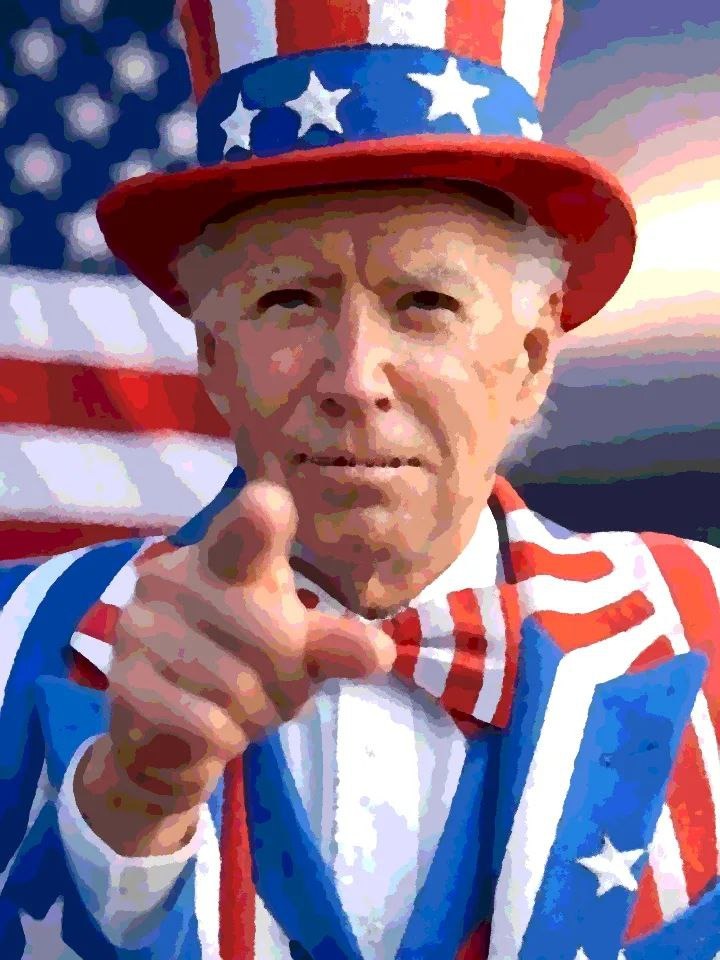
Journalist Cláudio Dantas aptly named this arrangement “Operation Uncle Joe”, a reference to Operation Brother Sam, the 1964 U.S. mission to support the military coup that overthrew João Goulart.
At that time, the mere approach of U.S. Navy ships off the Brazilian coast was enough to intimidate any resistance and ensure the success of the rupture.
In 2022, Uncle Sam’s action was more subtle—and therefore more effective. Diplomatic letters, high-level visits, public messages of support for institutions, and campaigns orchestrated by NGOs funded by international billionaires exerted a new, more sophisticated form of political pressure.Curiously, the same arguments used in 1964 to justify the military’s “preventive counter-coup” are now echoed by defenders of judicial censorship.
The left, which once condemned U.S. interference in Brazil, now defends it—so long as it is directed against its adversaries. But there is a major difference. In 1964, there was a concrete threat of armed rupture: Soviet influence, Cuban-trained guerrillas, and violent revolutions underway across the continent. The fear, though perhaps exaggerated, had a basis—even if it did not justify U.S. intervention.
In 2022, that fear was manufactured. There were no tanks, no revolution. Only demonstrations, criticism, and memes on social media. Yet the narrative of an institutional emergency was used to justify censorship, persecution, and political imprisonment.
As I revealed in my investigations into the “Censorship Industrial Complex,” the United States did not merely observe events in Brazil—it actively participated, politically containing the domestic situation. The irony is that this arrangement was born in the United States, stemming from the panic over alleged Russian interference in the 2016 election.
For Washington, the problem has never been interference itself—but who carries it out.In the end, Brazil once again became a pawn on the chessboard of global interests.
The Pressure from Abroad.
While Operation Brother Sam was only revealed a decade later with the declassification of official U.S. documents, the current operation was unexpectedly exposed.
On May 13, 2025, during an international event in New York, Supreme Federal Court (STF) Justice Luís Roberto Barroso, the court’s current president, openly admitted:“I went to the United States to ask for help in containing the ‘authoritarian wave’ in Brazil.”
This statement, made without hesitation at Brazil Week—organized by the LIDE group founded by João Doria—in front of entrepreneurs, diplomats, and political leaders, took place at one of those events held far from the Brazilian public to discuss the country’s future.
According to Barroso, while presiding over the Superior Electoral Court (TSE), he met at least three times with the U.S. chargé d’affaires in Brazil, requesting public statements from the U.S. government in support of the Brazilian electoral system.“I think it had some effect, because Brazilian military officers don’t like to quarrel with the United States, where they receive their training and equipment,” he said, in a rare moment of candor about the international coordination behind the institutional framework of the elections.
This was just one of many “slips” by Barroso, who had previously exposed the judiciary’s political bias on other occasions:
- “You lost, man, stop bothering us”—said to a Bolsonaro supporter in New York;
- “We defeated Bolsonarism”—declared at the UNE congress in July 2023, after Lula’s victory;
- “An election isn’t won, it’s taken”—a phrase he uttered, then attributed to someone else, claiming it was taken out of context.
Cláudio Dantas, in an article on his site, pointed out that Barroso committed at least two indiscretions by publicly discussing his coordination with the United States during the 2022 elections.
The first was revealing the name of his diplomatic interlocutor—Douglas Koneff, then U.S. chargé d’affaires in Brazil.
The second, more revealing, was almost verbatim repetition of a statement attributed to a “high-level Brazilian authority” in a 2022 Financial Times article about a “quiet campaign” by the White House to ensure Brazil would respect the election results.
At the time, the British newspaper quoted the anonymous source as saying:“The U.S. statement was very important, especially for the military. They receive equipment from the United States and train there, so having good relations with the United States is very important for Brazilian military officers.”Barroso repeated the same argument, almost literally, to justify his request for U.S. diplomatic support: Brazilian military officers “don’t like to quarrel with the United States,” and Washington’s gestures “may have played a role” in managing the institutional crisis.
For Dantas, this coincidence is revealing. Either Barroso memorized the anonymous source’s phrase and repeated it like a political mantra, or he was the source in 2022. If the latter, the then-TSE president acted not only as an electoral judge but also as an informal architect of diplomatic pressure and the international narrative that Bolsonaro was preparing a coup.
The facts support this hypothesis. Koneff was the diplomat representing the United States at the July 18, 2022, meeting at the Alvorada Palace, where Jair Bolsonaro presented a series of criticisms of the Brazilian electoral system, questioning the security of electronic voting machines and the TSE’s actions—criticisms that later formed the basis for his ineligibility.
The next day, the U.S. Embassy in Brasília, under Koneff’s direct responsibility, issued an official statement reaffirming its “confidence in Brazil’s democratic institutions” and emphasizing that the country’s electoral system was a model for other nations.The statement read:
“Brazilian elections, conducted and tested over time by the electoral system and democratic institutions, serve as a model for nations in the hemisphere and the world. We are confident that the 2022 Brazilian elections will reflect the will of the voters.”
This communiqué was widely covered by Brazilian and international media, interpreted as a direct rebuke of Bolsonaro’s speech and public support for the TSE under Alexandre de Moraes. Today, we know it was directly solicited by Barroso in prior meetings with Koneff.Rather than protecting national sovereignty, Barroso admitted seeking political support from a foreign power to contain a domestic adversary under the pretext of “defending democracy.”
This admission dismantles any narrative of institutional impartiality. It reveals that the STF, under Barroso and later Moraes, acted as an active player in a transnational coalition involving foundations, platforms, think tanks, and diplomats, with the clear aim of neutralizing Bolsonaro and shielding the electoral process from legitimate contestation.
The Many “Little Visits” by ForeignersParallel to this, senior Biden administration officials made a series of strategic visits to Brazil between 2021 and 2022—always under the diplomatic rhetoric of “confidence in the voting machines,” but with a strong subtext of political surveillance, military warning, and institutional containment. According to Cláudio Dantas, these visits formed a far-from-discreet campaign disguised as democratic protection but operating as an international operation of psychological pressure and institutional discipline.
The first was CIA Director William Burns, who arrived in Brasília in July 2021 and met with Jair Bolsonaro and hard-core advisers like Augusto Heleno. The visit was presented as a gesture of democratic concern, but—as Dantas noted—it involved a figure accustomed not to diplomacy but to psychological operations, lawfare, information manipulation, institutional sabotage, and even political insurrection. Burns does not come from the State Department’s moderate wing—he comes from the cavalry of what is now called hybrid warfare.
Shortly after, in August 2021, the Biden administration sent two key advisers: Jake Sullivan, National Security Advisor, and Juan González, Director for the Western Hemisphere. They met Bolsonaro, Braga Netto, and Heleno. As the U.S. press itself acknowledged, the real objective was to contain Bolsonaro’s growing rhetoric against electronic voting machines.
The strategy had an immediate effect. The following month, the first official U.S. statements defending the Brazilian electoral system emerged—before any concrete allegations of fraud or coup attempts.In April 2022, Victoria Nuland, Under Secretary of State for Political Affairs, visited Brasília with Ricardo Zúñiga for a Brazil-U.S. High-Level Dialogue meeting. Though officially diplomatic, the agenda and political context suggest other objectives.
In a CNN interview, Nuland confirmed that the Brazilian elections were discussed, stating that Brazil had one of the safest and most transparent voting systems in South America.
On June 1, 2022, Juan González publicly declared U.S. confidence in Brazilian electoral institutions, emphasizing their robustness—just before the 9th Summit of the Americas in Los Angeles, where President Joe Biden met Bolsonaro.Shortly after the U.S. Embassy note under Douglas Koneff, Defense Secretary Lloyd Austin visited Brazil on August 5, 2022, meeting Braga Netto, Mourão, Heleno, and Admiral Flávio Rocha. Austin is not a diplomat—he is a military hardliner and Iraq veteran.
The message was clear: there would be no room for electoral contestation, and any challenge could lead to immediate international isolation.The climax came later. After the January 8, 2023, events, Secretary of State Antony Blinken reinforced the “coup attempt” narrative and expressed solidarity with Barroso and Moraes. Joe Biden even called Lula directly, solidifying internationally the narrative that Brazil had suffered an insurrection inspired by the U.S. January 6.
Asymmetry and Hypocrisy
Days after the meeting with ambassadors, on July 24, a delegation organized by the Washington Brazil Office (WBO)—an entity created to bridge Brazilian progressives and the U.S. political establishment—traveled to Washington. For six days, the group—composed of NGO leaders, former PT government officials, and identity activists—met with State Department diplomats and Democratic lawmakers, including Jamie Raskin and Bernie Sanders.
The agenda was kept secret to avoid interference from Brazilian diplomacy.According to journalist João Paulo Charleaux in Piauí magazine, the delegation aimed to demonstrate that Bolsonaro had the means and intent to sabotage the elections with military, police, and armed civilian support. They argued Brazil lacked the institutional capacity to contain this movement alone and needed a firm external response to deter the president.
The delegation sought to amplify the narrative of a democratic risk and increase international pressure before the electoral process even began.After these meetings, the flow of public U.S. statements expressing confidence in the Brazilian electoral system intensified—even though the U.S. does not use the electronic voting system it began praising in Brazil.
The State Department, White House, and Democratic lawmakers issued notes, statements, and joint letters. The most forceful was signed by 39 U.S. Congress members urging President Biden to make it “unequivocal” to Bolsonaro and the armed forces that any democratic subversion would isolate Brazil internationally.
The delegation included figures like Anielle Franco (Marielle Franco Institute), Sheila de Carvalho (Peregum Institute and Prerrogativas group), Paulo Abrão (former Justice secretary under Dilma), Rogério Sottili (Vladimir Herzog Institute), and Paulo Vannuchi (Arns Commission). Many—especially Black and indigenous women—later took positions in the Lula government, consolidating the convergence between NGO structures, parallel diplomacy, and the new administration.Charleaux called this visit “Operation Brother Sam in reverse.” This time, the calls for engagement came from the Brazilian left, which began using the same mechanisms it once condemned, asking Washington to intervene preventively in the national political process.
For Charleaux, this time the Americans were on democracy’s side.But when right-wing figures seek political dialogue in the United States, the institutional and media treatment is radically different. An action considered “defense of democracy” when carried out by left-wing leaders becomes a “conspiracy against sovereignty” when undertaken by an opponent.In February 2025, federal deputy Eduardo Bolsonaro (on leave) traveled to the United States, meeting Republican lawmakers and figures close to Donald Trump.
According to Eduardo, his trip aimed to mobilize international support for victims of judicial abuse in Brazil, denounce the situation of January 8 political prisoners, and push for sanctions against authorities responsible for systematic rights violations—including Justice Alexandre de Moraes.Accused of undermining national sovereignty, PT deputies Lindbergh Farias and Rogério Correia filed a criminal complaint against Eduardo with the STF, requesting seizure of his diplomatic passport and investigation for alleged crimes like coercion, obstruction of a criminal organization probe, and conspiracy against the democratic order—all without tangible evidence.
Justice Alexandre de Moraes accepted the complaint and, instead of dismissing it outright, forwarded it to the Prosecutor General’s Office (PGR). The PGR responded that there were no minimal elements justifying an investigation or precautionary measures but kept the case pending for weeks, fueling speculation and media exploitation by government-aligned outlets.
The case was only archived in March, coinciding with the official visit of OAS Special Rapporteur for Freedom of Expression Pedro Vaca, who expressed concern over escalating judicial measures against political opponents and misuse of legal instruments to silence dissent. By then, Eduardo Bolsonaro had requested leave from his seat and announced he would remain in the United States, citing institutional persecution and threats to his freedom of expression and personal safety.“Moraes considered that I violated Brazilian sovereignty and asked the PGR about seizing my passport. So what about the confession of the current STF president and former TSE president, Barroso? Is it within a Supreme Court justice’s remit to ask the Biden government to intervene in our election? Of course not. That is a conspiracy. Grounds for impeachment,” Eduardo wrote on X.
Chronology of Meetings2021
July
CIA Director William Burns visits Brasília on July 1. Meets President Jair Bolsonaro and key advisers Augusto Heleno and Luiz Eduardo Ramos.August
U.S. National Security Advisor Jake Sullivan and Western Hemisphere Director Juan González visit Brazil. Meet Bolsonaro, Braga Netto, and Heleno.2022
April
Under Secretary of State Victoria Nuland visits Brasília with Ricardo Zúñiga for a Brazil-U.S. High-Level Dialogue.June 1
Juan González publicly declares U.S. confidence in Brazil’s electoral system on the eve of the 9th Summit of the Americas.
August 5
U.S. Defense Secretary Lloyd Austin visits Brazil. Meets Braga Netto, Mourão, Heleno, and Admiral Flávio Rocha.The Role of American NGOsInternational interference in the 2022 elections was not limited to the U.S. government. Numerous organizations funded by foreign—primarily American—foundations acted directly in Brazil during the electoral period.
One major initiative aimed to increase youth political participation, targeting the segment where Lula overwhelmingly led in voting intention—young voters who had not lived through the Mensalão scandal or Operation Car Wash and thus had less resistance to Lula.
Behind this mobilization was the agency Quid, linked to PSOL’s activist bloc, with support from NGOs with a history of foreign funding and strong progressive engagement.
Among them was NOSSAS, a nonprofit that develops social mobilization campaigns to strengthen “democracy, social justice, and equality.” Though not openly partisan, all causes it promotes are left-wing. NOSSAS is funded by billionaire groups including Open Society, OAK Foundation, Skoll Foundation, Tinker Foundation, Malala Fund, Instituto Avon, and others.
Another supporting organization was Girl Up, a feminist group focused on teenage girls, known in Brazil for promoting the free menstrual pad campaign (in which NOSSAS also participated).
Girl Up was created by the United Nations Foundation (UNF), a U.S.-based international organization and strategic UN partner. Besides the U.S. government, UNF receives funding from Johnson & Johnson (a major pad manufacturer), the Bill & Melinda Gates Foundation, Nike Foundation, Royal Dutch Shell, and Disney.The campaign featured celebrities like Anitta, Juliette, Felipe Neto, and Hollywood actors Mark Ruffalo and Leonardo DiCaprio, with carefully scripted messaging designed to appear spontaneous—but functioning as a professional mobilization machine serving Lula’s campaign.
According to portal Metrópoles, the PT itself invested about R$100,000 in a similar mobilization explicitly aimed at securing more votes for Lula.Later, the Passe Livre pela Democracia movement emerged with the same aesthetic, operators, and goals: pressuring city halls and courts to guarantee free public transport on election days under the pretext of fighting abstention.
This operation was organized via BONDE, a platform managed by NOSSAS and used by Sleeping Giants—a group that tracks and attempts to demonetize non-aligned activists and media—and received support from many entities involved in youth vote mobilization.
These campaigns were not isolated. They fit into a continuous strategy of occupying public debate through artificially boosted digital mobilizations, almost always coordinated via BONDE. Examples include Cada Voto Conta, Marco Temporal Não!, Toma Café com Elas, SP sem Canudos, and A Eleição do Ano. Aesthetics, themes, and faces change—but the structure remains: movements presented as spontaneous that, in practice, function as auxiliary arms of a political project articulated with foundations, parties, and governments.
Had Lula lost, the narrative was ready: low turnout among the poor would justify contesting the result. Since he won, the rhetoric flipped—the opposition was accused of “sabotaging access to voting.” In 2023, then-Federal Highway Police director Silvinei Vasques was arrested on Alexandre de Moraes’s order, accused of organizing checkpoints in the Northeast on election day—interpreted as voter suppression.
A measure initially presented as protecting voting rights became a tool of political persecution.
Brazil as a Laboratory for American Censorship
International action favoring censorship in Brazil did not begin with the 2022 elections—it predates them. Since the emergence of the Censorship Industrial Complex (CIC), Brazil has been transformed into a testing ground for the new content moderation architecture developed in the United States after the Cambridge Analytica scandal and Donald Trump’s election.
As early as 2017, the Superior Electoral Court (TSE) held meetings with representatives from ABIN (Brazilian intelligence), digital platforms, NGOs, and foreign agencies—including the FBI and U.S. Department of Justice—to discuss disinformation strategies. In one, U.S. agents shared experiences in combating foreign interference and content suppression on social media.
Initially confidential minutes show discussions already included proposals like rapid account blocking, AI surveillance, creation of “trusted” site lists, and categorizing critical content as fake news based on reports from international NGOs like First Draft.
This was just the beginning of an authoritarian ecosystem that, under the pretext of protecting democracy, began controlling information, punishing dissent, and restricting freedom of expression.
What started as preventive action against fake news consolidated into a permanent system of surveillance and censorship institutionalized within the state itself.This environment paved the way for the next step: direct platform action.
Under political and media pressure, platforms developed preventive narrative containment mechanisms—in partnership with activist NGOs, “disinformation analysis” labs, and allied governments.
This new machinery was inaugurated in Brazil in July 2018, before Jair Bolsonaro’s election.That month, Facebook announced the removal of 196 pages and 87 Brazilian profiles.
Primary targets included the Movimento Brasil Livre (MBL), regional MBL-linked pages, the Brasil 200 group led by entrepreneur Flávio Rocha (a recent presidential pre-candidate), pro-Bolsonaro channels, and even apolitical pages.According to the platform, these pages “violated authenticity policies” by operating a coordinated network using fake accounts to hide the nature and origin of content aimed at generating division and spreading disinformation.
No concrete information on the allegedly disinformative content was provided. The timing—months before the presidential election—raised suspicions about true motives.
Two years later, on July 8, 2020, the pattern repeated. Facebook removed 88 digital assets: 35 accounts, 14 pages, 1 group, and 38 Instagram profiles. Targets were directly linked to Bolsonaro’s political core—including presidential office staff, Flávio and Eduardo Bolsonaro’s offices, and PSL deputies.
A central figure was Tercio Arnaud Tomaz, presidential adviser and administrator of the “Bolsonaro Opressor 2.0” page with nearly one million followers.Both operations received technical support from the Digital Forensic Research Lab (DFRLab) of the Atlantic Council—a U.S. think tank linked to NATO, funded by Western governments, multinationals like Chevron, and Facebook itself (which donated $1 million in 2018).
DFRLab had been monitoring Brazil since May 2018, tracking amplification of “electoral fraud” claims by conservative groups.Using OSINT techniques, the lab produced reports, mapped content clusters, and established account connections—even without evidence of legal violations. The 2020 takedown was detailed: Facebook disclosed engagement metrics and ad spending ($1,500), and DFRLab published a Medium report with org charts linking operators to official offices.
Testimony to the Fake News Parliamentary
Inquiry by former Bolsonaro allies like Joice Hasselmann, Alexandre Frota, and Heitor Freire reinforced the “Cabinet of Hate” thesis. The STF, in inquiries led by Alexandre de Moraes, began directly using DFRLab reports as grounds for judicial measures—including search warrants.Brazilian media quickly adopted the narrative.
Criteria for removals were opaque and selective, targeting only one political spectrum. Transparency was minimal. In 2018, Facebook only disclosed the list of removed profiles after pressure from the Goiás Federal Prosecutor’s Office.
No details on alleged violations were provided.Importantly, this structure was not limited to Brazil. In 2020, DFRLab co-founded the Election Integrity Partnership (EIP) in the United States, which monitored and intervened in real time during the U.S. presidential election using the same model pioneered in Brazil—OSINT analysis, internal platform data, silent removals, and alignment with state organs. Brazil was the prototype.
Since then, a transnational political moderation ecosystem has consolidated, comprising Big Tech, analysis labs, fact-checking agencies, media, and supreme courts. Its institutional ties and cross-funding shaped the Censorship Industrial Complex—a structure that operates under the justification of defending democracy but in practice promotes selective censorship and political persecution of specific groups.
Under the pretext of combating disinformation, an alliance formed between digital platforms, international NGOs, and progressive governments to monitor, punish, and silence opponents.
American Funding of Censorship in BrazilIn a report co-authored for Civilization Works, a think tank founded by Michael Shellenberger, we detailed how repression of free speech in Brazil has been systematically fueled by foreign funds, international expertise, and direct cooperation with Western powers—especially the United States government.
The country became a testing ground for the global Censorship Industrial Complex (CIC), which operates under the pretext of “fighting disinformation” but aims to suppress dissenting voices and control digital information flow.Key funders include the U.S. State Department, USAID, and the National Endowment for Democracy (NED)—the latter created in the 1980s to openly replace covert CIA political operations.
As NED co-founder Allen Weinstein told the Washington Post in 1991: “A lot of what we do today was done covertly 25 years ago by the CIA.”According to Mike Benz, former State Department official and director of the Foundation for Freedom Online, Brazil was the site of the world’s first experiment in direct censorship within encrypted environments.
During the 2022 electoral cycle218 cycle, under judicial pressure and with support from Washington-funded NGOs, Telegram was forced by Alexandre de Moraes to remove pro-Bolsonaro accounts and content and install internal moderation mechanisms. WhatsApp, under international influence, had already restricted message forwarding since 2019.
For the first time, private messages between family and friends were treated as potential threats to democracy and подвер subjected to systematic surveillance.Entities like DFRLab, Meedan, Poynter Institute, Information Futures Lab (IFL), and Stanford Internet Observatory structured a multi-layered moderation network. DFRLab trained TSE officials and published reports used by the STF to justify judicial actions.
Meedan, via the Confirma 2022 project, provided the TSE with tools to insert “fact-checks” directly into private WhatsApp groups—with support from Aos Fatos, Lupa, Projeto Comprova, and funding from U.S. foundations.NED and USAID also funded portals like Countering Disinformation and the Design 4 Democracy (D4D) coalition, which includes Brazilians aligned with the current government, such as Marco Ruediger, director of public policy analysis at FGV.
He advocated internally at the TSE for creating a list of “trusted” sites—a state credibility label that would in practice bolster aligned media and cast suspicion on others.The ecosystem extends into academia.
The most emblematic case is NetLab at UFRJ, directed by Rose Marie Santini. Though presented as an independent research center, it has become a key piece in attacks on STF critics and the opposition. Its reports have supported actions by the Justice Ministry, STF decisions, and Senacon measures. In 2023, it accused Google of manipulating algorithms against the Fake News Bill—leading to content censorship, federal police summons, and threats of R$1 million/hour fines.
The PGR later archived the case for lack of evidence. Between 2023 and 2024, NetLab received approximately R$8.3 million from foundations including Open Society, Ford Foundation, Serrapilheira, and Greenpeace.
Another revealing case is Instituto Vero, founded by YouTuber Felipe Neto. The NGO received over R$1 million from Open Society and approximately $30,000 from the U.S.
Embassy starting in 2023. According to the Twitter Files Brasil, Felipe Neto used privileged channels with Twitter executives to push for censorship of political opponents and content contradicting official pandemic narratives.Sleeping Giants Brasil is also part of this circuit.
Created in 2020 as a supposedly apolitical consumer movement, it acts exclusively against right-wing voices. It received over $470,000 from Ford Foundation and Open Society, plus R$200,000 from Instituto Serrapilheira for a vaccination study whose results were never published.
From Uncle Sam to Comrade
XiIt was an almost perfect arrangement—operating outside national legislation, popular will, and democratic transparency—but it began to collapse with Donald Trump’s return to the political stage. Brazil, however, remains under strong external influence.
During a recent official visit to China, Lula asked Xi Jinping to send a trusted representative to Brazil to discuss social media regulation. First Lady Janja interrupted the meeting to accuse TikTok—controlled by the Chinese regime itself—of favoring the far right and spreading disinformation. The embarrassment was immediate.
But the episode revealed more than diplomatic amateurism: it exposed the Brazilian government’s explicit desire to import, with a dictatorship’s approval, a model of centralized surveillance and narrative control—under the pretext of protecting democracy.
While the world begins to break from the Censorship Consensus, Brazil moves in the opposite direction: strengthening ties with authoritarian regimes, adopting repressive practices, and doubling down on a project of total information control.
It remains to be seen how long the population will accept being treated as a manipulable mass in a global experiment in social engineering.