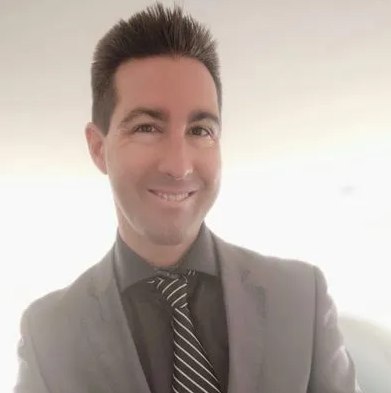
Antoine Bachelin Sena is a strategic risk analyst based in São Paulo, Brazil, specializing in transnational hybrid networks and institutional vulnerabilities in Latin America.
His research examines how these networks embed themselves in legal and financial systems across the region and develops analytical frameworks to assess how these infrastructures exploit institutional vulnerabilities.
He has written and published several books and analytical works.
Research Areas.
- Structural Geopolitical Risk in Latin America,
- Transnational Network Infrastructure & Regulatory Asymmetry.
Analytical Approach & Research Focus.
His work is grounded in the analysis of upstream cognitive architectures that precede political decisions and visible conflicts.
Rather than reacting to current events, he examines how meaning is produced, framed, distorted, and stabilized through narratives, moral frameworks, and information environments.
We live in a world saturated with data but structurally impoverished in understanding.
This paradox is central to his research.
He argues that contemporary power increasingly operates through perception management rather than direct coercion, transforming the cognitive domain into a permanent field of conflict.
Conceptual Framework: Cognitive Distortion.
A key concept developed in his work is cognitive distortion: the process by which reality is fragmented, emotionally hierarchized, and morally simplified in order to generate adherence rather than comprehension.
Intellectual Positioning & Publications.
His analyses do not align with predefined political camps. He examines both dominant and dissident narratives, emphasizing that opposition alone does not guarantee lucidity.
Ideological blind spots, sacred narratives, and selective indignations can exist across the entire political spectrum.
His research crosses geopolitics, media studies, political economy, philosophy, and collective psychology, not to juxtapose disciplines, but to reveal their deep interactions.
In this perspective, geopolitics is not only a matter of territories, but of perceptions; and media do not merely inform, they configure reality.
He publishes long-form analytical articles and participates in interviews and discussions across independent media platforms.
His work is intended not to reassure or mobilize, but to equip critical thinking and restore intellectual autonomy in an age of narrative saturation.
For institutional or confidential inquiries, see Strategic Notes & Advisory.