Introduction.
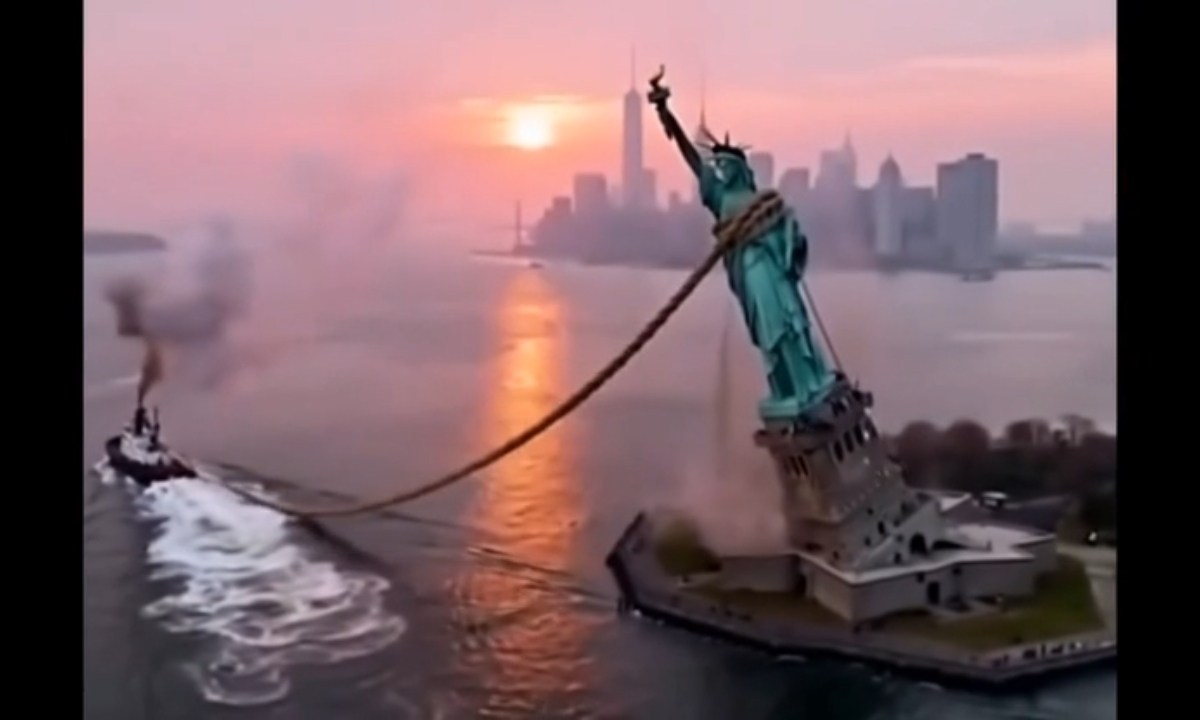
The American thinker Philip Rieff, in his final book, « My Life Among the Deathworks » (University of Virginia Press, 2006), provides a framework for explaining why contemporary nihilism paves the way for an Islamization that infiltrates subtly, allied with communist forces and cultural Marxism.
This is a cultural jihad that, far from being a mere military conquest, operates over the long term through psychological, ideological, and spiritual warfare, exploiting the weaknesses of secularized Western society.

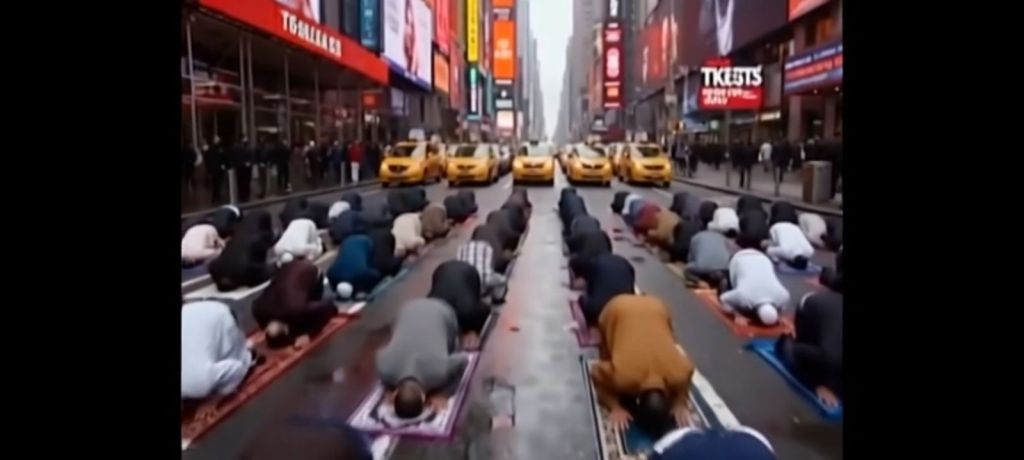
To understand this phenomenon, let us take a step back with an overview and begin with an analysis of culture as an expression of divine order, inspired by the works of Philip Rieff.
The Sacred Order and Western Nihilism.
In the historical evolution of the West, Rieff identifies three successive sacred orders, which he calls « worlds. »
- In the culture of the ancient Greco-Roman world, supra-human and infra-human spiritual powers framed man within a cosmic order that translated into a social order under the general notion of « fate. »
- In Christian monotheism, the reading of symbols becomes more subtle and at the same time more demanding, establishing the commitment of « faith » and the permanent struggle of man to remain integrated into the divine order.
- The third culture, or « third world, » is forming before our very eyes, and its difference from the previous two is radical: for the first time in human history, cultural elites are attempting to build a social order without a sacred order—or rather, against any sacred order. The experience, Rieff insists, is unprecedented.
Commenting on the book in the « Intercollegiate Review« , R. R. Reno, particularly qualified to analyze the subject due to his prior experience in « Ruins of the Church: Sustaining Faith in an Age of Diminished Christianity » (2002), observes that it involves imposing on all of humanity remedies that have never been tested.
The principles of the new civilization can be summarized in three statements:
- Every prohibition is prohibited.
- Every repression must be repressed.
- The only truth is that there is no truth.
What remains at the bottom of nihilism is hedonism, but it would be futile to try to build—or defend—a civilization on this basis. Hedonism attracts interests but is not a source of authority. It is itself a light version of nihilism. Restaurant advertisements can do nothing against the vigor of Islamic protest.
The absolute inability of secular social democracy to resist the Islamic cultural invasion is already more than demonstrated in practice. I will not dwell on this. Those interested will read « Eurabia: The Euro-Arab Axis » by Bat Ye’or (Fairleigh Dickinson University Press, 2005), « The Death of the West » by Patrick J. Buchanan (St. Martin’s Press, 2002), and « The Abolition of Britain » by Peter Hitchens (Encounter Books, 2000), as examples only.
The incurable weakness of what was once « the West » stems from the fact that, stripped of the vital content they received from the Christian tradition, the very principles that incite European intellectuals to defend their countries against Islamic tyranny—democracy, capitalist progress, freedom of expression, the primacy of the consumer, and the comforts of social security—become instruments of corrosion of national identities and cultural defense capabilities. And for a long time, Islamic strategists have perceived how to operate this inversion and subversion; otherwise, they could not have conceived of « asymmetric warfare » or the massive use of immigration as a weapon of combat.
Thus, despite errors in details—for example, regarding China—the analysis made in 1924 by René Guénon (himself a Muslim) in East and West remains valid, according to which the West, from that moment on, would have only three paths to choose:
- the reconquest of the Christian tradition;
- the fall into barbarism and endless ethnic conflicts;
- general Islamization.
Those who claim to defend the West on the basis of secularism or atheism only help to strengthen the second alternative, against which the third may emerge one day, even as a humanitarian alternative.
The « secular civilization » is not a promise of life: it is the agony of a declining humanity that, one minute before death, will end up imploring the aid of Islam.
But the strength of the Islamic invasion does not rest solely on the weakness of the adversary. There is an effective, « active » power, so to speak, intrinsic to the Islamic message that makes it particularly apt to appropriate a civilizational body weakened by nihilism.
This is because Islam itself has a « nihilistic » foundation. Muhammad destroying the idols of the Kaaba is the advent of an abstract monotheism that sweeps away the visible symbols of the divine from the planet and replaces them with the disciplinary worship of the absolutely invisible.
Islam rests above all on a set of community rules, which is a paradigm totally opposed and different from Christianity, which aims for a unique personal and individual intimacy with God. This is a point not understood by superficial analysts.
The radical prohibition of images amounts to a scorched-earth policy in the spiritual realm, where only what remains to attest to the divine presence is the auditory call of an abstract noun (Allah does not properly mean « God, » a proper name, but « the divinity »). In mosques, the equivalent of the altar is the mihrab, an empty space hollowed out in the wall, designating the divinity eternally absent and inaccessible.
In Islam, there is neither the chosen people, attesting through history to the continuity of prophecy and the permanent dialogue between man and God, nor the Incarnation through which the divine dwells among us as our equal and our brother.
The cycle of prophecy is closed: God spoke for the last time to Muhammad and will speak no more until the end of time. The silence is broken only by the call of the muezzins from the minarets, summoning humanity to prostrate itself before the Eternal Absent who, in the face of the nullity of the Earth, becomes the only Present.
And God, according to Islam, has never been among us: it was only an appearance, or better, an apparition. As noble and spiritual as one might wish, but an apparition. La ilaha illa Allah, « there is no god but God« —everything else is, properly speaking, nonexistent. Only God exists, ungraspable and incorporeal—and, on the other side, the Nothingness.
In a world emptied by nihilism, Islam becomes, for them, the only viable religion.
 Deus - Patria - Familia - Libertas